Business & Finance
Wall Street Slides Again as Oil Prices Spike and 10-Year Treasury Yield Hits Highest Level Since 2007
By Sean Conlon, Chloe Taylor, Lee Ying Shan, Ananya Chetia
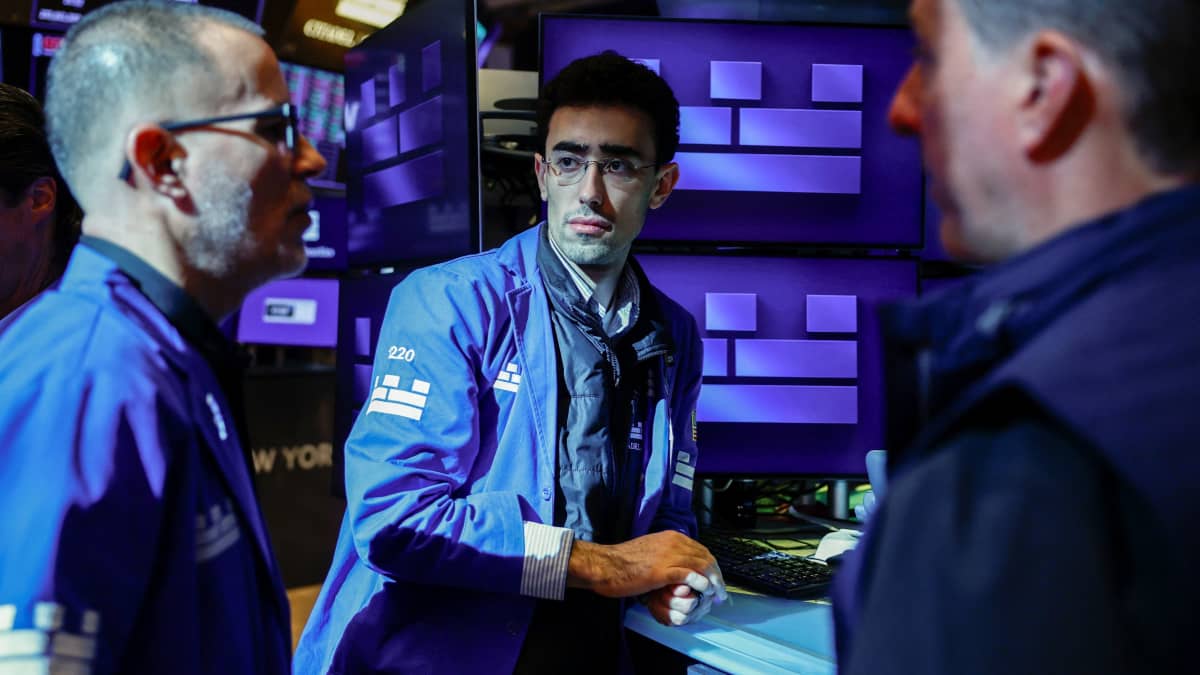
U.S. stocks declined for a second consecutive session on Tuesday as investors braced for the Federal Reserve's upcoming policy decision and Treasury yields surged to multiyear highs. The S&P 500 fell 0.45% to close at 7,585.73, the Nasdaq Composite dropped 0.78% to 25,981.57, and the Dow Jones Industrial Average lost 328.09 points, or 0.63%, to finish at 52,093.11. Losses in the broader market were partially offset by gains in artificial intelligence-related stocks, which had been under pressure the previous day. Coherent rose nearly 2%, Advanced Micro Devices gained 2%, and Qualcomm advanced more than 4%. The yield on the benchmark 10-year Treasury note climbed to 5.041% at one point Tuesday, its highest level since 2007, before easing slightly to settle up more than 3 basis points at 5.00%. Bond yields have been rising globally in recent weeks amid concerns that the ongoing U.S.-Iran conflict could stoke inflation and prompt a more hawkish stance from central banks. Melissa Brown, global head of investment decision research at SimCorp, said investors are increasingly focused on economic pressures including U.S. government debt surpassing $40 trillion, persistently high inflation, and oil prices above $100 a barrel. Oil markets rallied after Saudi Arabia shut down a key pipeline that bypasses the Strait of Hormuz following drone damage from Iraq, further tightening global supply. Brent crude futures for November delivery jumped nearly 3% to $108.75 a barrel, while West Texas Intermediate crude climbed more than 4% to $105.83. Both benchmarks had already closed above $100 a barrel on Monday. The rally in energy prices came alongside reports of renewed Houthi strikes on Saudi Arabia and Iranian attacks on Gulf shipping. All of this comes as the Federal Reserve prepares to announce its interest rate decision Wednesday. Fed funds futures indicate a more than 94% probability of a quarter-point rate hike, which would lift the target range to 3.5%-3.75%. Brown said markets are seeking clarity from Fed Chair Kevin Warsh on the central bank's approach to inflation, warning that a lack of guidance could unsettle investors further. Barclays strategists noted in a Tuesday report that rising rates have already pressured equity valuations, and that the approach toward a 5% yield on the 10-year Treasury represents a historically significant threshold beyond which rates tend to become a persistent drag on stocks. Wolfe Research's Chris Senyek said there is roughly a 90% probability the Fed will hike rates this week, though his firm's own outlook is more evenly split. He noted that while stocks often face short-term pressure following a first rate hike in a cycle, they typically recover within six to twelve months, and he does not believe this would represent a market top given continued strength in AI-related demand and corporate earnings. BlackRock's Rick Rieder said he personally would not favor a rate hike, arguing current inflation is being driven by factors insensitive to interest rates, such as war, energy costs, and rising expenses in areas like healthcare and education. He said he has begun adding limited exposure to long-dated bonds, noting that historically, a 10-year yield near 5% has signaled a favorable long-term entry point for bond investors, though he still expects yields could rise further if the Fed hikes rates. Wells Fargo strategist Ohsung Kwon lowered his year-end target for the S&P 500 to 7,700 from 7,950, suggesting the market may be entering a late-cycle phase with limited upside and a possible 5% to 10% pullback ahead. In corporate news, Bank of America shares had fallen more than 5% Monday after a weak third-quarter forecast, but Morgan Stanley analyst Manan Gosalia called the reaction overdone, maintaining an overweight rating and a $67 price target. Dave & Buster's shares dropped 17% after the company posted a surprise quarterly loss and missed revenue expectations, while Enova International shares fell more than 15% after it withdrew regulatory applications for its planned acquisition of Grasshopper Bancorp. ResMed shares rose nearly 5% after RBC Capital upgraded the stock and raised its price target to $262. A CNBC Fed Survey showed a majority of respondents now expect at least two rate hikes over the next year, a sharp shift from last month, as inflation concerns broaden beyond energy prices. Treasury Secretary Scott Bessent was scheduled to testify before the House Financial Services Committee Tuesday, where he was expected to highlight economic resilience amid the Iran conflict and address questions on inflation, energy costs, and federal debt. In Asia, markets closed mostly lower, with Hong Kong's Hang Seng Index down 1% and South Korea's Kospi falling 0.85%. European stocks also declined, with the Stoxx 600 down 0.6%, led by losses in financial services amid rising Treasury yields. Cryptocurrency markets weakened as well, with Bitcoin falling 2.85% to about $76,826 and Ether dropping 2.7% to just over $2,472. Separately, U.S. prosecutors filed a civil forfeiture complaint seeking to seize $61 million in cryptocurrency allegedly tied to black-market sales of sanctioned Iranian oil, part of a broader scheme accused of laundering more than $1.5 billion to benefit Iran's military and the Islamic Revolutionary Guard Corps. In China, official data showed retail sales grew just 0.4% in August from a year earlier, missing forecasts, while industrial output rose 5.2%, beating expectations. Urban fixed-asset investment fell 7.2% over the first eight months of the year, and the urban unemployment rate ticked up to 5.3%.