World
Pakistan's Military Spokesperson Defends Makkah Defence Pact as Purely Defensive, Addresses India, Iran and Afghanistan
By News Desk
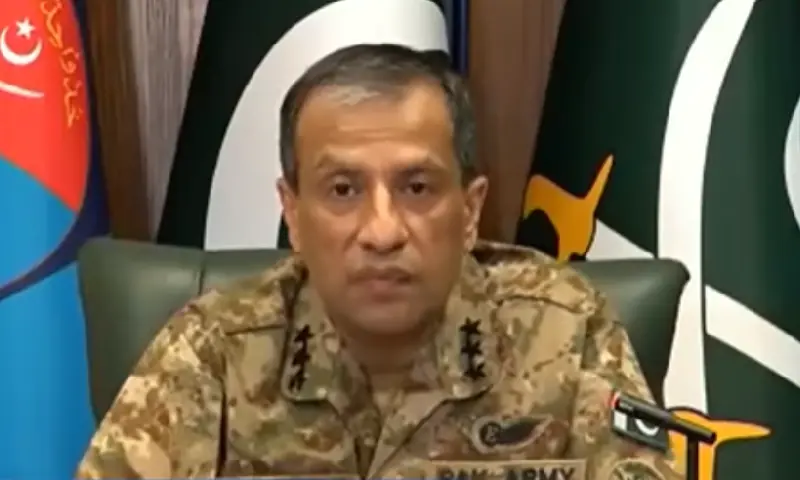
Lieutenant General Ahmed Sharif Chaudhry, Director General of Inter-Services Public Relations (ISPR), has stated that the Makkah Defence Alliance—a tripartite agreement between Pakistan, Saudi Arabia and Turkiye—carries no regional ambitions and is designed solely for collective deterrence. He made these comments during an interview with host Tom Burges Watson on Al Arabiya English's programme 'Global News Today', aired early Wednesday.
Explaining Pakistan's obligations under the agreement, Lt Gen Chaudhry said it formalizes decades-old ties between Pakistan, Saudi Arabia and Turkiye in the areas of collective defense and deterrence. When asked whether the pact represented mere defensive cooperation or a broader strategic alliance, he insisted it was defensive by nature. "It is defensive. There's nothing aggressive. There are no regional aspirations. It is collective deterrence," he said, noting the pact was complementary to each nation's other existing relationships and alliances, not competitive with them.
Pressed on whether the agreement included mutual defense obligations, Chaudhry said the publicly released text of the agreement was clear on this matter. When asked how Pakistan would respond if an allied nation came under attack, he explained that operational details of defense commitments are never disclosed publicly, noting this is standard practice for such agreements worldwide. He said the specifics of implementation were matters for the three nations to determine internally.
Regarding concerns that the pact might affect Pakistan's relationship with China, Chaudhry said it would complement rather than compete with that relationship, noting that China understood the historic ties between Pakistan, Saudi Arabia, and Turkiye. He also rejected the characterization of the alliance as an exclusively Muslim bloc, stating it was open to new partners committed to regional peace, stability, and non-aggression, though decisions on expansion would rest with the three founding nations' leadership.
The defense pact was signed on August 7, stipulating that an attack on one member state would be considered an attack on all. Its inaugural meeting took place in Istanbul on August 31, where Pakistan was designated to lead the alliance's secretariat for an initial three-year term. There has been speculation about potential expansion, with Turkiye floating the possibility of Egypt joining, though Cairo has not confirmed this. Pakistani officials, including Prime Minister Shehbaz Sharif and Deputy Prime Minister/Foreign Minister Ishaq Dar, have emphasized the pact's defensive character, with Dar noting it remains open to regional countries willing to uphold its core principles. However, Foreign Office spokesperson Sajjad Haider Khan recently stated that expansion was not currently under consideration, as the organization needed to be solidified first.
On Pakistan's role mediating between the United States and Iran amid their ongoing conflict, which began with US-Israeli strikes on Iran in February, Chaudhry said the Makkah alliance did not complicate this effort, since it stemmed from long-standing strategic relationships. He said Pakistan's mediation efforts were driven by a desire for regional peace and stability, adding that Pakistan's policy of global engagement positioned it as an objective arbiter. He declined to comment on specifics of the mediation process, citing the need for neutrality, but stressed that Pakistan's leadership continued reaching out to all parties to seek a negotiated rather than military resolution. On concerns about the conflict spilling into Pakistan's western border regions, he expressed confidence in the country's ability to protect its territorial integrity.
Discussing the brief military conflict between Pakistan and India in May last year, Chaudhry said the key lesson was that military conflict between nuclear-armed neighbors was unthinkable, calling it a "mad idea." He asserted that India had made a strategic error during that conflict and said it was up to India to determine whether it had learned from the experience, while Pakistan's role was to continue reminding it. He criticized India's military as "deeply politicized" and accused it of externalizing internal issues, citing treatment of minorities and the Kashmir dispute. He said Pakistan sought peace on equal terms but warned that any Indian ambitions of regional dominance through military aggression would have consequences "beyond their imagination." He confirmed that communication channels between the two countries' military operations directors had remained functional during and after the conflict, and expressed openness to restoring sustained communication, provided it occurred on equal terms and was not used to mask Indian-sponsored terrorism in Pakistan.
On Afghanistan, Chaudhry said Pakistan's military objectives align with the political leadership's goal of ending interference and terrorism originating from Afghan soil. He cited Pakistan's right to self-defense under Article 51 of the United Nations Charter and stated the government has an obligation to protect its citizens' lives and property. He said Pakistan had carried out 42,000 intelligence-based operations this year, resulting in the deaths of 2,100 terrorists, and described the country's counter-terrorism campaign as the most successful in the world given its position as a frontline state against terrorism from Afghanistan.
Addressing the situation in Balochistan, Chaudhry rejected the term "insurgency," stating the province faces terrorism rather than insurgency. He noted that more than 32,000 of the 42,000 intelligence-based operations conducted this year took place in Balochistan, targeting what he called proxies falsely associated with the province. He said the government's strategy combined eliminating terrorists with efforts to support the local population through sustainable development initiatives at the village and district levels, alongside broader engagement between civil-military leadership and Baloch communities.