World
Twenty-Five Years After 9/11: How the ‘War on Terror’ Reshaped US-Israel Ties and American Views of Palestinians
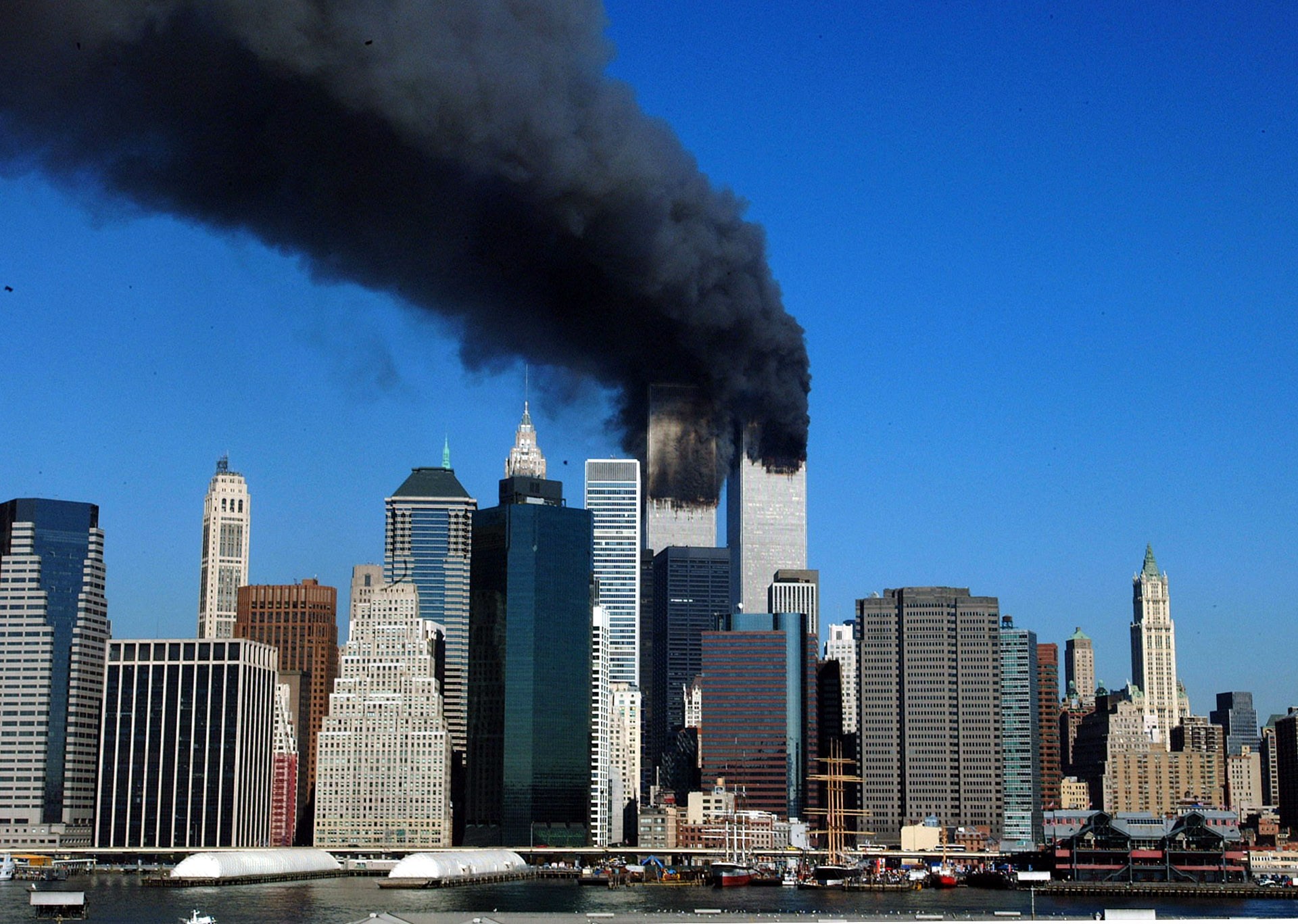
Growing up just across the Hudson River from New York City, I had a front-row view of the Manhattan skyline from my bedroom window. As a Palestinian American, I often served as a tour guide for relatives visiting from the Middle East, showing them landmarks like the Statue of Liberty, the Empire State Building, Central Park, and the World Trade Center. My last such tour took place in late August 2001, when we visited the World Trade Center’s observation deck, known as the “Top of the World.” Two weeks later, that deck—and the towers themselves—were destroyed in the September 11 attacks, which killed nearly 3,000 people and reshaped global politics.
On the morning of the attacks, I was in my university dormitory in New England, watching the coverage unfold on a small television with fellow students. Among the earliest reactions came from Benjamin Netanyahu, then a former Israeli prime minister, who told The New York Times that the attacks were “very good” for US-Israel relations before correcting himself to say they would generate “immediate sympathy” and “strengthen the bond between our two peoples.” This comment came even as the wreckage in New York was still smoldering.
That moment made clear to me that the world was changing—and that life as a Palestinian American in the United States would soon become more complicated. The US was about to enter a long period of military engagement in the Middle East, a development Netanyahu appeared to view as advantageous for Israel.
To understand the significance of this shift, it helps to look at the years before 9/11. Throughout most of the Cold War, Israel presented itself to the US as a democratic ally standing against Soviet-backed Arab states. But after the Cold War ended—marked by the fall of the Berlin Wall, democratization in Eastern Europe, and the end of apartheid in South Africa—Israel’s image became more complicated, especially as it suppressed the first Palestinian Intifada. During this period, the US made some of its strongest efforts toward Israeli-Palestinian peace negotiations and applied limited pressure on Israel regarding settlement expansion.
The September 11 attacks, occurring during the second Palestinian Intifada, changed this dynamic. The global „war on terror“ realigned US and Israeli interests around a new common adversary: radical Islam, replacing communism as the defining threat. Netanyahu and his allies recognized this shift, and in the years that followed, US-Israel intelligence cooperation deepened, American financial support for Israel increased, and new anti-terror legislation was used to target Palestinians.
This period also saw a shift in how Palestinians were portrayed in American discourse—less as people resisting occupation and more as a security threat. Israeli military tactics, such as surveillance, counterinsurgency, and targeted killings—previously criticized by Washington when used in the West Bank and Gaza—became normalized as US forces adopted similar strategies in Iraq and Afghanistan.
Several American commentators played a role in shaping this narrative. Among them: David Horowitz, who linked Palestinian identity with terrorism and called for profiling; Daniel Pipes, who frequently portrayed Muslim organizations as potential security threats; Steven Emerson, who promoted narratives suggesting infiltration by extremists into mainstream Muslim groups; Brigitte Gabriel, who framed Islamism as a civilizational threat to the West; and David Yerushalmi, who extended these narratives to include Sharia law and Muslim political participation. Collectively, these voices reinforced the idea that Palestinian, Arab, and Muslim identities were inherently linked to terrorism, thereby legitimizing Israel’s security approach in the eyes of many Americans.
Twenty-five years later, the US finds itself in another prolonged Middle East conflict—this time involving Iran—which has already cost Americans more than $100 billion due to rising fuel prices. In light of this history, it remains important for Americans to critically examine Islamophobic narratives and consider the motivations behind those who promote them.