India
Bihar CM Orders Zero‑Tolerance Policy on Crime, Corruption and Negligence
By Amit Bhelari
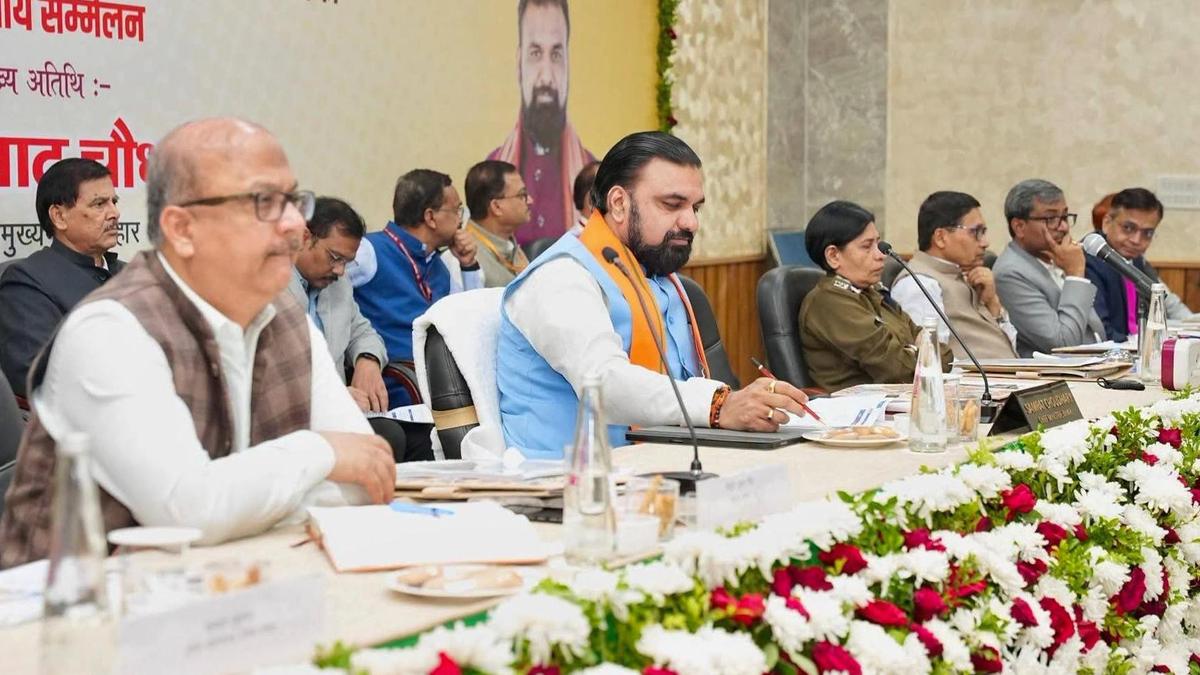
On Saturday, November 28, 2026, Bihar Chief Minister Samrat Choudhary directed state officials to adopt a zero‑tolerance policy for crime, corruption and negligence in the discharge of duties. The directives were issued during a two‑day administrative review conference held at the ‘Samvad’ hall in the Chief Minister’s Secretariat. All District Magistrates, Senior Superintendents of Police (SSPs) and Superintendents of Police (SPs) of Bihar attended the meeting.
Choudhary stressed that officials must ensure accountability in administrative functions and the timely execution of tasks that serve the public interest. He warned that any laxity in addressing public problems would not be tolerated at any level. "It must be ensured that the poor and vulnerable sections receive justice, and the strictest possible action is taken against criminals," he said.
He called for strengthening intelligence and information‑gathering systems and aligning the administrative machinery with the public interest by regularly obtaining feedback from citizens. "Janata Darbars (public grievance redressal sessions) should be held consistently, with officials engaging in direct dialogue with the public to ensure the timely resolution of their issues. Continuous monitoring of the activities of officials working at the local level must be maintained to prevent any irregularities," he added.
Additional Chief Secretaries, Principal Secretaries and Secretaries from the Home Department, Information and Public Relations Department, Road Construction Department, Health and other departments were present. Choudhary directed that police patrolling systems be made more effective, insisting that night patrols be monitored via GPS, and that absconding criminals be continuously tracked and arrested. He also ordered regular verification of weapons and the display of arms in public.
Addressing land disputes, the CM noted that they are a critical issue for law and order. He instructed administrative and police officials to hold regular weekly meetings at the sub‑divisional and block levels and to ensure the consistent functioning of the courts of the Deputy Collector Land Reforms (DCLR) and Additional District Magistrate (ADM) to settle land disputes promptly. District Magistrates and Superintendents of Police were told to hold press conferences at least twice a month to disseminate accurate information to the public.
During a review of projects under the Road Construction and Water Resources Departments, Choudhary issued directives to address black spots on roads, formulate action plans for flood and silt management, and accelerate inter‑state river‑linking projects to complete them before the upcoming monsoon.
"The government’s priorities are good governance, security, justice, and development. Transparency, accountability, and the public interest must remain top priority," he said.
The eight‑hour meeting was also attended by Chief Secretary Pratyaya Amrit, Development Commissioner Mihir Kumar Singh, Bihar Director General of Police Preeta Verma and Principal Secretary of the Home Department Pankaj Kumar. Published – November 29, 2026 03:55 am IST
Frequently asked questions
When did Bihar CM Samrat Choudhary issue the zero‑tolerance policy?
On Saturday, November 28, 2026, during a two‑day administrative review conference at the ‘Samvad’ hall in the Chief Minister’s Secretariat.
What measures did the CM direct for police patrols?
He directed that police patrolling systems be made more effective, with night patrols monitored via GPS, and that absconding criminals be continuously tracked and arrested.
How will land disputes be addressed according to the CM's directives?
Administrative and police officials were instructed to hold regular weekly meetings at sub‑divisional and block levels and ensure the consistent functioning of the courts of the Deputy Collector Land Reforms (DCLR) and Additional District Magistrate (ADM) to settle land disputes promptly.