World
9/11 Report: India-Pakistan Rivalry Diverted U.S. Focus From Bin Laden Threat
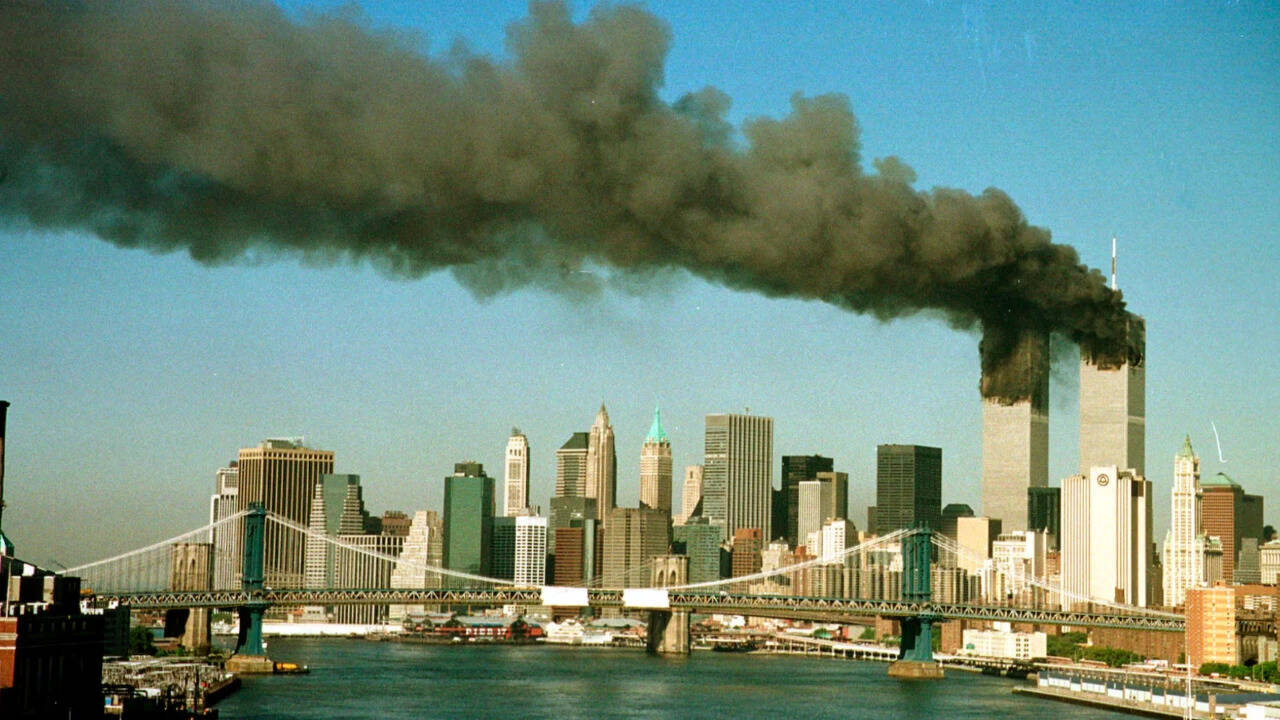
The 9/11 Commission Report reveals that in the years leading up to the September 11, 2001 attacks, which killed 2,977 people, American attention was frequently diverted from the growing threat of Osama bin Laden and al-Qaeda toward tensions between India and Pakistan.
According to the Commission, State Department officials were more concerned about a potential arms race and war between the two nuclear-armed nations than about developments in Afghanistan involving Bin Laden. This concern intensified after India and Pakistan conducted nuclear tests in May 1998, turning the rivalry into what the report calls a "daily first-order concern" for officials.
Meanwhile, Bin Laden was escalating his rhetoric and planning. In February 1998, he declared that killing Americans was a duty for Muslims capable of doing so. In a May 1998 interview with ABC, he warned that continued American "injustice" would bring the conflict to U.S. soil. The Commission notes that attack plans against the United States had been developing with "unwavering single-mindedness" throughout the 1990s.
The report identifies Pakistan as central to Bin Laden's ability to operate from Afghanistan. Pakistan's military, focused on its rivalry with India over Kashmir, viewed the Taliban as a means of gaining "strategic depth" against India. According to the Commission, Pakistani intelligence officials likely knew of Bin Laden's return to Afghanistan and may have facilitated it, reportedly introducing him to Taliban leaders partly so his training camps could be used for Kashmiri militants.
In the summer before the 1998 U.S. embassy bombings in Kenya and Tanzania, the State Department remained focused on India-Pakistan tensions rather than pressuring Pakistan over its ties to Bin Laden and the Taliban. Separately, the department's acting counterterrorism coordinator recommended designating Pakistan a state sponsor of terrorism due to its military intelligence agency's alleged support for attacks in Kashmir. The South Asia bureau objected, fearing further strain on ties with Pakistan following the nuclear tests. Secretary of State Madeleine Albright rejected the recommendation on August 5, 1998. Two days later, al-Qaeda bombed the U.S. embassies in Kenya and Tanzania.
An earlier 1997 National Security Council review had already found that the U.S. needed to pay more attention to Pakistan and Afghanistan, not just India. One diplomat told the Commission the U.S. effectively had "no policy" on Afghanistan at the time. Tensions escalated further during the 1999 Kargil war, when Pakistani troops infiltrated Kashmir, prompting NSC official Bruce Riedel to describe Pakistan as acting like a "rogue state" both for backing Taliban and Bin Laden-linked terrorism and for provoking conflict with India.
The report emphasizes that these issues were interconnected: Pakistan's rivalry with India influenced its support for militant groups, which operated within networks that also sheltered the Taliban, who in turn provided Bin Laden the sanctuary needed to plan attacks against the U.S.
Despite these entanglements, Washington took some action. The CIA developed plans to capture Bin Laden, and the Justice Department moved toward indicting him. In April 1998, U.S. Ambassador to the UN Bill Richardson visited Afghanistan to demand Bin Laden's expulsion, but the Taliban denied knowing his location and claimed he posed no threat to the U.S. President Bill Clinton later raised the issue with Pakistani Prime Minister Nawaz Sharif and, in March 2000, directly urged General Pervez Musharraf to help capture Bin Laden.
By that point, Pakistan's role had become deeply complicated—simultaneously a potential counterterrorism partner, a nuclear rival of India, a Taliban supporter, and a state with military links to militant groups. The Commission concludes that while the CIA and Justice Department pursued Bin Laden, the State Department remained more focused on easing India-Pakistan tensions, ending Afghanistan's civil war, and addressing the Taliban's human rights record than on removing Bin Laden from Afghanistan. By the time the full scale of the threat was understood, 19 hijackers had already boarded four aircraft on September 11, 2001.