India
India Claims Victory After Killing Lashkar-e-Taiba Commander, Analysts Warn of Evolving Militancy
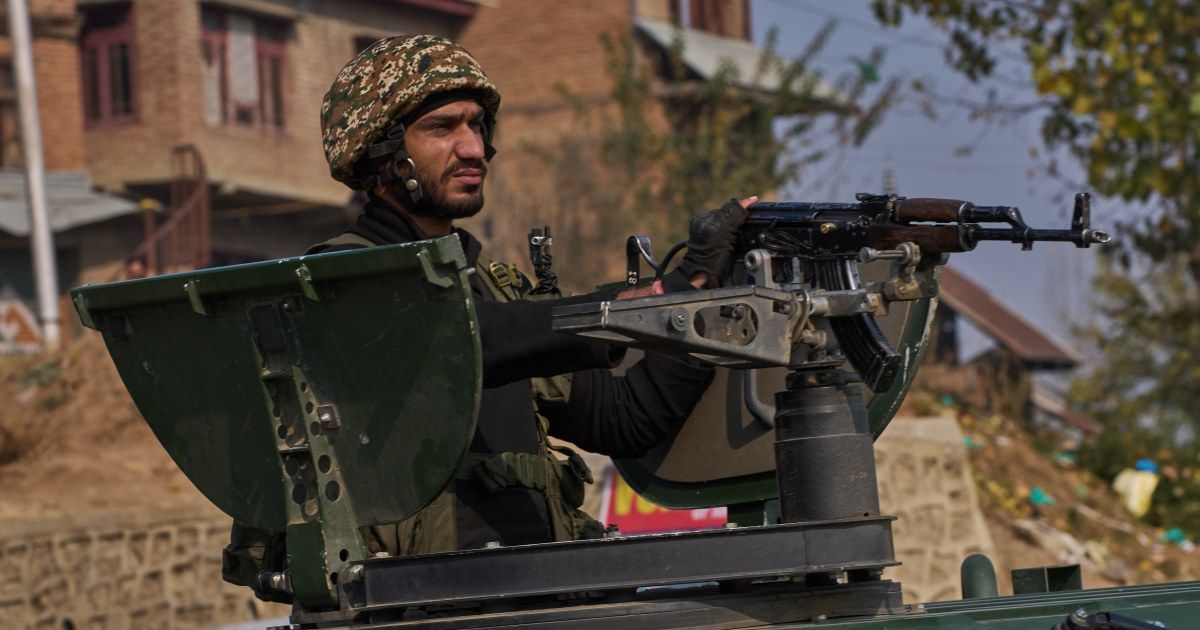
After a seven‑day search, Indian security forces trapped and killed Mohammad Lateef Bhat, a commander of the Pakistan‑based Lashkar‑e‑Taiba (LeT), in a mosque in Zangalpora village, Kulgam district, on November 18. Bhat had previously fired at Central Reserve Police Force soldiers a week earlier, injuring three, and an associate was killed shortly after that attack. Indian Home Minister Amit Shah announced that Bhat was the last local armed fighter in the Kashmir valley, stating that no Kashmiri youth were now involved in terrorist activities. Jammu and Kashmir police said this was the first time since the 1989 rebellion that LeT had no local fighters.
Former deputy inspector general Israr Khan described Bhat’s killing as a significant victory for security forces but cautioned that militants could remain active without appearing in official records. He referred to “hybrid militants” – individuals who conduct attacks while maintaining a civilian façade – and noted that such fighters are difficult for security agencies to detect. Analysts argue that the term is not clearly defined and may be applied broadly.
Security forces also face challenges from newly formed groups such as the Resistance Front (TRF) and the People’s Anti‑Fascist Front (PAFF), which emerged after the revocation of Kashmir’s special status in August 2019. TRF claimed responsibility for a 2025 attack that killed 26 civilians in Pahalgam, and both groups are viewed by analysts as proxies linked to Pakistan‑based organisations.
The shift in militant tactics includes a move away from local recruitment toward foreign fighters, encrypted communications, and a geographic shift of violence from the Kashmir valley to the forests of Jammu in the south. Since 2021, at least 33 people, including 10 civilians, have been killed in Jammu, a region that has seen a resurgence of armed violence due to reduced security presence and the redeployment of troops to the China‑border area.
Experts say the dense forests of Jammu provide cover for militants, making it harder for security forces to conduct searches and increasing the likelihood of incidents in areas such as Udhampur and Rajouri. The changing geography and tactics suggest that while local recruitment in Kashmir may be down, armed violence has found a new foothold in the south, challenging the narrative that the absence of local fighters marks the end of militancy.