World
Trump Administration's 2030 Census Overhaul Could Exclude H-1B Holders and International Students from Population Count
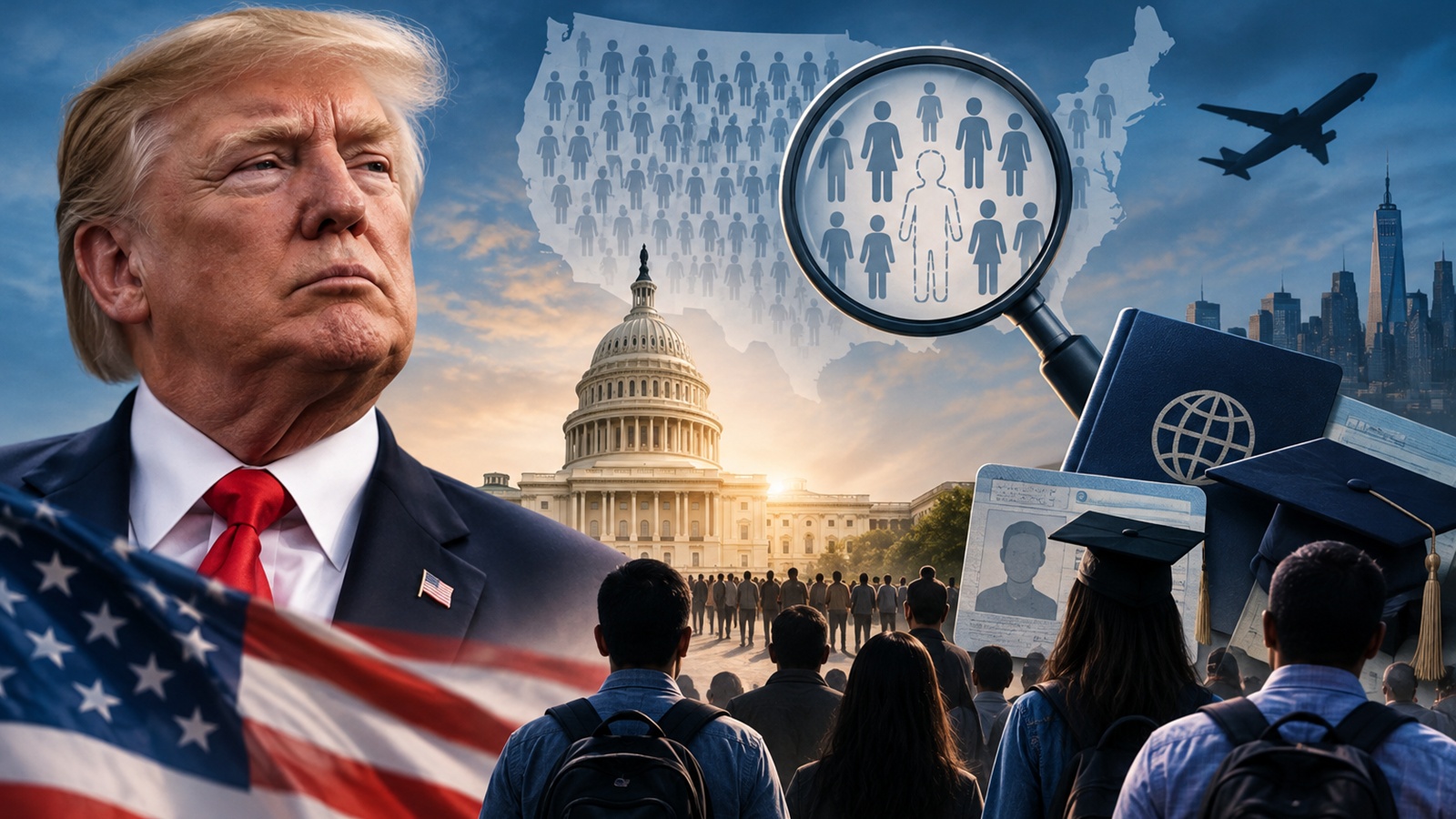
The Trump administration has put forward a significant revision to the 2030 US Census that could leave out undocumented immigrants and, potentially, certain temporary legal residents—including H-1B visa holders and international students—from the population count used to allocate congressional seats. According to Reuters, the US Census Bureau submitted this proposal roughly a year after President Donald Trump instructed the agency to draft new rules preventing undocumented immigrants from being included in the next census, which is scheduled for 2030.
The proposal, overseen by the Commerce Department, seeks to exclude non-citizens whose legal status is described as "less durable and indefinite in length than lawful permanent residence status." In practical terms, this means non-citizens without a Green Card would not be counted toward the population figures used for congressional apportionment.
Beyond immigration status, the plan also proposes removing long-standing census questions on race and ethnicity, and would prevent the survey from including questions about sexual orientation.
Groups that could potentially be excluded under the baseline proposal include undocumented immigrants, refugees and asylum seekers, individuals on temporary work visas, and international students. For Indian nationals in the US, this carries notable implications, as it could affect thousands of H-1B visa holders working in technology and specialized fields, as well as a large number of Indian students enrolled at American universities. The exact treatment of these groups is still open to feedback, but the current proposal's baseline would exclude them.
The Census Bureau justified the exclusion by arguing that individuals without permanent residency lack sufficient ties to the United States to be considered "true inhabitants" with a "usual residence," and therefore should not be counted for census purposes. The Bureau also noted that it has historically counted foreign citizens when determining how many House seats each state receives, but the new proposal would end that practice for undocumented immigrants. The document also acknowledged legal challenges and internal opposition during Trump's first term regarding the counting of undocumented immigrants.
Separately, the census questionnaire itself could see changes, with race, ethnicity, and sexual orientation questions potentially being removed. This follows an earlier failed attempt during Trump's first term to add a citizenship question to the census form, which the US Supreme Court blocked at the time.
Meeta Anand, senior director of the census at the Leadership Conference on Civil and Human Rights, told USA Today that the effort could "uproot centuries of practice" and leave communities with large immigrant populations without adequate federal resources. She noted that the proposal would exclude H-1B visa holders, refugees, asylum seekers, individuals with temporary protected status, and undocumented immigrants alike.
Since the census also determines the distribution of political representation and federal resources across states, excluding these groups could significantly affect states with large immigrant populations.