World
Legal and Financial Doubts Surround Trump's $5,000 Payment Pledge Tied to Tariff Revenue
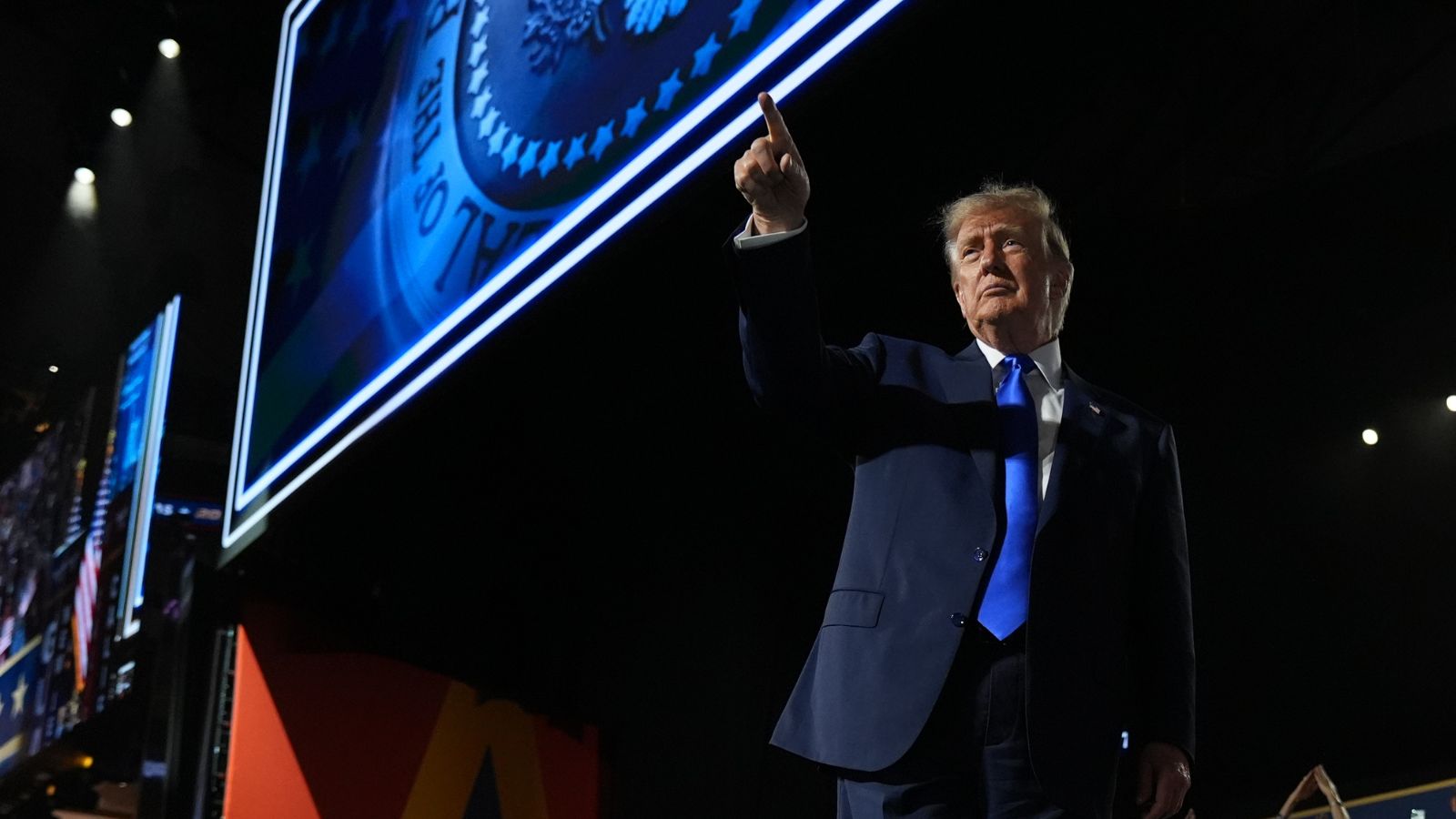
US President Donald Trump has pledged to give every adult American $5,000 if Republicans win the upcoming November midterm elections, a promise that has sparked debate over its legality, feasibility, and funding source. Trump announced the offer at a Republican convention in Texas on Wednesday night, where it was met with applause from supporters. Democrats, however, have dismissed the pledge as an "empty promise."
According to Trump, the money would need to be spent within the United States, though it remains unclear how such a condition would be enforced. It is also uncertain whether Congress would approve the plan or if the administration has developed a concrete method for distributing the funds.
Under US federal law, payments made with the intent of influencing votes are prohibited. However, some legal experts argue that Trump's proposal could be interpreted as a campaign pledge related to tax cuts or returning funds to citizens, rather than a direct exchange for votes.
Joan Mahoney, a law lecturer at the University of Southampton, told the BBC she believes the proposal would likely be legal, though she noted that politicians rarely make such offers this explicitly. She explained that while the plan might resemble a bribe, it would apply to all adults regardless of how they vote, which distinguishes it from a traditional bribe.
Laurel Rapp, director of the US and North America programme at Chatham House, offered a contrasting view, describing Trump's proposal to the BBC as a "very different, very transactional agreement" compared to typical campaign promises.
With close to 270 million adults in the US, distributing $5,000 to each person would cost approximately $1.3 trillion — nearly 3% of the country's GDP. This substantial figure has cast doubt on whether the plan could secure congressional approval, especially given the nation's ongoing large budget deficits. Additional financial pressures, including the prolonged conflict involving Iran and continued demands for increased defense spending, further complicate the feasibility of such a proposal.
Erica York, senior economist at the Tax Foundation in Washington, told the BBC she would be "extremely surprised" if Congress approved the measure.
Regarding funding, Vice-President JD Vance has suggested that revenue from tariffs could support the payments. However, current figures suggest a significant shortfall. Data from the Bipartisan Policy Center shows the US has collected roughly $475 billion in tariff and excise tax revenue since the start of 2025. Of that, more than $100 billion has since been refunded following a Supreme Court ruling that struck down several tariffs imposed by the administration earlier this year.
Even without factoring in other government expenditures, the tariff revenue collected so far falls well short of the approximately $1.3 trillion that would be needed to fund $5,000 payments to every adult American.