Technology
Shenzhen Market Sells Banned Nvidia Chips Near Trump‑Xi Meeting Site
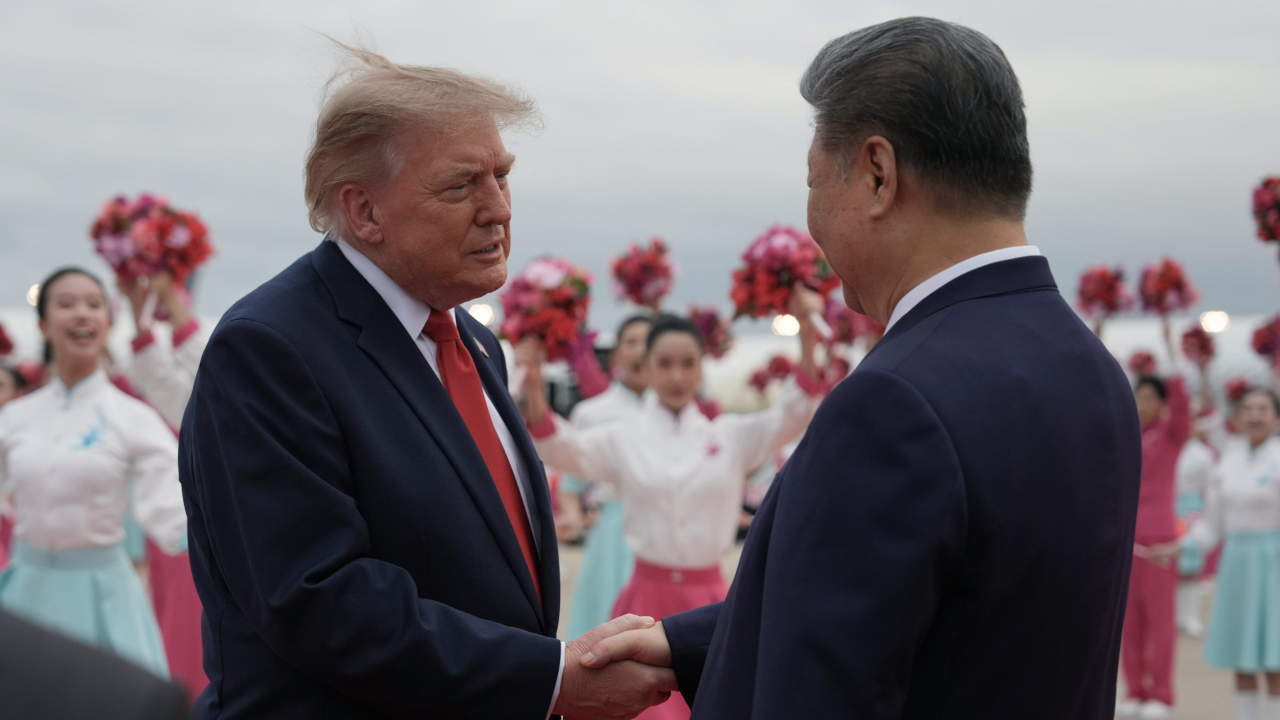
Just miles from the villa where U.S. President Donald Trump met Chinese President Xi Jinping for the APEC Summit, vendors in Shenzhen’s bustling electronics market were found selling some of the United States’ most tightly restricted AI chips, according to a Washington Post investigation. The report notes that traders were offering Nvidia’s advanced Blackwell B300 chips, which the U.S. has prohibited from export to China since 2024 for national‑security reasons. One vendor quoted 20 million yuan (about $3 million) for a server containing eight Blackwell B300 chips after contacting suppliers, while other traders listed similar servers for $3 million to $3.4 million. A vendor identified only as Wu said a Blackwell B300 server cost about $2 million two months earlier. Nvidia does not publish prices for its high‑end chips, but a Brookings Institution fellow estimated a comparable B300 server in the U.S. at roughly $500,000 to $600,000. The availability of these chips in Shenzhen illustrates the difficulty the U.S. faces in enforcing export controls designed to keep advanced technology out of China’s hands. Vendors explained that restricted chips reach the Chinese market through supply networks that include Hong Kong and other locations. “If I ever wanted to be a big Chinese AI developer and I needed a bunch of Blackwells, I would just go to Huaqiangbei and work out a deal,” said Joshua Woodard, founder of Shenzhen‑based supply‑chain consultancy Sparrows. The market attracts start‑ups, independent developers and foreign buyers. Jason Cheng, a vendor, said customers from Russia and Iran had bought Nvidia chips from his stall for the past four or five years, adding, “We don’t care which country a customer comes from, as long as they can pay.” Some traders keep products in Shenzhen and nearby Hong Kong warehouses and require advance deposits before allowing buyers to inspect them. Other Nvidia products, such as the RTX 5090 and RTX PRO 6000 chips, were also displayed openly at the market and were usually sourced through Hong Kong, with vendors acknowledging their restricted status. In a statement to the Washington Post, Chinese Embassy spokesperson Liu Chang said, “China’s position on U.S. chip exports to China is consistent. China opposes the U.S. overstretching the concept of national security and abusing export‑control measures, which disrupt the stability of global industrial and supply chains.” The report also cited public procurement records showing that Chinese research institutes and universities continued to acquire export‑restricted Nvidia chips through 2025 and 2026, including as recently as last month. Amid the scandal, Nvidia CEO Jensen Huang stepped down but returned to the position just days later.