India
Strobe Talbott, key figure in reshaping India‑US relations, dies at 80
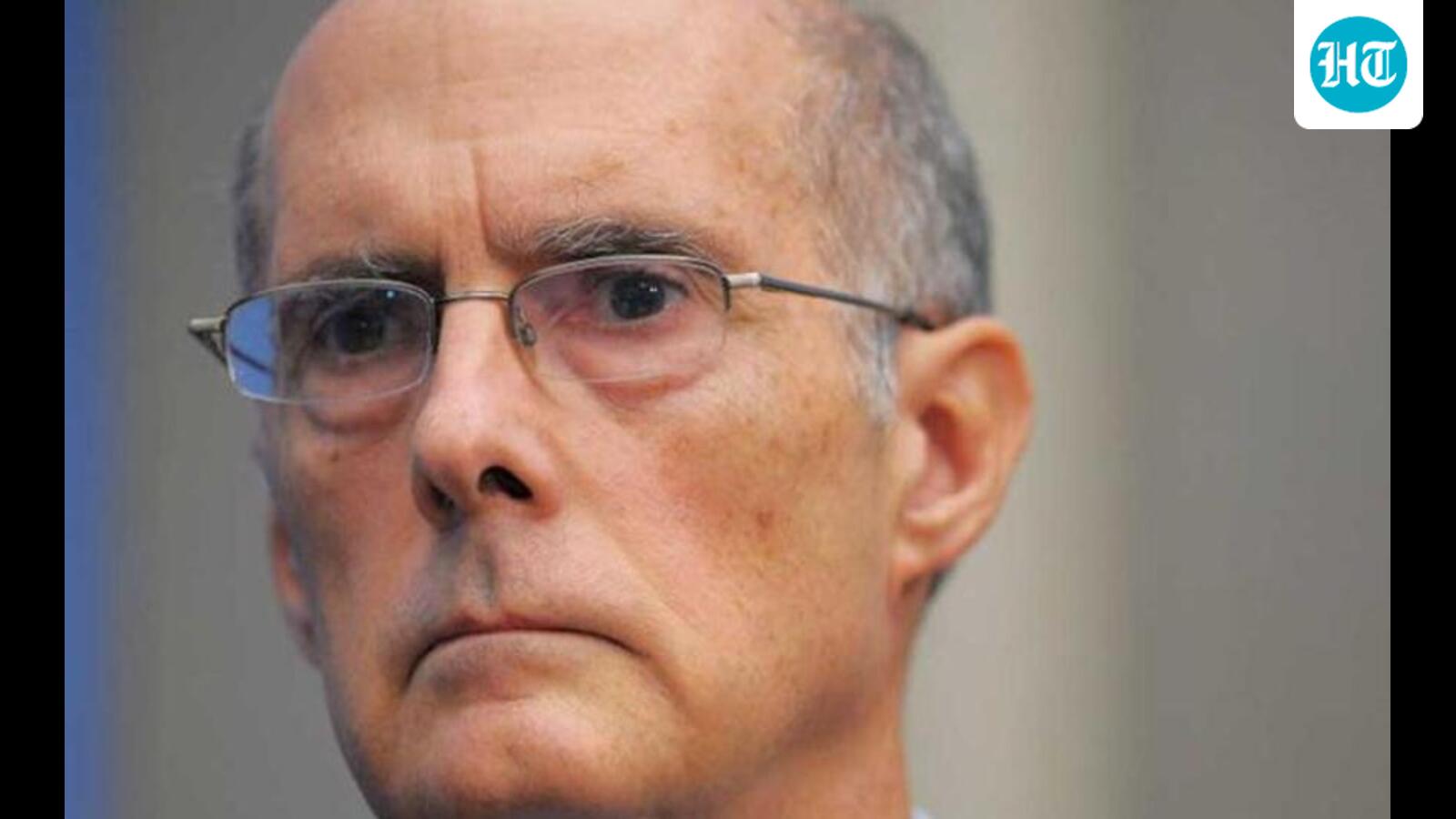
Strobe Talbott, a former U.S. Deputy Secretary of State who played a central role in improving ties between India and the United States, died in New York on Friday at the age of 80. Talbott, born in 1946, began his career as a foreign‑affairs correspondent for Time magazine before joining the State Department after a friendship with President Bill Clinton that began at Oxford. He was instrumental in launching a dialogue with Indian External Affairs Minister Jaswant Singh following India’s 1998 nuclear tests, a move that helped repair a relationship that had been strained for half a century.
In May 1998, President Clinton expressed anger over India’s Pokhran nuclear tests, saying, “We’re going to come down on those guys like a ton of bricks.” The tests had caught Washington off‑guard, as the U.S. was preoccupied with conflicts in West Asia and Europe. Within 22 months, however, Clinton visited India, addressed the Indian parliament, and began a new era in bilateral relations.
Talbott recalled that he and Singh met 14 times at 10 locations in seven countries on three continents, describing the exchanges as the most intense and prolonged set of high‑level talks between the two nations.
Talbott’s background included a Yale education, a Rhodes Scholarship at Oxford, and a career as a Soviet analyst during the Cold War. He entered the White House in 1993, a time when the Clinton administration was looking for a new global strategy after the Cold War. India had been a focus of U.S. policy since the late 1960s, and Talbott’s role was to help turn the relationship around.
The U.S. had largely ignored India during the early 1990s, but the 1998 nuclear tests forced Washington to pay attention. Talbott and Singh began talks in Washington in June 1998, with Talbott acting as the American interlocutor. Over the next two years, Talbott pushed for India to meet five benchmarks: sign the Comprehensive Test Ban Treaty (CTBT), halt fissile‑material production, restrain missile and warhead deployment, tighten export controls, and resume dialogue with Pakistan. In return, Washington would lift sanctions imposed after the Pokhran tests.
India resisted the benchmarks, and the talks did not result in a CTBT signature or significant compliance. Talbott noted that while the dialogue did not achieve its immediate goals, it laid the groundwork for a new era in U.S.–India relations. When Pakistani forces launched the Kargil war in 1999, Washington openly supported India.
Clinton visited India in March 2000, receiving a warm reception. Talbott and Singh developed a personal friendship, with Singh praising Talbott’s intellectual ability and integrity. After Talbott left office in 2001 and Singh moved to the finance ministry in 2002, the work they began continued. In 2008, India and the U.S. concluded a civil nuclear deal, a milestone that came a decade after Talbott and Singh first met.
Talbott’s contributions are seen as pivotal to the significant partnership that exists today between the two democracies, despite periodic strains. His death marks the loss of a key architect of the India‑U.S. relationship’s transformation.