India
56 Elephants Displaced from Hassan Coffee Estates Face Political Roadblock
By Arun Dev
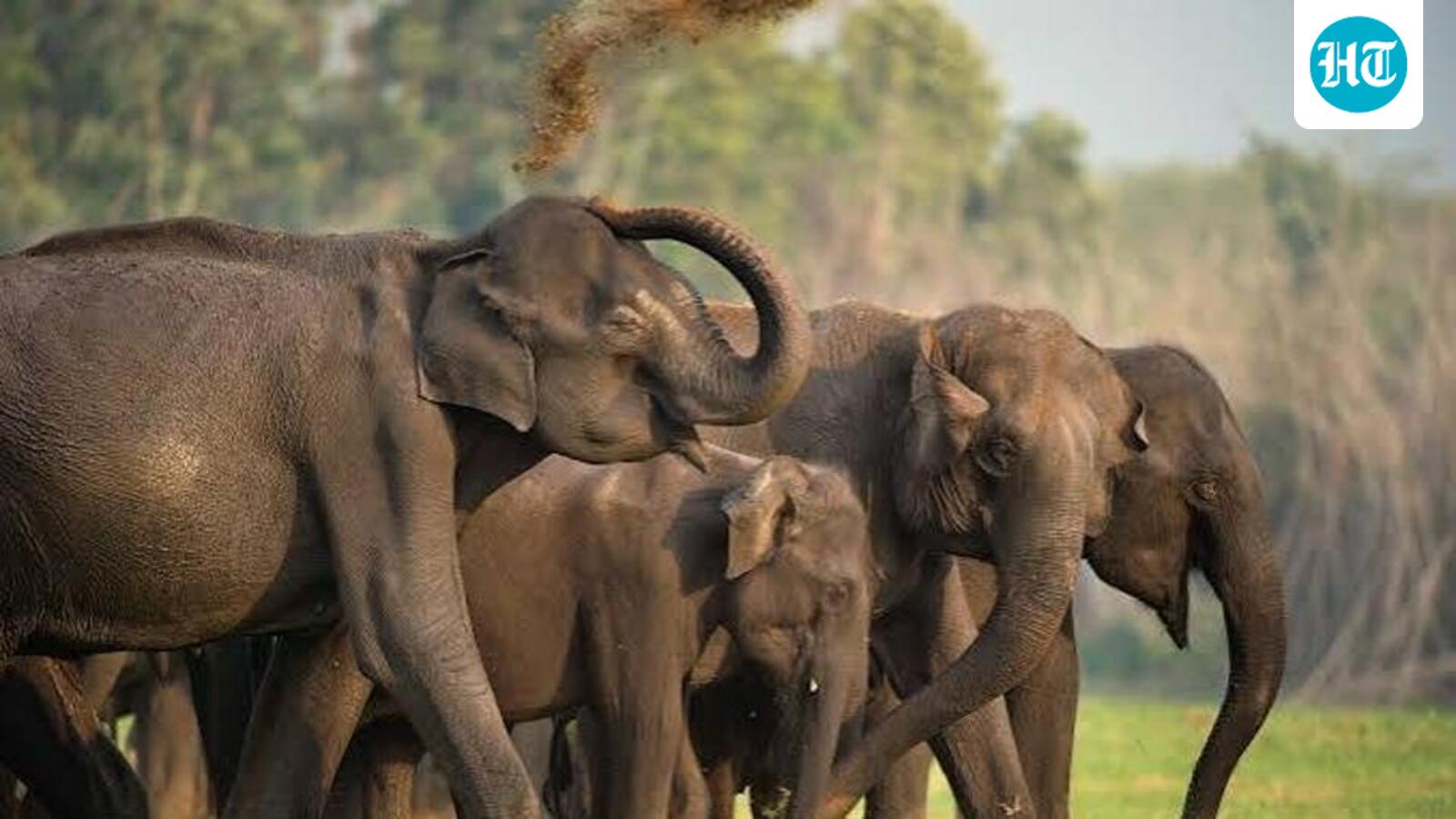
Karnataka’s plan to relocate 56 elephants from coffee estates in Hassan to the Bhadra forest has been halted after legislators and residents in Chikkamagaluru protested. The forest department temporarily suspended the operation, and the herd has dispersed across three districts: 39 elephants are in Mudigere, 13 remain in Belur, and four are moving toward Kodagu as of November 26. The move was prompted by two fatal elephant attacks in Belur. The operation began on November 21 after two tuskers were captured on November 18 and 19; one was transferred to the Mathigodu camp in Nagarahole Tiger Reserve, and the other was released into the wild in Bandipur with a radio collar. Forest officials continue to monitor the herd and guide those in Mudigere toward the Tatakola forest area, which borders reserve forests. Forest Minister Ramalinga Reddy is scheduled to meet legislators from the affected districts on November 30 to discuss the issue. The dispute highlights the challenge of moving elephants between villages, as fragmented habitats, plantations, roads, and fences limit their movement and increase conflict. Hassan district in-charge minister K M Shivalinge Gowda defended the operation, citing the limited forest area in Belur. Congress MLAs Nayana Motamma, T D Rajegowda, and H D Thammaiah opposed moving the herd toward Chikkamagaluru, which also experiences frequent human‑elephant conflict. Motamma, representing Mudigere, submitted a resignation to the Assembly speaker on November 23 in protest of the movement into her constituency without consultation, withdrew it after intervention by Chief Minister D K Shivakumar and senior Congress leaders, and continued to demand assurances on public safety. She said, “I have to answer the people who elected me. I am not answerable merely to the government. If we cannot protect the people who elected us, what is the purpose of holding public office?” Reddy warned that elephants belong in forests, not coffee estates, and cautioned legislators against politicising the issue. A study published in August in the Journal of Wildlife Science examined elephant movement across 466 villages in the Hassan landscape from 2023 to 2025. The research mapped 277 solar‑powered fences around coffee plantations, covering 382 km and 32 sq km (about 5% of the study area). Nearly 20% of refuge habitat fragments bordered a solar fence, and another 30% had fences within 300 metres, limiting elephants’ access to resources. The study also noted that the expansion of National Highway 75 from two lanes to four acted as a barrier, shifting elephant activity hotspots to the northern side in 2024 and 2025. Recommendations included protecting refuge habitats, redesigning fences to allow elephant movement, discouraging new fencing near natural forests, and constructing highway overpasses or underpasses at critical crossing points. Karnataka has identified nine elephant corridors, but the Union government reported securing only two through private land purchases, according to a Rajya Sabha reply in March 2023. The state acquired 25.37 acres for the Edayahalli‑Doddasampige corridor in 2017 and 16.30 acres at Muddahalli for the Chamarajanagar‑Talamalai corridor in 2021‑22. The Karnataka Economic Survey 2025‑26 estimated the state’s elephant population at 6,395 based on a 2023 assessment and reported that the state had installed 428 km of railway barricades, 1,360.87 km of solar fencing, and 1,775.41 km of elephant‑proof trenches to reduce human‑elephant conflict. While these barriers protect farms and settlements, they can also restrict elephants’ access to habitats and traditional movement routes. Joseph Hoover, president of the United Conservation Movement and former member of the Karnataka State Wildlife Board, said the conflict is being viewed too narrowly, blaming elephants for a crisis largely created by human intervention. He argued that fragmented habitats, depleted food sources, and blocked corridors force elephants onto agricultural land, and that capturing and relocating them only provides temporary relief. The human cost of the conflict is significant: Union government data show that Hassan recorded 4,285 cases of crop damage by elephants in 2022‑23, with ₹2.97 crore paid in compensation; the number fell to 3,641 in 2023‑24, but compensation rose to ₹4.07 crore; in 2024‑25, 3,015 cases were recorded with ₹3.80 crore paid. The district also recorded 24 human deaths in elephant attacks between 2020‑21 and 2024‑25. The forest department’s immediate challenge is to manage the 56 elephants dispersed across Belur, Mudigere, and towards Kodagu without exposing more communities to danger. The November 30 meeting may resolve the immediate political dispute, but not the underlying conflict. Driven out of one landscape because of the threat they pose to people, the elephants face resistance in another, with shrinking habitats, plantations, roads, and fences at the heart of the problem. Relocating the herd may shift the conflict, but will not address its causes.