World
EU Leaders Face Deadlock Over 2028‑2034 Budget and Ukraine Loan
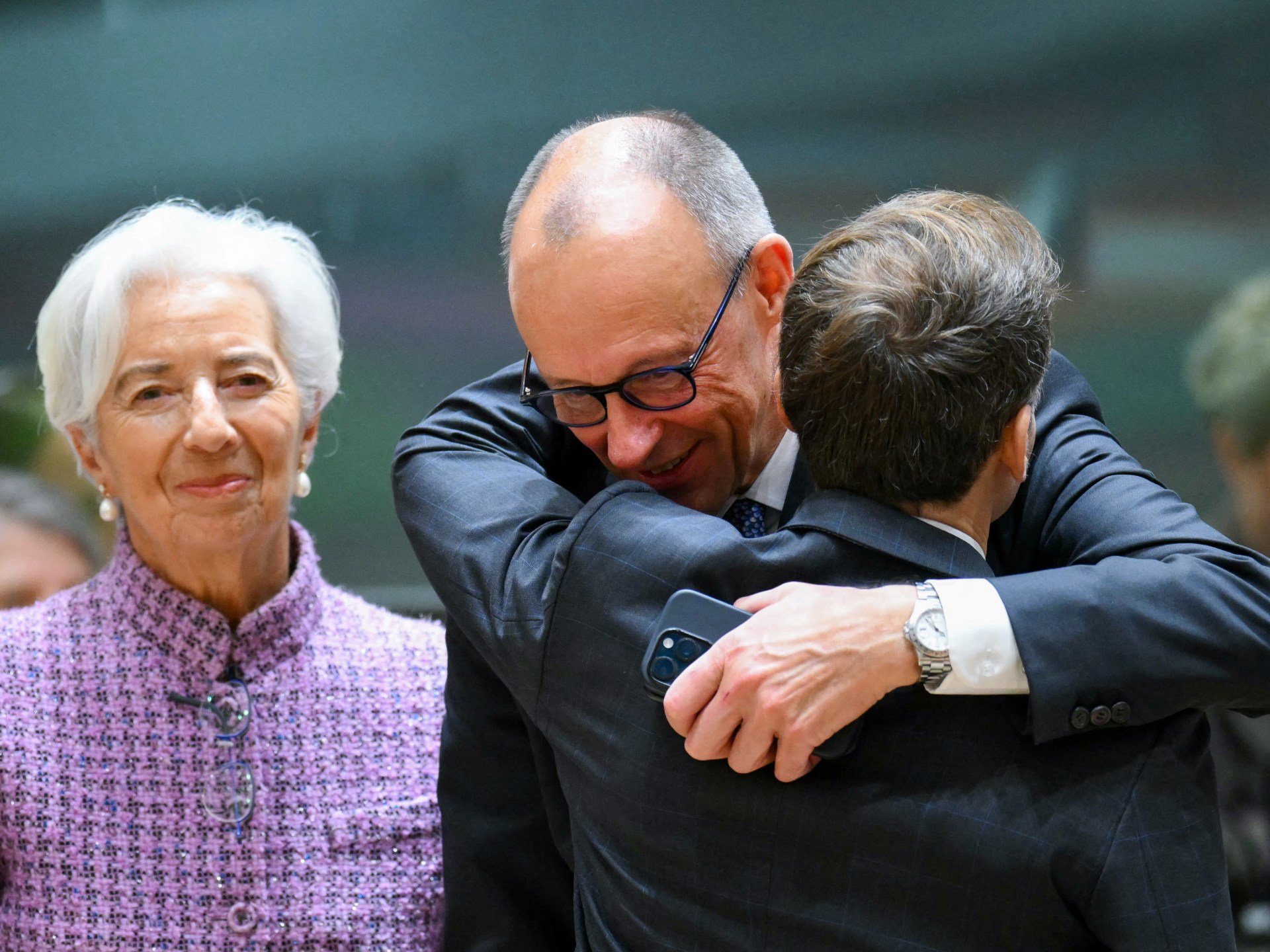
European Union leaders are struggling to agree on the bloc’s nearly $1.76 trillion budget for 2028‑2034 and a new $49 bn loan for Ukraine. The differences were evident at an extraordinary summit in Brussels on Thursday, where some leaders called for tighter spending while others defended traditional policies that consume large parts of the budget. Most, however, wanted extra funds for new priorities and to help Ukraine almost five years into the war.
German Chancellor Friedrich Merz said, “Europe needs solid finances. We can’t and we mustn’t take on more debt,” while noting that “there is a series of tasks we must fulfil reliably.” He added that the priorities must be a flourishing economy, a fully developed internal market, and better defence.
Italy’s Prime Minister Giorgia Meloni and Hungary’s Prime Minister Peter Magyar were more forthright. Meloni told reporters, “We’re light‑years away from a solution. We are not willing to sign off on a budget under which we would have to give more to receive less.” Magyar posted on Facebook that “the chance of an agreement today is virtually zero, but a Christmas agreement does not seem likely either.”
The new joint spending package is small compared with national budgets and is financed mostly by the 27 member countries based on the size of their economies. It requires unanimous approval from all member states. Although the budget starts in 2028, leaders want a deal by year‑end because elections next year in France, Italy, Poland, Greece, Estonia, Finland and Slovakia could complicate negotiations. Dutch Prime Minister Rob Jetten said he was ready for a marathon that could end today, tomorrow or in December.
European Council President Antonio Costa, chairing the summit that could run into Friday, called on leaders to approach the debate with an “open mind, a constructive approach and the sense of compromise.” He said an agreement is needed “by the end of this year and for this we need to reach unanimity.”
Ukraine is a major part of the EU’s budget puzzle. The spending package foresees $110 bn for the Ukrainian government over seven years. Leaders must also decide on the new loan and whether the costs of servicing it should be drawn from the budget. Earlier this month, Merz threatened to hold up a budget agreement if no “collective commitment” was made to Ukraine by all member countries, “without exception.” Bulgaria, the Czech Republic, Hungary and Slovakia oppose using funds for military aid to Ukraine. Merz repeated his warning on Thursday and said that “we will talk about this in depth in one‑on‑one talks.” He added, “We must ensure that Ukraine receives sufficient support in the coming years. I don’t think anyone in Europe can have any interest in seeing new waves of refugees from Ukraine if this war does not come to an end.”
Nearly a year ago, EU leaders endorsed a loan of $99 bn to cover most of the Ukrainian government’s needs for two years. Russia’s intensified attacks on energy and civilian infrastructure, along with disruptions to Black Sea trade, are straining Ukraine’s finances.
Frequently asked questions
What is the size of the EU's 2028‑2034 budget?
The budget is nearly $1.76 trillion.
How much funding is planned for Ukraine in the EU budget?
The spending package foresees $110 bn for the Ukrainian government over seven years.
What is the new loan amount for Ukraine?
The new loan is $49 bn.