World
Ukraine Orders Civilians to Evacuate Key Donbas Cities Amid Intensifying Russian Assault
By Today News Hours Editorial Desk
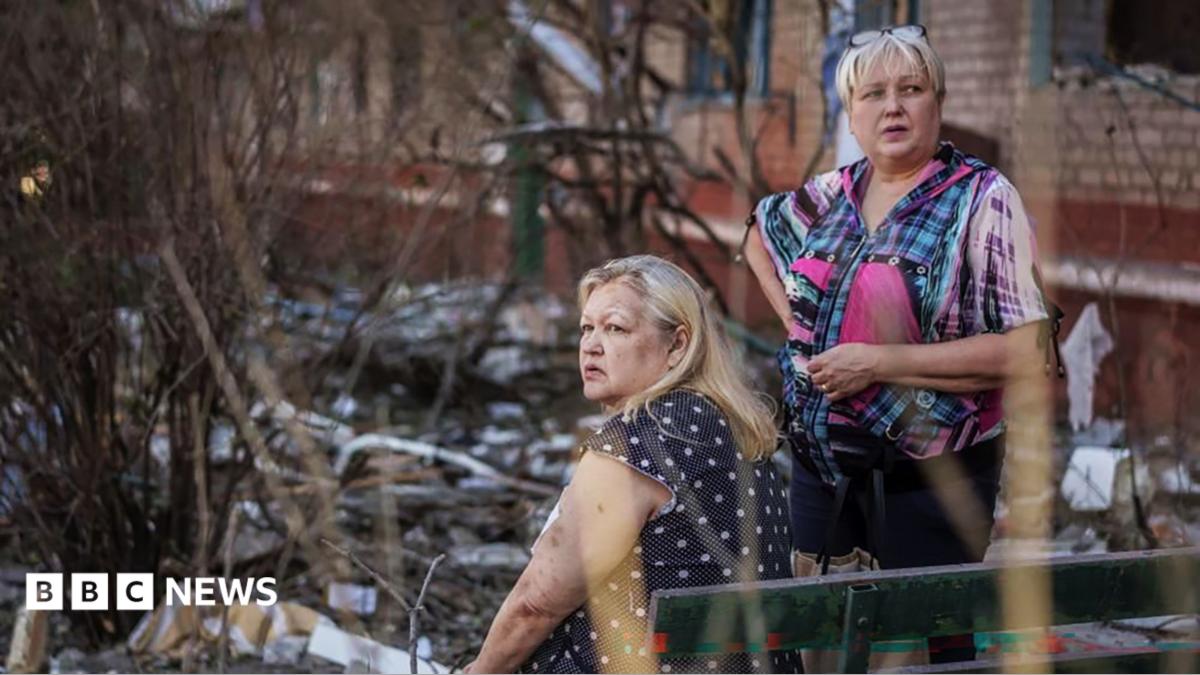
Authorities in eastern Ukraine have urged civilians to evacuate the cities of Slovyansk and Kramatorsk as security conditions rapidly deteriorate, according to Donetsk police official Pavlo Dyachenko. These two neighboring cities remain the largest urban centers in the Donbas region still under full Ukrainian control. Forced evacuations of families with children have already begun in the hardest-hit areas, Dyachenko said, describing the move as essential for survival given the worsening danger. He noted that Slovyansk, once struck by glide bombs about once a week, is now hit almost daily.
Slovyansk, Kramatorsk, and the nearby city of Kostyantynivka form part of Ukraine's so-called "fortress belt," a network of heavily fortified defensive positions in the east. However, reports indicate that Ukrainian troop presence in Kostyantynivka has dwindled significantly, with Russia claiming full control over the city.
Seizing the entire Donbas region, which comprises Donetsk and Luhansk, remains a central goal for Moscow, which has repeatedly framed the invasion as a mission to "liberate" and "protect" the predominantly Russian-speaking population there. Russian forces already control nearly all of Luhansk and approximately 80% of Donetsk, where the three fortress cities are located. Ground operations near Kramatorsk and Slovyansk have been a primary focus for Russian forces in recent months, as capturing them could open the way for further advances westward.
Both cities are now enduring heavy drone and bombing attacks. Many residents have already fled, and major roads are lined with anti-drone netting, according to Viktor Makurin, a volunteer from London. He described the constant threat of drone strikes, saying travel through the city has become extremely dangerous due to drones positioned along roadways, alongside continuous explosions and counter-drone gunfire.
Casualty figures compiled by Ukrainian police show a sharp rise in civilian injuries in the two cities, climbing from 70 in June to 212 in August. Fatalities were recorded at 16 in June, 20 in July, and 15 in August. Dyachenko noted that residential buildings and infrastructure have suffered extensive damage from the strikes.
Data reviewed by the BBC shows the number of glide bombs deployed by Russian forces rose sharply, from 40 in June to 109 in July and 92 in August. On August 25, nine glide bombs struck Kramatorsk, with seven hitting residential apartment buildings and injuring 24 people, including a two-month-old infant, police reported. Two days later, the city was struck again with seven more glide bombs, while five hit Slovyansk.
Glide bombs, equipped with wings that allow them to travel toward targets rather than simply fall, are regarded as among the most destructive weapons in Russia's arsenal. They typically weigh between 250 and 500 kilograms, though heavier 1,500-kilogram versions have also been used. "The devastation they cause is simply incredible," Dyachenko said. British volunteer John Auckland Abbey described the bombs as "silent killers," noting the anxiety of waiting to see whether a second explosion will strike closer after the first.
Kramatorsk currently serves as the seat of the Donetsk regional administration, a role it assumed after Russian-backed separatists seized the original capital, Donetsk, in 2014.
The future of the remaining Ukrainian-held areas of Donbas was reportedly a major topic of discussion when U.S. envoys Steve Witkoff and Jared Kushner met with Ukrainian President Volodymyr Zelensky last weekend, following their earlier talks with Russian President Vladimir Putin. Witkoff has previously appeared sympathetic to Russian claims over the region, but Zelensky has refused to withdraw Ukrainian forces. He stated that Putin has instructed his military to complete the occupation of Donbas by the end of the year, adding that "Putin's primary objective on the front line remains the same: Kostyantynivka-Slovyansk."
In response to the mounting pressure, Zelensky has established two new military task forces, led by experienced generals Andriy Biletsky and Denys Prokopenko, to help defend the remaining Ukrainian-controlled portions of Donbas. An unnamed Ukrainian general described the stakes as extending beyond a single regional battle, calling it "probably the main battle of this year and the next."