World
Twenty-Five Years After 9/11: How Intelligence Agencies Learned—and Failed to Learn—From History's Deadliest Terror Attack
By Today News Hours Editorial Desk
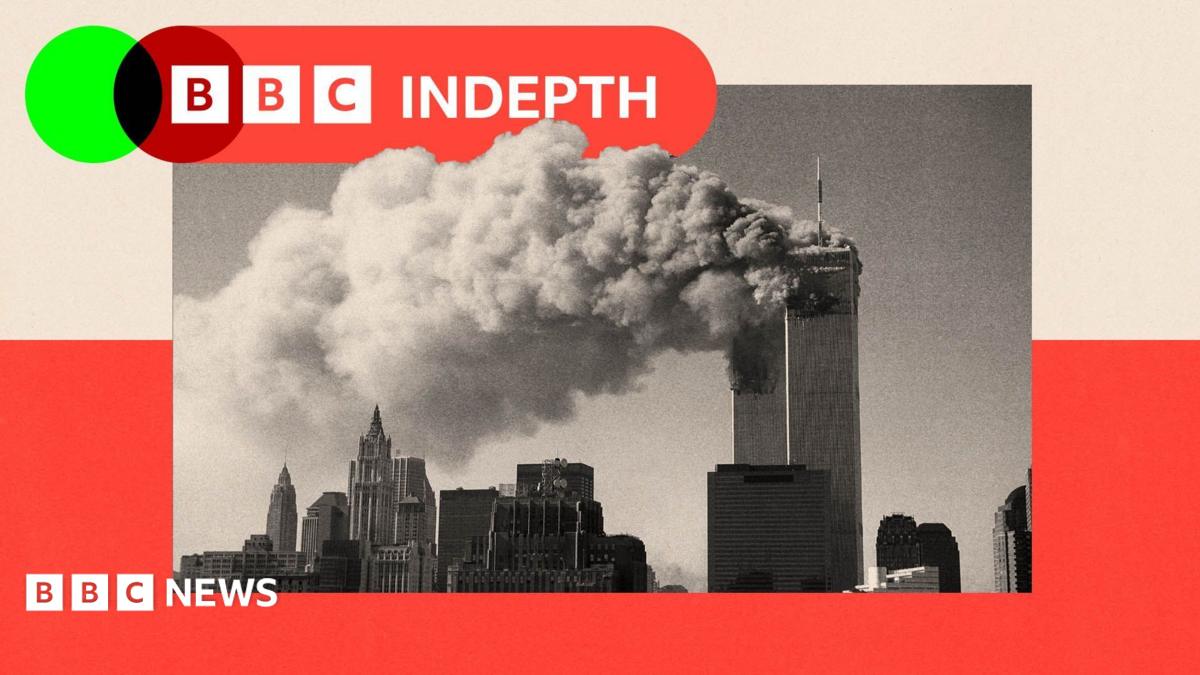
Governments are entrusted with protecting their citizens, but on September 11, 2001, the United States failed catastrophically in that duty. Intelligence about the threat existed beforehand, yet no one connected the pieces in time to prevent al-Qaeda's suicide pilots from flying hijacked planes into the World Trade Center, killing 2,977 people.
The CIA had tracked al-Qaeda and its exiled Saudi leader, Osama bin Laden, for years before the attacks and even maintained a dedicated task force to hunt him. Nine days after the attacks, President George W. Bush declared the "War on Terror," launching a new era of foreign, security and intelligence policy that would define the first two decades of this century.
In the 25 years since, Western intelligence agencies have notched numerous successes—foiled plots, arrests, convictions—alongside significant failures. The 9/11 Commission Report concluded the attacks resulted from "failures of imagination, policy, capabilities and management," faulting the CIA and FBI for not properly sharing intelligence or taking sufficient action to disrupt the plot.
That lesson has largely, if imperfectly, been absorbed. Cooperation between agencies has improved dramatically. In the UK, rivalries between MI5 and police counter-terrorism units have given way to regional "fusion centres" and, more recently, the Counter Terrorism Operations Centre in London, where MI5 officers work alongside police, FBI agents and GCHQ linguists. In the US, the National Counter Terrorism Center and a Director of National Intelligence now help coordinate information across 18 intelligence agencies. The CIA-MI6 relationship remains among the closest in the world, reinforced by the Five Eyes intelligence-sharing alliance between the US, UK, Canada, Australia and New Zealand.
Despite these reforms, serious intelligence and strategic failures have continued. Ahead of the 2003 Iraq invasion, MI6 allowed its intelligence to become politicized, supplying flawed assessments to Prime Minister Tony Blair's government under pressure from Washington to prove Iraq possessed weapons of mass destruction. Iraq had once had such weapons, but they were destroyed after the 1991 Gulf War. The episode severely damaged MI6's reputation—its worst setback since the Cold War-era betrayals by double agent Kim Philby.
"The [2003] Iraq war was based on deeply flawed intelligence," said General Sir Richard Shirreff, who served as a divisional commander in Iraq. "Have we learnt from it? No, I think we're bad at learning." The subsequent Butler Review found the UK's intelligence on Iraq's alleged weapons program was "seriously flawed and heavily reliant on unverified sources." MI6 later restructured how it evaluates raw intelligence, separating agent runners from analysts who verify and challenge incoming reports.
MI5 has also faced setbacks. Lord Jonathan Evans, who led the agency from 2007 to 2013, noted that after 9/11, al-Qaeda-linked terrorism was assessed as the UK's primary threat, even as MI5 juggled more than 20,000 "Subjects of Interest." The agency failed to prevent the 2005 London bombings, which killed 52 people, despite being aware of ringleader Mohammed Sidique Khan, and the 2017 Manchester Arena attack. Evans said the threat landscape has since shifted: "State threats... have become increasingly serious and are at least as severe a national security concern as non-state terrorism," citing Russia, Iran, China and their proxies.
Some analysts also point to President Donald Trump's decision to join Israel in striking Iran this year as a strategic misjudgment, given widespread warnings that Iran would retaliate by closing the Strait of Hormuz—which it did, disrupting global energy markets.
The post-9/11 era also produced serious human rights controversies. Fearing further attacks, the US and allies detained numerous suspects, often on weak evidence, transporting many to Guantanamo Bay, Cuba, where they were held without trial. Prisoner abuse scandals in Iraq and Afghanistan later came to light, though critics argue senior officials avoided accountability. The US continues to hold detainees without trial at Guantanamo and in 2025 deported more than 200 men to El Salvador's Terrorism Confinement Center. Britain had its own reckoning: MI6's involvement in the 2004 rendition of Libyan Islamist Abdelhakim Belhaj and his wife to Libya, where he was tortured under Gaddafi's regime, led to a formal government apology in Parliament in 2018.
Meanwhile, as Western agencies focused on counter-terrorism, rival powers advanced militarily. Sir Alex Younger, MI6 chief from 2014 to 2020, said: "We spent the first 20 years of this century focussing almost entirely on counter-terrorism and counter-insurgency... We missed the rise of China as a military power and as a strategic challenge." General Shirreff similarly predicted Russia's invasion of Ukraine in his 2016 novel "War With Russia." During this period, Russia and China pursued major rearmament programs, including hypersonic missile development, eroding NATO's traditional military edge.
Sam Olsen, chief analyst at security firm Sibylline, said the West's error extended beyond distraction: "It also misunderstood the nature of China's rise, assuming that economic integration would lead to political convergence." He added that intelligence gathering on China faces a different challenge: "The bigger danger is that it sees the individual pieces without always understanding what they add up to... the problem is often less a failure of intelligence collection than a failure of strategic interpretation."
Advances in biometric technology—facial, iris and gait recognition—have also made it far harder for agents to cross borders undetected in