India
Centre Disburses ₹4,385 Crore Under PLI Auto Scheme in FY27
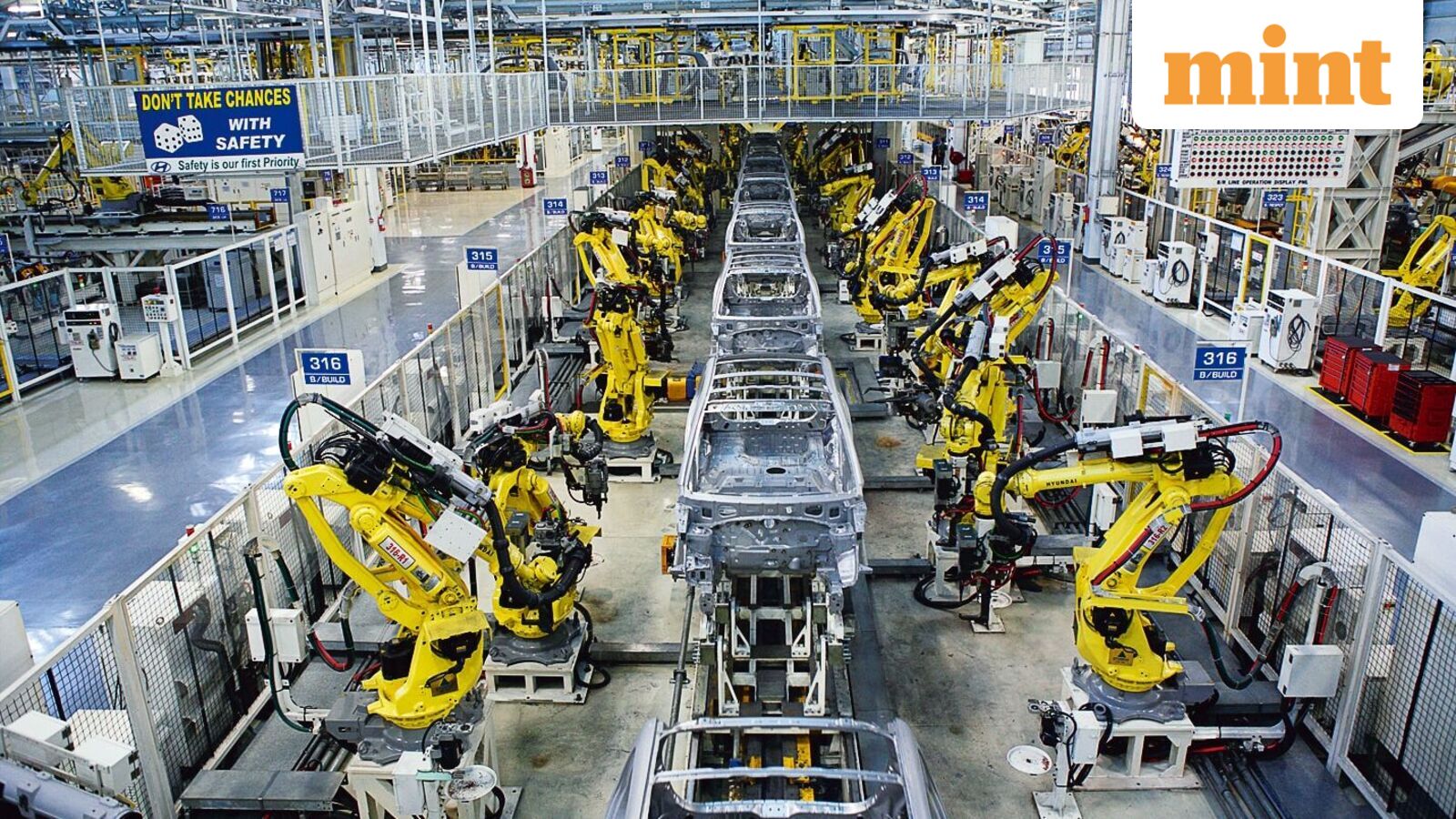
The Indian government has released ₹4,385 crore under its production‑linked incentive (PLI) scheme for automobiles and auto parts as of 25 November, marking a sharp increase in payouts for a program that has previously faced concerns about slow fund utilisation. According to a ministry statement, cumulative incentives paid under the ₹25,938 crore PLI Auto scheme have risen to ₹6,771 crore since the scheme began in fiscal year 2025 (FY25), representing about 26 % of the total outlay as of November 2026. The scheme, the largest outlay run by the ministry, will continue to provide incentives until FY29.
As of November, nine automakers and ten auto component manufacturers are eligible for incentives. The latest addition is the Indian arm of South Korean automaker Hyundai Motor, which received government approval in September to claim incentives for two models of its electric Creta car. The PLI Auto scheme offers incentives to manufacturers on sales of zero‑emission vehicles, including electric vehicles and some hydrogen‑based vehicles, with the aim of reducing manufacturing costs and improving margins.
The ministry has previously faced questions over low budget utilisation from the Rajya Sabha’s department‑related standing committee on industry. In March, the parliamentary panel, headed by MP Tiruchi Siva, highlighted under‑utilisation of budget estimates for the PLI Auto scheme, the ₹18,100 crore PLI scheme for batteries, and the ₹11,900 crore PM E‑Drive electric vehicle subsidy scheme, all of which had seen reductions of more than 30 % between budget estimates (BE) and revised estimates (RE) in multiple years. The ministry responded that the initial under‑utilisation was due to the time required for automakers to invest in cleaner vehicle manufacturing, delaying sales‑based incentives.
Under the original disbursement plan, payouts were targeted at ₹604 crore in the first year, ₹3,150 crore in the second, ₹5,925 crore in the third, ₹7,199 crore in the fourth and ₹9,060 crore in the fifth year. Against these targets, the government’s budget estimates stood at ₹3,500 crore in FY25, ₹2,818 crore in FY26 and ₹5,939 crore in FY27.
The acceleration in incentive disbursements comes as electric vehicle adoption in India gains momentum. EV registrations rose to 2.55 million in FY26, up from 2.04 million in the previous fiscal year, according to the government’s VAHAN registry of new vehicles. Based on its analysis of 2025 data, the International Energy Agency (IEA) ranks India as the world’s second‑largest electric two‑wheeler market, the largest electric three‑wheeler market and the third‑largest electric bus market. India aims to become a net‑zero carbon emitter by 2070; transport accounts for 12 % of the country’s carbon emissions, according to the IEA. A shift toward electric vehicles could also help reduce India’s dependence on imported oil, which currently meets about 90 % of the country’s oil requirements through imports.
Frequently asked questions
How much total incentive has been paid under the PLI Auto scheme as of November 2026?
₹6,771 crore, about 26 % of the total outlay.
Which new automaker was added to the PLI Auto scheme in September?
Hyundai Motor’s Indian arm received approval to claim incentives for two models of its electric Creta car.
What were the original disbursement targets for the PLI Auto scheme?
₹604 crore in the first year, ₹3,150 crore in the second, ₹5,925 crore in the third, ₹7,199 crore in the fourth, and ₹9,060 crore in the fifth year.