India
Udaipur’s Lakes Shrink Amid Low Monsoon, Threatening Tourism and Water Supply
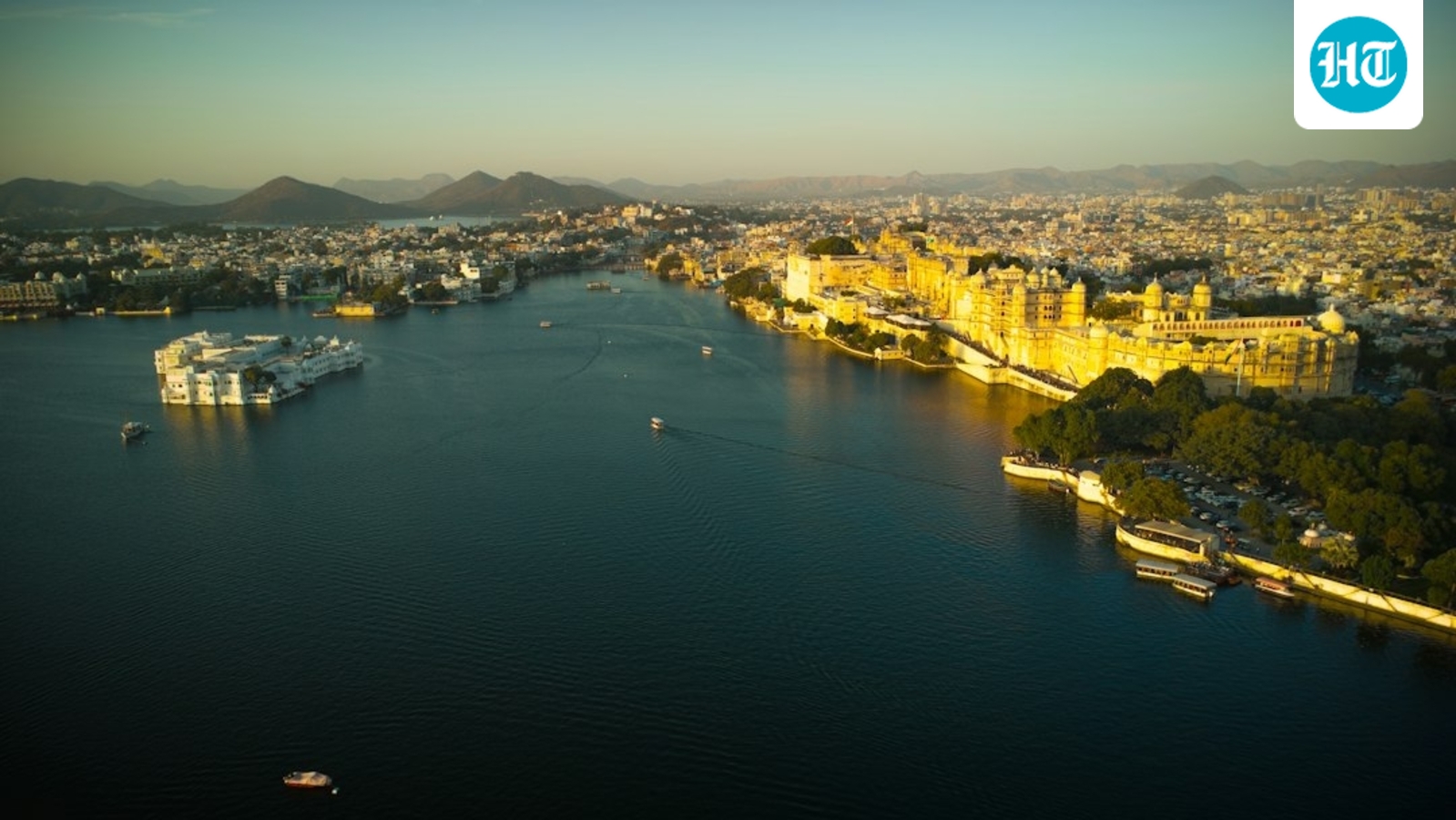
Water storage in the larger Udaipur water resources zone, which includes 178 reservoirs, fell to 814.99 million cubic metres (MCM) in November, representing only 44.04 % of total capacity, according to the Rajasthan Water Resources Department (WRD). The decline follows a deficient monsoon and has raised concerns about the city’s tourism‑dependent economy and drinking water supply.
Fateh Sagar and Swaroop Sagar, which were full in November last year, now show significant drops in water levels. Fateh Sagar’s gauge, designed for 13 ft, fell from 5.51 ft in October to nearly 4 ft in November, leaving 60.83 % of its capacity. Swaroop Sagar, with a full gauge of 11 ft, recorded 7 ft in November, down to 63 % of capacity from 100 % last year. Udai Sagar (full gauge ~24 ft) was at 21 ft, 80 % of capacity, while Goverdhan Vilas (full gauge ~9 ft) held only 47 %.
The WRD also reported that 15 medium and small reservoirs in Udaipur district dropped 42 % year‑on‑year in November, from 271.48 MCM to 151.43 MCM. Reservoirs such as Badgaon, Vallabhnagar, Aakodra and Ghasa, which were full last year, now hold 38.17 %, 50.34 %, 7.60 % and 19.59 % of their capacities, respectively. Sei Dam and Mansi Wakal hold 24.31 % and 49.53 % of their capacities.
Rainfall data show that between June and early October, Swaroop Sagar received 236 mm, while the catchment area Nai received 272 mm. Udaipur city recorded 327 mm, Girwa 315 mm, Dewas 355 mm, Sei Dam 392 mm and Udai Sagar 393 mm.
Tourism operators warn that the low water levels could reduce visitor numbers and increase operational costs. A local restaurant owner noted that the peak season is being affected by inadequate rainfall. Boating operators on Lake Pichola fear that further declines may force them to suspend services.
Environmentalist Anil Mehta explained that Udaipur’s lakes form an interconnected system. Fateh Sagar is fed by the Chhota Madar and Bada Madar reservoirs via the Madar Canal, and by Badi Talab through the Upli Badi and Hawala Kalan canals. When Pichola fills, surplus water flows into Fateh Sagar through a link canal after the Kala Kiwad gates open, and excess from Fateh Sagar flows into Udai Sagar via the Ayad River. Catchment areas such as Nai, Bujhra and Kodiat normally supply water to the Sisama River, which feeds Pichola through the Nandeshwar channel. This year, inadequate rainfall in those areas has reduced river inflows.
The Rajasthan High Court, on 5 June, took suo motu cognisance of ecological threats to Udaipur’s lakes, citing encroachments, unregulated construction, pollution, catchment degradation and disrupted drainage. The court ordered comprehensive inspections and detailed reports on the ecological condition, geographical extent, catchment areas, hydrological connectivity and conservation status of lakes including Pichola, Fateh Sagar, Swaroop Sagar, Rang Sagar, Roop Sagar, Doodh Talai, Goverdhan Sagar, Badi and Udai Sagar.
The Public Health Engineering Department (PHED) reports that negligible inflows into surface water sources are affecting drinking water supply. A PHED officer said the situation is concerning but not as severe as the 2005 crisis, and that Udaipur has not yet been declared drought‑affected. Local resident Geeta Devi recalled the 2005 water crisis, noting that water supplies now come less frequently and borewell levels have dropped. She warned that if the trend continues, the city could face a similar crisis.
All necessary measures are being taken to address the situation, according to the PHED officer, who spoke on condition of anonymity.
Frequently asked questions
What was the water storage level in Udaipur's water resources zone in November?
814.99 million cubic metres, 44.04 % of total capacity.
Which lakes are most affected by the low monsoon?
Fateh Sagar, Swaroop Sagar, Udai Sagar, and Goverdhan Vilas have dropped to 60.83 %, 63 %, 80 %, and 47 % of capacity respectively.
How is the drinking water supply affected?
Negligible inflows into surface water sources are affecting drinking water supply; PHED said the situation is concerning but not as severe as the 2005 crisis.