India
India Rejects Pannun’s Lawsuit, US Judge Orders Delhi Courts to Serve Summonses
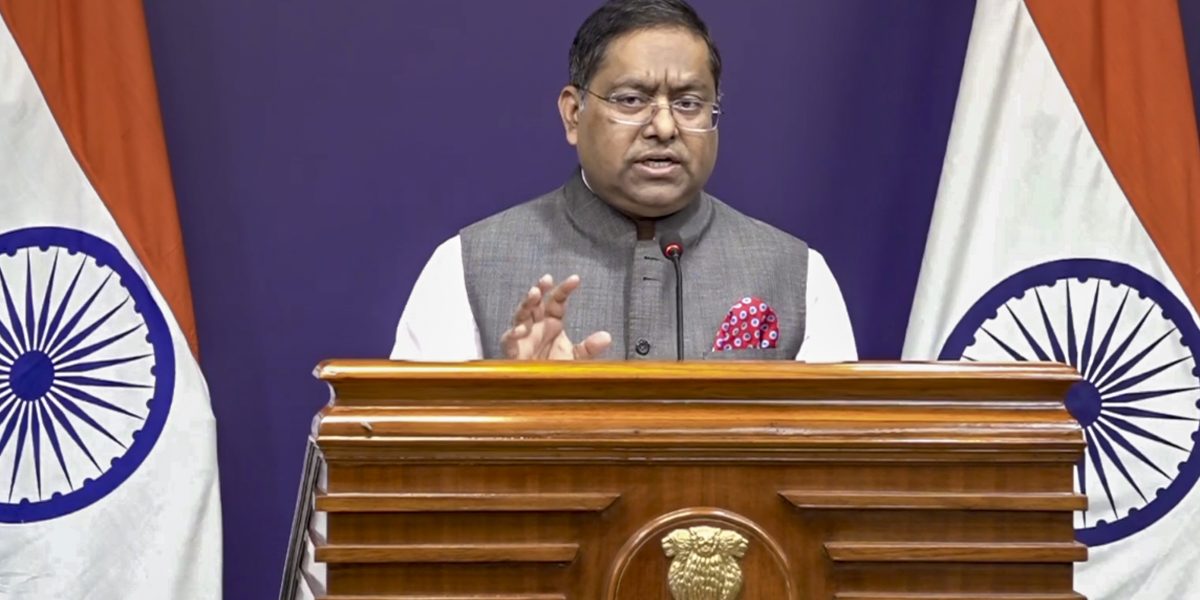
In New Delhi, the Ministry of External Affairs reiterated that the civil lawsuit filed by Sikh separatist Gurpatwant Singh Pannun against the Indian government and officials is baseless. “I had stated from this very platform that we reject such baseless lawsuits. That continues to be our position on the matter,” spokesperson Randhir Jaiswal said on Friday, November 20.
Earlier in the month, on November 9, Judge Katherine Failla of the U.S. federal court for the Southern District of New York granted Pannun’s request to have summonses for national security adviser Ajit Doval and former RAW secretary Samant Goel transmitted by the American judiciary to Delhi courts that have jurisdiction over the addresses where the duo is believed to reside.
Pannun, an American and Canadian citizen and general counsel for the pro‑Khalistan Sikhs for Justice organization, filed the civil lawsuit in 2024 naming the Indian government, Doval, Goel, former RAW officer ‘Vikram’ Yadav, Nikhil Gupta and 50 unnamed individuals. He accuses them of conspiring to kill him in retaliation for his advocacy of a separate Sikh country.
U.S. prosecutors have alleged that Yadav—whose real name is Vikash—planned a murder plot against Pannun at his New York home, a plan that was foiled by American law enforcement. That criminal case, which entered the public eye in 2023, is separate from Pannun’s civil suit.
Judge Victor Marrero of the same federal court sentenced Indian national Gupta to 19 years and seven months in prison for murder‑for‑hire, conspiracy to commit murder‑for‑hire and conspiracy to commit money laundering. Yadav’s whereabouts remain unknown.
In her November 9 order, Judge Failla agreed with Pannun that Article 19 of the Hague Convention on the Service Abroad of Judicial and Extrajudicial Documents allows summonses in his civil suit to be served through the Indian judiciary. Article 19 permits countries party to the Convention—such as India and the U.S.—to retain domestic laws that allow the transmission of foreign judicial documents for service within their territories by methods not otherwise mentioned in the Convention.
Judge Failla identified section 29(c) of the Code of Civil Procedure (CPC) as the relevant Indian law. The provision allows civil courts outside India that the Union government has notified as applicable under the Code to send summonses to Indian courts, which can then serve them as if they were issued by the Indian courts. In 2009, the government notified all civil courts in other Hague Convention parties as covered by section 29(c).
On November 13, Judge Failla accepted Pannun’s packet of submissions, including the summonses to Doval and Goel, and directed the court’s clerk to deliver them to the Patiala House, Tis Hazari and Dwarka courts in Delhi. She requested the three courts to accept the summonses and other documents and to serve them to Doval and Goel in accordance with the relevant procedures, and to provide a written record of the proceedings.
Pannun’s attempt to serve his summonses via the court‑to‑court route followed his lawyers’ failure to serve Doval in person during his 2023 U.S. visit. They also tried to serve Doval, Goel and Yadav through the Union law and justice ministry, India’s central authority under Article 5 of the Hague Convention, which provides that a central authority shall itself serve or arrange to serve summonses. Pannun claimed that the ministry returned his documents on the grounds that they did not fall within the relevant categories.
Weeks before Judge Failla’s orders, the Department of State informed the court on October 20 that it had transmitted the summons to and complaint against the Union government.
MEA spokesperson Jaiswal said on November 10 that India rejects the “fabricated and malicious attacks on our high officials” as well as Pannun’s “frivolous” lawsuit. “Requests for serving of judicial documents in India can only be routed through India’s designated Central Authority, that is the Ministry of Law and Justice,” he added.