Business & Finance
Apple's AirPods 5 Launch Puts Spotlight on $20 Upgrade Choice for Investors
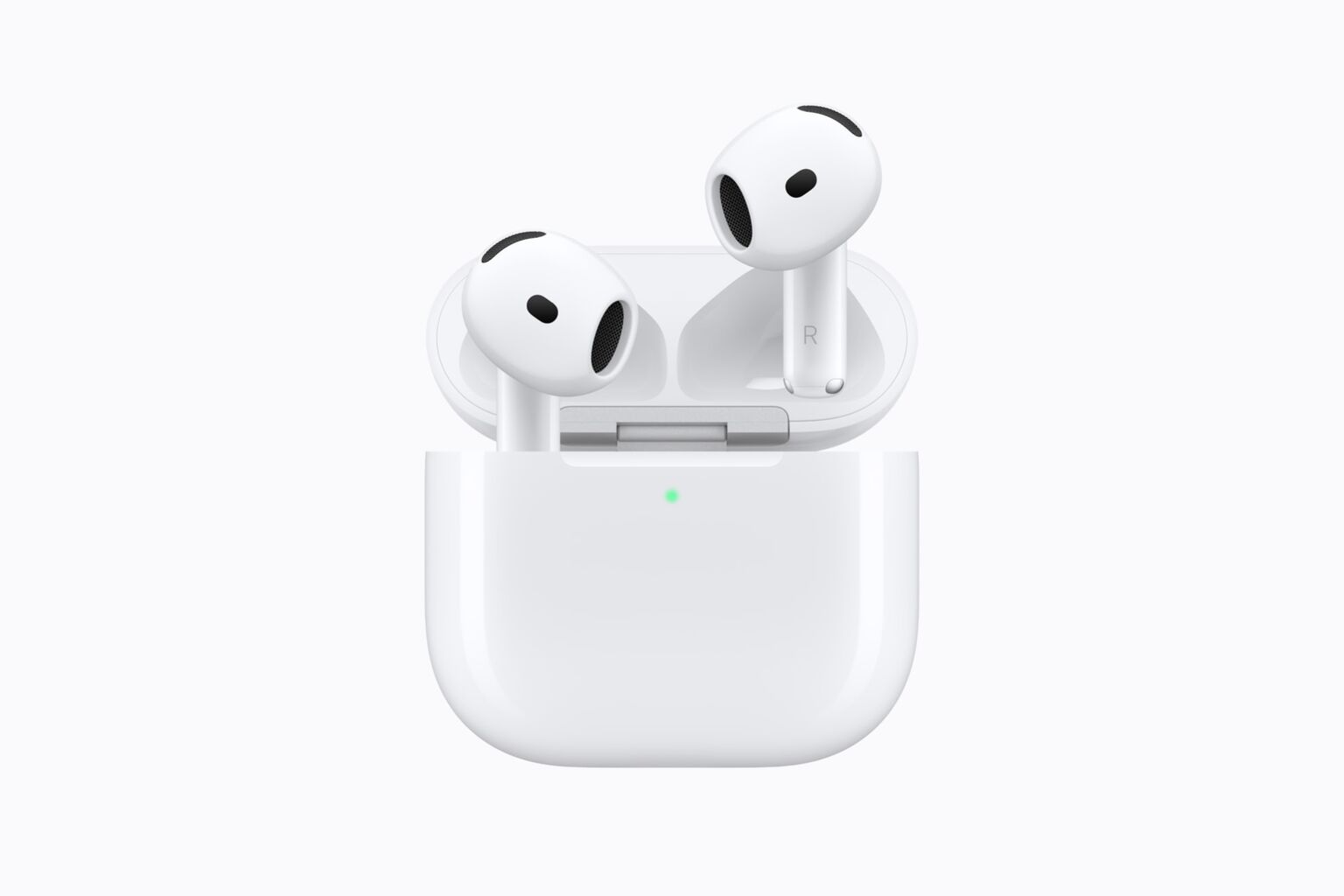
Apple has opened preorders for its new AirPods 5 earbuds, priced at $129 for the base model and $149 for a version that includes a wireless charging case. Both models are set to arrive in stores on September 18.
For Apple investors, the key question surrounding the launch is not the performance of the new Active Noise Cancellation (ANC) feature, but whether enough buyers will pay the additional $20 to preserve the product line's average selling price after Apple significantly reduced its entry-level pricing.
The $20 difference between the two models represents a 15.5% price premium. If one million customers chose the pricier option, it would generate an additional $20 million in retail revenue before taxes, discounts, and returns. That figure would rise to $200 million across 10 million buyers. Apple does not release unit sales or gross margin figures for AirPods, so the actual buyer mix remains unknown, though the math illustrates why the two-tier pricing structure carries significance.
According to Apple's announcement, both AirPods 5 models include open-ear ANC, Adaptive Audio, Transparency mode, Live Translation, and hands-free Siri AI capabilities. The $149 version adds wireless charging, on-stem volume controls, and extended battery life.
This pricing marks a notable shift from the previous generation. When Apple released AirPods 4 in 2024, the base model was priced at $129, while the ANC-equipped version cost $179. AirPods 5 reduces the cheapest path to ANC by $50, a 27.9% decrease. Even the $149 model represents a $30, or 16.8%, reduction compared to the prior ANC tier.
While this pricing strategy could boost demand, it also raises concerns about margins, as Apple has effectively moved a previously premium feature into its entry-level product without increasing the base price. To avoid diluting AirPods profitability, Apple will need some combination of higher sales volume, strong demand for the $149 model, or reduced component costs.
The distinction between the two models is narrow. Apple's comparison materials confirm ANC is available on both versions. The $149 model's additional features include compatibility with Apple Watch chargers and Qi-compatible pads, a volume-swipe control on the stem, up to five hours of listening time with ANC enabled (compared to four hours for the base model), and up to 22 hours of total battery life with the case.
Essentially, the $20 premium covers convenience and battery life rather than improved noise cancellation performance. This makes the sales mix a test of Apple's pricing power, as customers must decide if these added conveniences justify the 15.5% price increase.
Supporters of the pricing strategy suggest the upgrade may carry favorable profit margins since its additional features are concentrated in the case and control mechanisms. However, without published component cost data, it's equally possible that strong sales at the lower $129 price point could offset any margin benefits from upgrade purchases. Definitive conclusions about margins would require additional data from teardown analyses or company statements.
Apple does not report AirPods as a standalone business, instead including them within its Wearables, Home and Accessories category. This category generated $7.883 billion in revenue during fiscal Q3, representing 6% year-over-year growth. For the first nine months of fiscal 2026, category revenue grew just 2%, reaching $27.277 billion. The most recent quarter's figure accounted for approximately 7.2% of Apple's total revenue.
This context helps frame the potential impact of the $20 upsell. Even a hypothetical $200 million in additional revenue from 10 million upgrade purchases would represent only about 2.5% of one quarter's category revenue, and such purchases would likely be spread across multiple quarters rather than concentrated in one.
Two upcoming dates are particularly relevant for investors: Siri AI will begin rolling out in beta with iOS 27 on September 14, and AirPods 5 will become available in stores on September 18. Some AI features require a compatible Apple Intelligence device along with supported language and region settings, meaning not all buyers will have access to the same functionality at the $129 price point.
Investors are expected to monitor preorder delivery timelines, early product availability, and the holiday quarter performance of the Wearables, Home and Accessories category for further insight.
Apple's stock (AAPL) closed Thursday at $326.57, up 3.56%, with approximately 69.8 million shares traded, according to regular-session market data. However, this movement should not be attributed solely to the AirPods launch, as Apple's event featured multiple major product announcements, making it difficult to isolate the stock's reaction to any single device.
Strong demand for the $149 model would support the notion that Apple can lower the entry price for a premium feature while maintaining its overall pricing mix. Conversely, if demand remains concentrated at the $129 price point, it could still benefit customer retention within Apple's ecosystem, but would leave questions about profit margins unresolved.