Politics
BJP and SAD Re‑unite Ahead of Punjab Elections, Raising Questions on Vote Dynamics
By Nishant Ranjan, Roshan Kishore
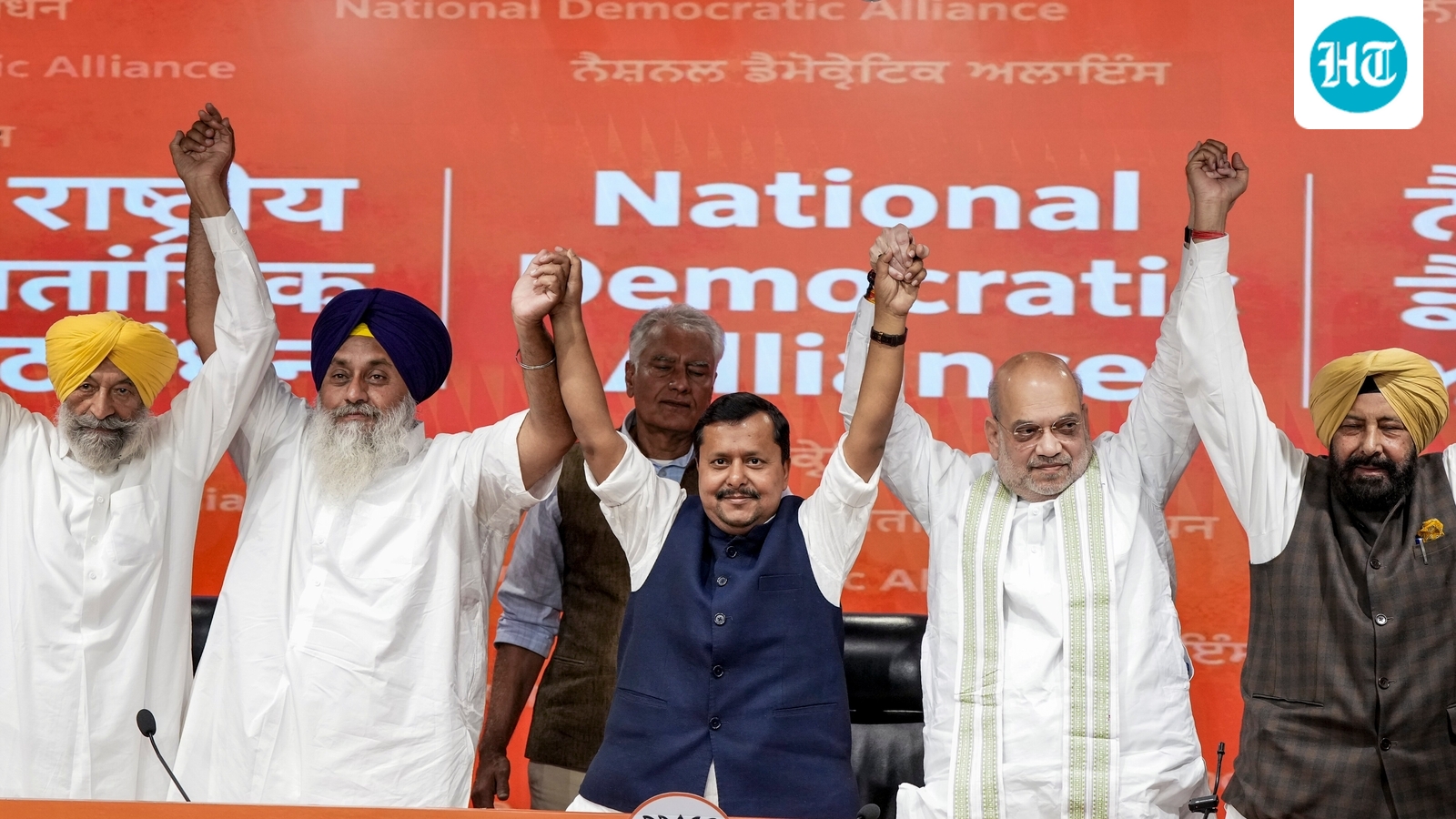
The Bharatiya Janata Party (BJP) and the Shiromani Akali Dal (SAD) announced a renewed alliance on Tuesday, ahead of the Punjab assembly elections. The partnership had ended in 2020 when the SAD withdrew from the National Democratic Alliance (NDA) in protest over the then‑farm laws, which were later withdrawn. The break had cost both parties politically; in the 2022 assembly and 2024 Lok Sabha elections the combined BJP‑SAD vote share was only 4.3% and 7.7% of assembly and parliamentary constituencies respectively, the lowest for either party in recent history.
The BJP‑SAD coalition had previously governed Punjab in 1997, 2007 and 2012, with Parkash Singh Badal serving as chief minister. The alliance first formed in the 1996 Lok Sabha elections and had won the highest number of assembly and parliamentary seats in six of the 12 elections held between 1996 and 2019.
Punjab’s political landscape is highly fragmented. In the 2022 assembly elections the median Effective Number of Participants (ENOP) was 3.23, the highest among Indian states and union territories with at least seven parliamentary constituencies. The rise in fragmentation is largely attributed to the entry of the Aam Aadmi Party (AAP) in 2014 and the subsequent split between the BJP and SAD.
The Congress party won seven of the 13 parliamentary seats in Punjab in the 2024 Lok Sabha elections with a 26% vote share, achieving the highest seat‑to‑vote share ratio among major parties in the state since 2014. If the BJP and SAD votes were combined at the parliamentary level, their hypothetical alliance would have secured 32% of the vote and 48.7% of seats when results are disaggregated at the assembly constituency level.
While the mathematical case for re‑forming the alliance is strong, lingering tensions from the farmers’ protests and ongoing infighting within the Congress party may influence the electoral outcome. The renewed partnership could alter the competitive dynamics in Punjab’s upcoming elections.
The article was written by Roshan Kishore, Data and Political Economy Editor at Hindustan Times, who leads the newsroom’s data journalism team and writes the weekly political economy column "Terms of Trade" for HT Premium.