Sports
Sabalenka and Rybakina Set for Rematch in US Open Final
By Cole Bambini
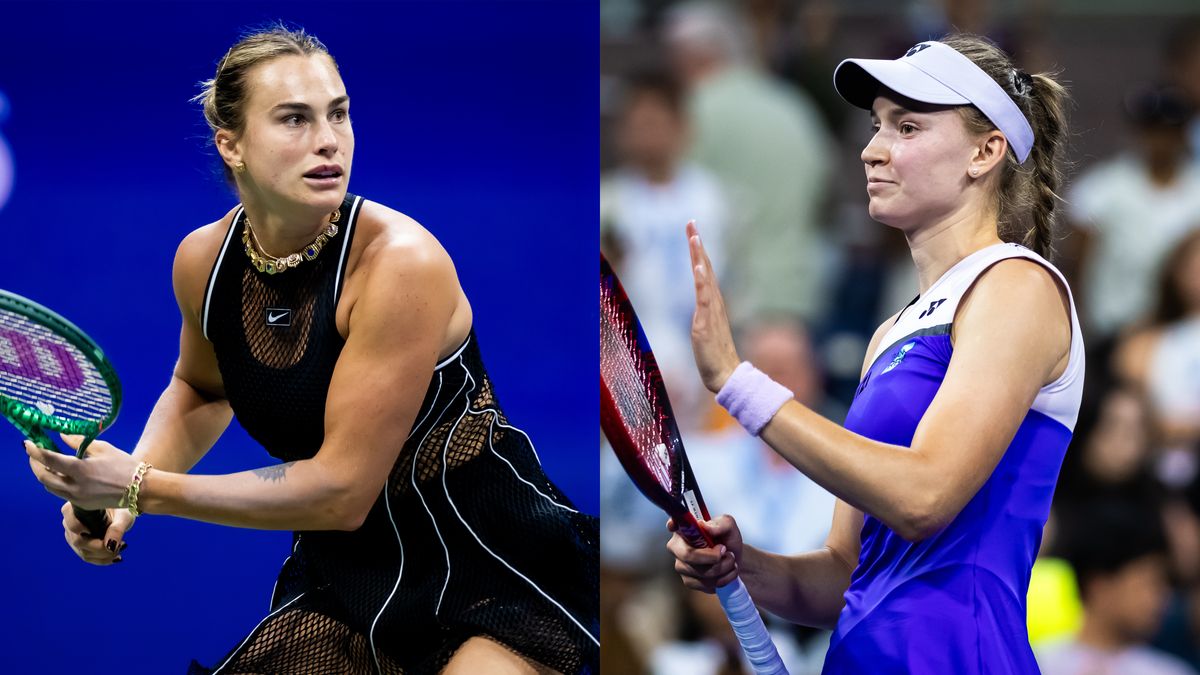
Aryna Sabalenka and Elena Rybakina will face off in the 2026 US Open final on Saturday, marking their second Grand Slam final meeting this year. Defending champion Sabalenka is chasing a third consecutive US Open title, which would make her the first player to achieve a three-peat at Flushing Meadows since Serena Williams from 2012 to 2014. Rybakina, meanwhile, is aiming for her second major title of the season after defeating Sabalenka earlier this year in the Australian Open final.
The match will be their 18th career meeting on the WTA Tour, with Sabalenka currently leading the head-to-head record 10-7. It will also be their third Grand Slam final encounter, with each having won one of the previous two.
The singles final is scheduled for Arthur Ashe Stadium at 4 p.m. ET on Saturday, September 12 (9 p.m. BST, 10 p.m. CEST). The doubles final, featuring top seeds Katerina Siniakova and Taylor Townsend against Ashlyn Krueger and Robin Montgomery, will take place Friday, September 11 at noon.
Sabalenka reached the final without dropping a set until her quarterfinal win over Linda Noskova, which she claimed in a third-set tiebreak. She defeated Camila Osorio, Polina Iatcenko, Kamilla Rakhimova, Taylor Townsend, Noskova, and finally third seed Jessica Pegula 7-5, 6-2 in the semifinals. The victory extended her record against Pegula to 10-0 and set up her fourth straight US Open final appearance. A win Saturday would give Sabalenka her fifth major title and 20th consecutive win at the tournament.
Rybakina's path included wins over Thea Frodin, Jessica Bouzas Maneiro, Yuliia Starodubtseva, 13th seed Naomi Osaka, qualifier Zheng Qinwen, and fourth seed Coco Gauff, whom she beat 3-6, 6-4, 6-4 in the semifinals. The victory over Gauff marked her second career comeback win at a major against a top-10 opponent. This is Rybakina's first US Open final and fourth Grand Slam final overall; she previously won Wimbledon in 2022 by defeating Ons Jabeur.
The stakes extend beyond the trophy. The singles champion will earn $5.5 million, with the runner-up collecting $2.8 million, as part of the tournament's total prize pool of $108 million. The doubles champions will split $1 million, while the runners-up will share $500,000. Both finalists will also earn ranking points -- 2000 for the winner and 1300 for the runner-up -- toward the PIF WTA Rankings and the Race to the WTA Finals in Indian Wells.
Regardless of Saturday's outcome, Rybakina is set to become the new World No. 1 in the rankings released Monday, with Sabalenka dropping to No. 2. In the Race to the WTA Finals, the winner of the match will move into first place, with the runner-up taking second.
Several notable records are on the line. Sabalenka has become the fifth player since 1988 to reach at least five Grand Slam finals while ranked World No. 1, joining Steffi Graf (20), Serena Williams (14), and Monica Seles and Martina Hingis (nine each). She has also become the first player in the Open Era, male or female, to reach eight consecutive Grand Slam finals on hard courts, surpassing the previous record of seven shared by Graf, Hingis, and Novak Djokovic. Additionally, her winner-to-unforced-error differential of +141 at majors is the best on tour, ahead of Pegula's +21.
For Rybakina, a win would make her the first player since Justine Henin in 2007 to defeat past women's singles champions in both the semifinal and final of the US Open. She is also the fifth player in the last two decades to reach both the Australian Open and US Open finals in the same season, joining Henin (2006), Victoria Azarenka (2012-13), Angelique Kerber (2016), and Sabalenka (2023-2026). Since last year's US Open, Rybakina holds the best win rate against top-10 opponents at 75 percent, compiling an 18-6 record in such matches.
Both players spoke ahead of the final about the challenge they expect to face. Sabalenka said facing Rybakina would be a tough physical and mental battle given her opponent's improved baseline game and strong serve, adding that she has learned to block out outside distractions and stay focused on her own game. Rybakina acknowledged the difficulty of playing Sabalenka, citing her aggressive style and powerful serve, and said she would need to bring her best game and make key decisions at crucial moments. She added that while the match carries significance as a final, she does not want to place excessive pressure on herself given how closely ranked the two players are and the tournaments still remaining this season.