India
Bihar’s State‑Run Coaching Drives Students into IITs and Medical Colleges
Kanak Ranjan Thakur is studying MBBS at AIIMS Deoghar, Pratyush Mansarovaram is enrolled at Patna Medical College and Hospital (PMCH), and Sohail Akhtar is a student at RIMS in Hyderabad. Avinash Anand is pursuing B Tech at IIT Kharagpur, Mohammed Ali at IIT Patna, and Mohammed Altamash at IIT Guwahati. All of these students came through the Bihar government’s free residential coaching scheme for medical and engineering aspirants, a state initiative that began in 2023 to give rural and suburban students an alternative to expensive private coaching hubs.
The education department conducts an entrance exam to select 50 boys and 50 girls for Class 11 and a similar batch for Class 12, preparing them for the IIT‑JEE and NEET‑UG exams. Each year, 100 students write the engineering and medical entrance tests. In the first batch (2023‑25), 99 students took the IIT‑JEE (Main) and 62 qualified for JEE (Advanced). Thirty‑three students secured admissions to government institutions: seven to IITs, 20 to NITs, and six to other premier colleges. In the inaugural NEET‑UG batch, 84 students took the exam and all 84 qualified; two of them earned seats in top‑tier medical colleges—one at PMCH and another at Darbhanga Medical College and Hospital (DMCH).
The second batch (2024‑26) showed improved results. In engineering, 97 students took the IIT‑JEE (Main) and 52 qualified for JEE (Advanced). Fifty‑seven students entered government institutions: ten to IITs, 19 to NITs, and 28 to other government colleges. In the medical cohort, all 86 students qualified in NEET‑UG, and 13 secured seats in government medical colleges: two at AIIMS, four at PMCH, two each at ANMCH (Gaya) and VIMS (Pawapuri), and one each at SKMCH (Muzaffarpur), DMCH (Darbhanga), and RIMS (Hyderabad). The state also added non‑residential entrance coaching at regional centers in Gaya, Muzaffarpur, Bhagalpur, and six other locations. Among 60 engineering aspirants, 13 cleared the tests, earning one seat in an IIT, five in NITs, and seven in other institutions. All 52 students in the non‑residential medical wing qualified in NEET‑UG; data on government college seats are not yet available.
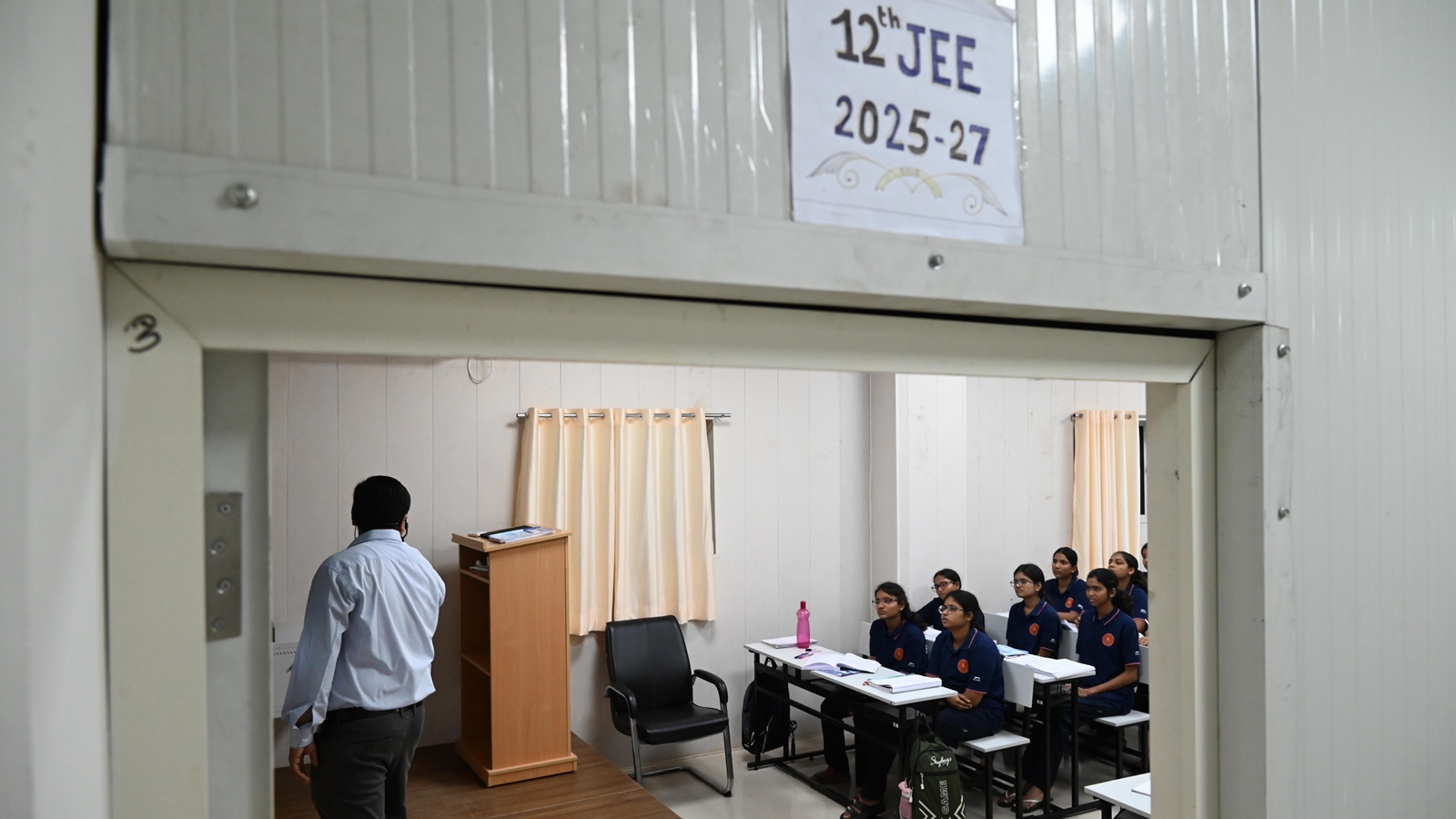
Residential coaching currently operates only in Patna. The campus, located opposite the iconic Golghar and surrounded by green trees, houses about 200 girls preparing for medical and engineering entrance exams. Students live away from their families without smartphones and are allowed visits from four local guardians designated by their parents; meeting an unauthorised person can lead to rustication. They are permitted only basic feature phones. The Bihar School Examination Board (BSEB), which manages the programme, hires top‑tier faculty by matching or exceeding private coaching pay packages. To ensure completion of regular Class 11 and Class 12 board requirements, students are enrolled in local schools. Meals follow a strict nutritional chart, with two main meals and multiple breakfasts daily, including 200 ml of milk per day; non‑vegetarian dishes are served three times a week.
The hostel building’s teaching section occupies an entire floor: four smart classrooms, each accommodating 50 students, and a staff room. English teacher Kanchan Kumari, who also coordinates the female streams, said, “Except on Sundays, students attend three daily lectures of 2 hours and 15 minutes each, interspersed with breaks. Subject‑wise doubt sessions follow… Smart devices are strictly prohibited to limit internet distractions and dependence on AI.” BSEB Deputy Secretary Rakesh Sinha added, “We are providing top‑quality faculty, good living conditions, and nutritious food. We want to establish a strong model of our own.”
The 2026‑28 batch has 44 boys and 41 girls in IIT‑JEE and 43 boys and 41 girls in NEET‑UG courses. The 2025‑27 batch has 46 boys and 44 girls in engineering and 39 boys and 41 girls in medical entrance courses. Physics teacher Sandeep Kumar, one of 15 faculty members for the 2026‑28 engineering batch of girls, previously worked at a prominent commercial coaching institute. “I am deeply impressed by the quality of students here,” he said. “Most come from semi‑urban and rural backgrounds. I am glad to contribute to the education department’s talent hunt.”
Students share the experience of coming from small towns with big aspirations. Nandini Kumari, daughter of a grocery shop owner from Siwan, is the first in her extended family to prepare for engineering. Pushpanjali Kumari from Rajaun, Banka, wants to follow her brother’s footsteps, who is studying B Tech at NIT Patna. Gayatri Kumari from Chandidih village near Patna said, “My father could never have afforded a private coaching institute. When I learned about this government facility, I realised it was designed for students like us.” Some students left established commercial coaching centres to join the state‑run programme. Aanchal Kumari from Rajgir, Nalanda, had studied in Kota but switched after health issues; she now feels fully recovered. Raj Nandini from Patna left a private medical coaching centre due to frequent faculty changes and now focuses on her studies in the hostel. Nahid Sultana from Begusarai secured the second rank in the Bihar Board Class 10 exams and earned direct admission to the coaching without an entrance test. She described the facility as “far above expectations.” Surabhi Kumari from Muzaffarpur said, “Hardly any girl in my village studies past Class 10; most are married off early. I wanted to break that pattern. I now hope to become the first doctor from my village.” Isha Kumari, daughter of a schoolteacher from Gopalganj, said, “We take rigorous mock tests… The faculty constantly pushes us to extract our full potential.”
In the hostel, four students share one room with individual wardrobe lockers and are offered optional morning yoga sessions to help them de‑stress. Bihar Education Minister Mithilesh Tiwari said the state plans to establish residential coaching centres across all nine administrative divisions in Bihar over time, aiming to retain top talent within the state system and demonstrate that government institutions can set benchmarks in competitive education. Bihar Congress chief spokesperson Ajay Kumar Paswan added that while running coaching centres for medical and engineering is constructive, it must be scaled up and that the state should focus on improving the quality of education at primary, secondary, and senior secondary levels to strengthen government schools.