Sports
From Bankruptcy to Billions: The Rise of Como 1907 Under Fabregas and Djarum Group
By Mark Doyle
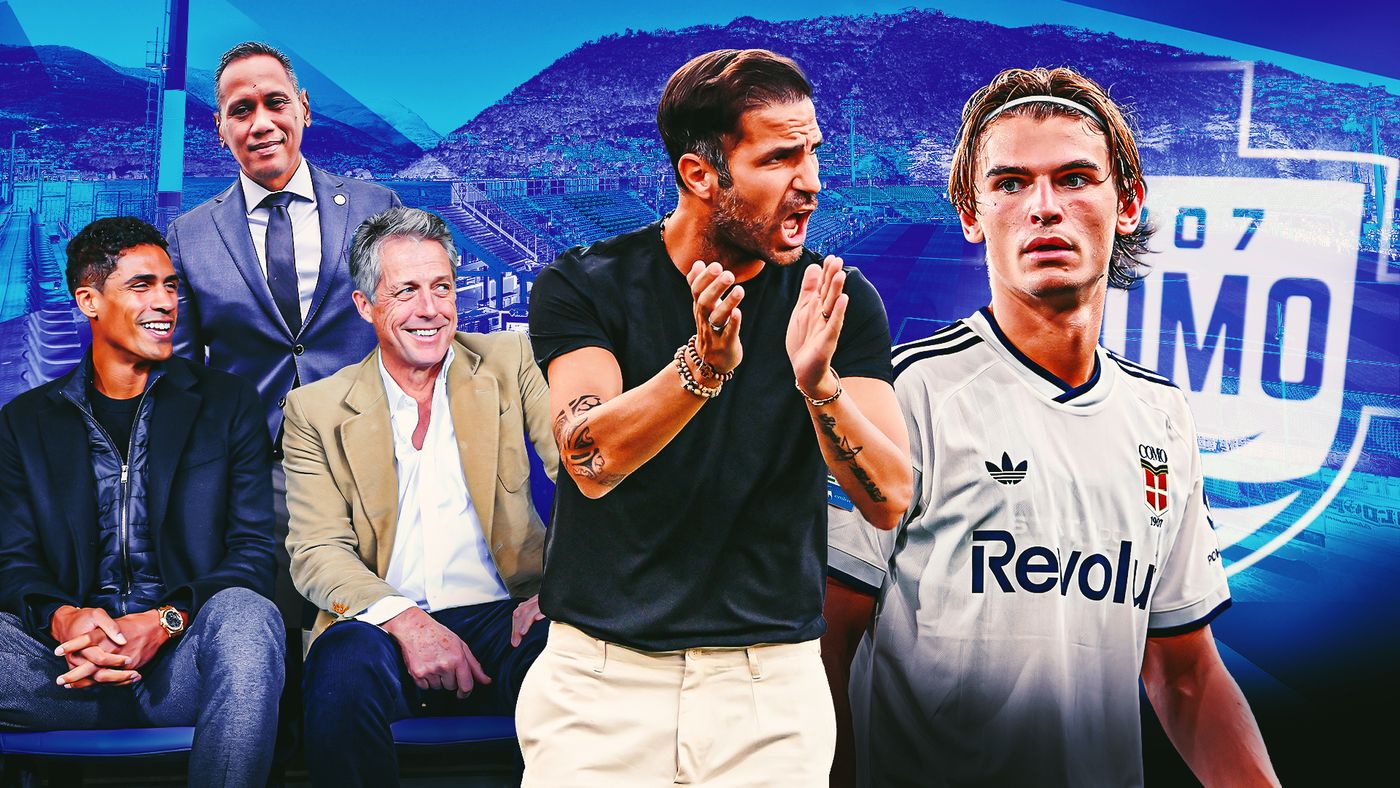
Como's official Twitter bio boasts 'the most beautiful football in the most beautiful location,' a claim few in Serie A would dispute. Genoa coach and World Cup winner Daniele De Rossi recently admitted he hadn't faced a stronger opponent since taking charge nearly a year ago. The setting adds to the allure: Como's Sinigaglia stadium, a modest 13,000-seat venue nearly a century old, sits on the shores of Lake Como, one of the world's most celebrated tourist destinations. On Thursday night, Como will make its Champions League debut there against RB Leipzig, a match so anticipated that club president Mirwan Suwarso and other executives gave up their own seats to allow more than 40 of the club's longtime supporters to attend. This gesture reflects the meticulous image-building that has defined Como since the Djarum Group acquired the club in 2019, when it was valued at less than €1 million. Suwarso now believes it could eventually surpass €1 billion. The idea for Como's transformation began before the club was even purchased. Suwarso and colleagues at Mola TV, a Djarum subsidiary, were developing a football documentary similar in concept to 'Welcome to Wrexham.' While scouting locations near Milan, Suwarso discovered Como, which he called 'a happy coincidence.' At the time, the club had just been promoted to Serie C1, with a stadium in visible disrepair. Suwarso pledged to renovate it and found in Como the rags-to-riches narrative he sought. Financial resources were never a concern, given Djarum's backing from billionaires Budi and Bambang Hartono. The challenge instead was operational expertise, which led Suwarso to hire former Chelsea and England midfielder Dennis Wise, initially as a consultant, then CEO, and later president. Wise recalled that Como lacked a permanent training ground, had gone bankrupt twice, and averaged crowds of just 800. He worked to rebuild the club's infrastructure, community ties, and academy system, often relying on loan deals due to limited transfer funds. By 2021, Como had returned to Serie B. The following year, Cesc Fabregas joined as both player and shareholder, citing Wise's influence and his own desire for 'a project that excited me.' In 2024, Como achieved promotion to Serie A for the first time in over two decades. By then, Fabregas had effectively taken charge of team affairs, though officially listed as assistant to Osian Roberts until completing his coaching qualifications. That summer, Wise departed, stating the club had chosen to 'follow Cesc Fabregas' direction,' and later suggested Suwarso sought greater control outside the existing financial framework. Fabregas and Suwarso, however, remained aligned in vision. Como's ambitions extended beyond survival in Serie A - they aimed to compete immediately, investing heavily in the process. Data from Football Benchmark shows operating costs of €52 million against revenue of €10 million during their promotion season, with a net transfer deficit of €93.35 million in their first Serie A campaign and nearly €108.79 million in the second. Despite this, Fabregas guided Como to a surprising fourth-place finish last season. Suwarso maintains that Champions League qualification wasn't a financial necessity, saying the club focuses on long-term profitability rather than fixed sporting targets, aiming to achieve sustainability within two to three years. Antonio Di Cianni, director of Advisory at Football Benchmark, noted that Como's financial model differs from most clubs, as it was effectively built from scratch rather than acquired as an established institution. Despite net losses nearing €200 million over three seasons, the club has achieved both promotion and European qualification. Plans are underway to expand Sinigaglia's capacity to between 15,000 and 17,000 seats, incorporating more hospitality areas to boost matchday revenue. The club has also invested heavily in branding, leveraging the global prestige of Lake Como through merchandising, licensing, and a private members' club charging €4,500 annually. Celebrities including Hugh Grant, Michael Fassbender, Adrien Brody, Keira Knightley, Kate Beckinsale, Jeff Goldblum, Benedict Cumberbatch, and Hugh Jackman have attended matches, though Suwarso insists these visits were unplanned, arising organically from public interest in Fabregas' project. Fabregas, described by Suwarso as Como's 'CEO of football,' works alongside shareholders such as Thierry Henry and board member Raphael Varane. The ownership's directive from the outset was for 'front-footed football' designed to entertain, attracting both players and tourists. Suwarso compared Como's business model to Disney's, with the football club serving as its central 'theme park' amid several interconnected ventures, including international academies and merchandise sales spanning over 120 countries. Tourism to the region has grown from 1.6 million visitors annually to 4.8 million since Djarum's arrival, a trend Suwarso hopes to convert into sustained revenue growth. Still, challenges remain. Como continues to depend heavily on the transfer market rather than homegrown talent, and its player sales revenue remains limited. According to Football Benchmark, a €1 billion valuation would place Como fourth among Serie A clubs, behind Inter (€2.1 billion), Juventus (€1.84 billion), and AC Milan (€1.8 billion), but ahead of Napoli (€967 million). Di Cianni noted that Como's 2024-25 revenue stood at approximately €50 million, with potential earnings of €30-40 million from Champions League participation this season, potentially pushing total revenue toward €100 million. He cautioned, however, that a billion-euro valuation remains ambitious, contingent on sustained competitive success. He also highlighted the rising market value of Como's squad, which reached €584.2 million this year, up from €288 million last September, following the addition of players such as Moise Kean and Trevoh Chalobah. While reaching a €1 billion valuation remains a long-term goal, Di Cianni suggested it is achievable if Como's sporting performance and commercial strategy continue to align. As long as the football matches the beauty of its surroundings, Como's Champions League debut is unlikely to be its last.