World
Pakistan Reignites Debate Over Creating New Provinces Amid Governance Concerns
By Luv Puri
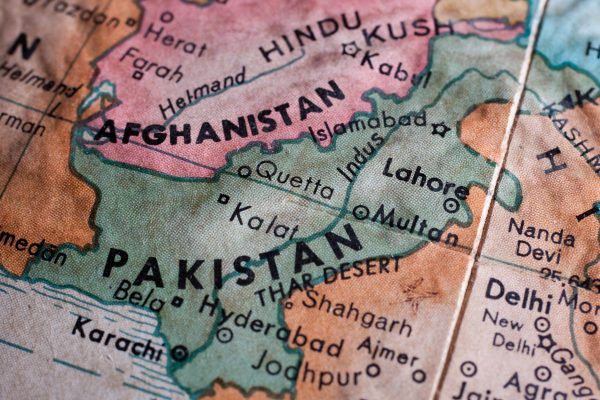
A renewed debate over whether Pakistan should create new provinces has emerged after Interior Minister Mohsin Naqvi declared in July that the country's current administrative system had "collapsed." Naqvi argued that decisions on provinces or administrative units should be put before the public, saying there was no alternative solution.
Other officials have joined the discussion. Defense Minister Khawaja Asif called for greater decentralization and devolution of power to local levels. Lt Gen Ahmed Sharif Chaudhry, director general of Inter-Services Public Relations, noted Pakistan's rapid population growth despite the country still being divided into only four provinces. He said any administrative changes must follow constitutional and legal procedures involving elected political representatives.
The debate carries political weight given the figures involved. Naqvi is widely viewed as having close ties to Pakistan's military establishment, which is seen as instrumental to his political career. Because of this connection, and the military's apparent reinforcement of his comments, many believe the establishment is sympathetic to the idea of redrawing provincial boundaries. Various proposals have surfaced, ranging from roughly a dozen new administrative units to as many as three dozen.
Supporters of creating new provinces cite Pakistan's weak social indicators. With a population of about 250 million, a literacy rate of just 63 percent, an estimated 28 million children out of school, and widespread child stunting, proponents argue that smaller administrative units could bring government closer to citizens and improve delivery of health, education and other services.
Pakistan's existing provinces vary enormously in size and population. Punjab holds more than half the national population, while Balochistan, though geographically vast, has a sparse population. This imbalance has fueled long-standing demands, such as calls for a separate South Punjab province, as southern districts argue that power remains concentrated in Lahore.
However, redrawing provincial boundaries could trigger serious political tension, especially in Sindh. Karachi Division, home to about 20.4 million people according to the 2023 census, is ethnically diverse, with Urdu, Sindhi, Pashto, Punjabi and Baloch communities. Memories of ethnic violence in the city during the 1990s, including clashes involving the Muttahida Qaumi Movement, remain part of the political landscape. Any move to alter Sindh's boundaries, particularly involving Karachi, risks being viewed as a threat to the province's political and economic balance rather than simple administrative reform.
Creating new provinces also faces a major constitutional hurdle. Article 239(4) of Pakistan's Constitution requires that any change to a province's boundaries be approved by a two-thirds majority in that province's assembly before being sent to the president, in addition to two-thirds approval in both houses of parliament. This effectively requires a provincial assembly to consent to reducing its own territory and resources — a particularly difficult proposition in Sindh, a stronghold of the Pakistan Peoples Party.
Some proposals have gained more institutional traction. The Khyber Pakhtunkhwa Assembly has endorsed the creation of a separate Hazara province, while a proposed Saraiki-speaking province in southern Punjab has received support in both the Punjab Assembly and the National Assembly. Neither proposal has been enacted due to disagreements over boundaries and the difficulty of securing the required constitutional majorities.
Historical experience adds to the sensitivity surrounding the issue. The 1955 One-Unit scheme merged West Pakistan's provinces and princely states into a single unit, partly to balance representation with East Pakistan, before being reversed in 1970. The political turmoil following the 1970 election and the eventual breakup of Pakistan left lingering wariness about using administrative boundaries to influence political representation.
Analysts caution that creating new provinces will not automatically improve governance. A new provincial capital, they note, could simply become another remote center of power. If the goal is better delivery of services such as waste collection, policing, schools and infrastructure, reforms may need to focus on city or district governments rather than provincial structures — especially since local governments have remained financially and politically weak even after the 18th Amendment devolved significant powers to the provinces.
The discussion touches on broader questions of federalism, resource distribution, and regional identity, with parallels across South Asia. India's linguistic reorganization of states and Bangladesh's administrative decentralization efforts offer potential lessons, though decades of tension — particularly between India and Pakistan — have limited regional cooperation and the exchange of ideas.
Ultimately, observers say, the central issue is not how many provinces Pakistan should have, but whether smaller administrative units can be made more accountable and effective. If reorganization becomes chiefly a contest over territory and political power, it risks deepening existing divisions. If paired with genuine decentralization and stronger local governance, it could help address some of the country's persistent governance challenges.