India
Punjab Faces Rising Border‑Smuggled Arms and Police Attacks Ahead of 2027 Elections
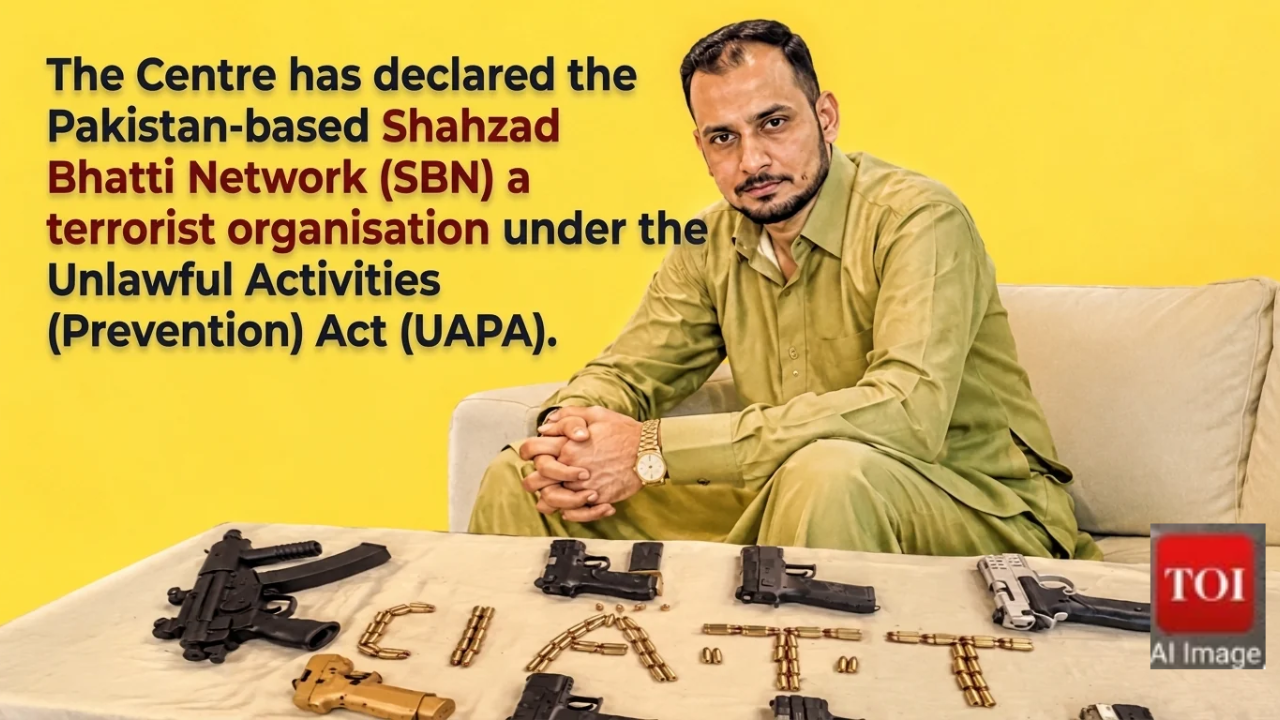
Punjab is confronting a growing security crisis as weapons and drugs cross its 553‑km border with Pakistan, while police officers are increasingly targeted. Over the past months, the border fence has allowed an AK‑47, M16 rifles, Glock pistols, a rocket‑propelled grenade and more than half of India’s seized heroin to enter the state. Six policemen have been shot dead this year, including Head Constable Vinod Kumar, 42, whose body was found near a Gurdaspur bypass last Sunday. Police say a social‑media group called Tehreek‑e‑Taliban Hindustan (TTH) claimed responsibility for the killing, and intelligence agencies point to Shahzad Bhatti, a Pakistan‑based gangster‑turned‑terrorist allegedly working for the ISI, as the mastermind behind TTH’s propaganda and operations.
Bhatti’s network recruits local youths online, pays them for small “test tasks,” records the work, and escalates to violence. Drones deliver weapons across the border, and arrested recruits are easily replaced. The network’s reach extends beyond Punjab: a railway blast in Rajasthan, a plot against police in Delhi and a car bomb in Haryana have all been linked to Bhatti or the same method.
Since February, Punjab police have recorded six police murders. The latest victim, Head Constable Vinod Kumar, was found in uniform near a Gurdaspur bypass. Police are investigating a claim by TTH that it took responsibility for the killing. Bhatti’s name surfaced in several cases across northern India, including a gas‑cylinder blast at a Haryana police station, arrests in Gujarat, and a Delhi‑based module that targeted police personnel and spread extremist propaganda.
Defence analyst Ajai Sahni describes the violence as largely mercenary, feeding on gangster networks and vulnerable individuals. He notes that the threat is widening beyond a single handler, involving Pakistan‑backed players, Khalistani sympathisers and local gangsters. The network’s strategy includes online grooming, small payments, and escalating tasks from “tests” to violent attacks.
The weapons pipeline is a major concern. In June, the Border Security Force (BSF) seized an AK rifle, 25 pistols, 47 magazines, 368 rounds and a light bullet‑proof jacket. In August, Tarn Taran police and the BSF recovered an MP‑9 rifle and seven pistols, including four Glocks. In October and November, additional recoveries included an AK‑47, two grenades, an M16 rifle, nine pistols, 15 kg of opium, a rocket‑propelled grenade, a drone and 14 pistols. Punjab accounted for 2,086 kg of heroin seized in 2025, 58 % of the national total, and drone‑related cases rose from three in 2021 to 305 in 2025, with Punjab accounting for 298.
The network’s operations also involve drug smuggling, which funds the purchase of weapons and pays recruits. A constable posted with Punjab’s anti‑drone system was caught carrying 15 kg of heroin in his car.
Political involvement is cited as a root cause. Sahni argues that political parties in Punjab play a double game regarding Khalistani sentiment and drugs, and that eliminating political patronage is essential to curb organised crime.
The pattern of recruitment—online grooming of lonely women and young men, small payments, and escalating tasks—has been observed in incidents such as the November 3 blast on the Anupgarh‑Suratgarh railway line in Rajasthan, which was linked to a Pakistan‑based ISI handler known as “Shah.” The accused were from Gurdaspur, Punjab, highlighting the cross‑border reach of the network.
Police are monitoring whether the steady drip of attacks can intensify as the 2027 assembly elections approach. The increased presence of heavy weaponry and killings of public officials raises concerns about the safety of candidates, party workers and the electoral process. Punjab police have conducted joint operations with the BSF, apprehended 109 suspects in an ongoing drive, and installed an anti‑drone system along the border. However, the continued smuggling of weapons and drugs, coupled with the network’s ability to recruit locally, suggests that the pressure will intensify in the months leading up to the vote.