World
UK Students Join Europe‑Wide Youth Protests Over Austerity and Defence Spending
By Feyzi Ismail
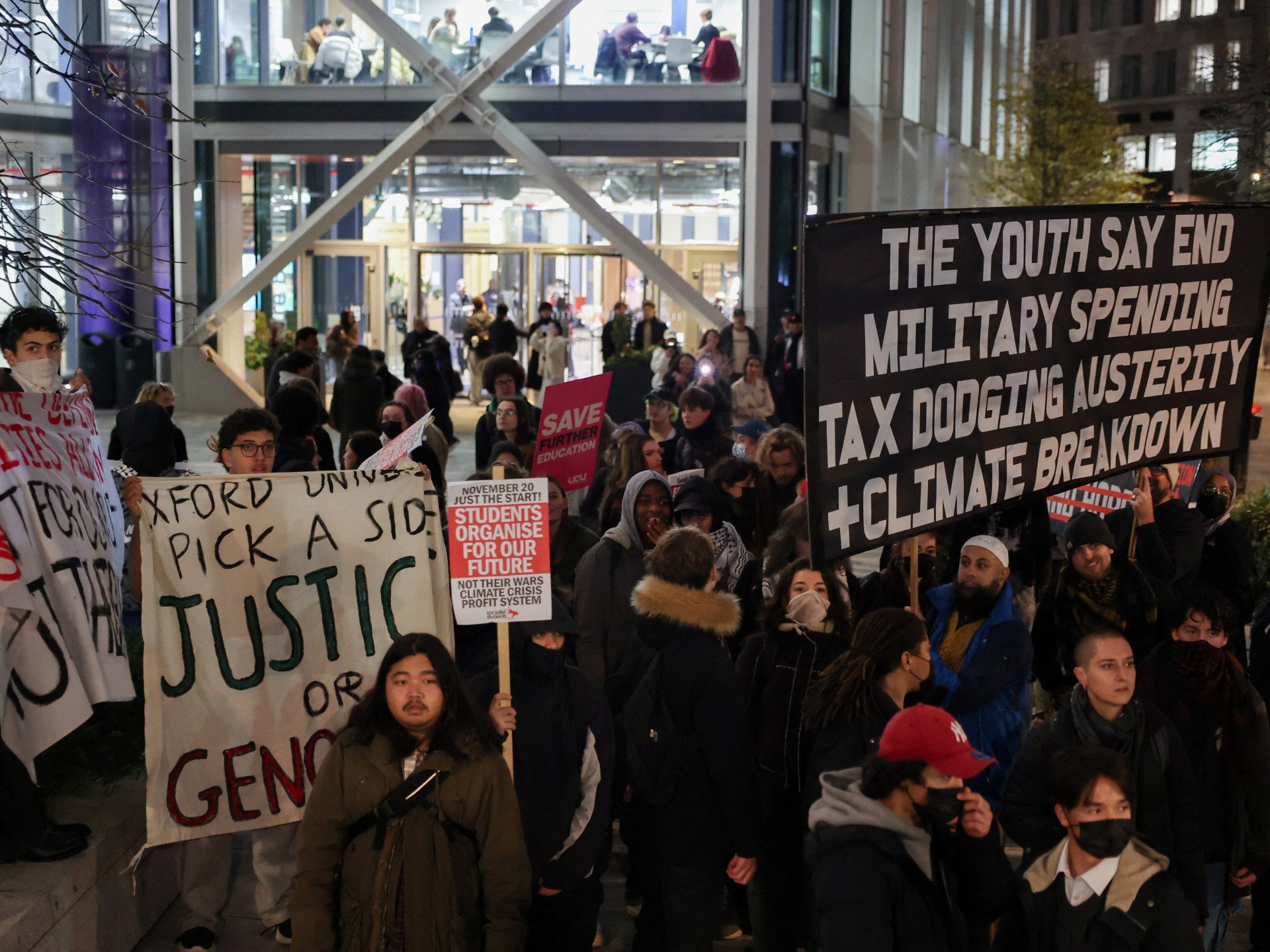
On Friday, thousands of students across the United Kingdom staged walkouts from schools and universities in cities such as Aberdeen, Brighton, Swansea and Nottingham. The action, one of the largest student mobilisations since tuition fees tripled in 2010, was organised by groups linked to the International Conference Against War, a pan‑European initiative coordinating protests against militarism. The University and College Union was the first union to endorse a National Day of Action, encouraging members of the university sector to protest alongside students. Other unions that followed include Unison, Unite, the National Education Union, GMB and the Educational Institute of Scotland, signalling growing union support.
In London, demonstrators from universities and colleges converged on Trafalgar Square, chanting “fight for our future, not their wars,” before moving to Downing Street. There, student activists and trade union leaders criticised the government for prioritising defence spending over education and public services.
Young people in the UK face high inflation, unemployment, economic stagnation, cuts to public services and a housing crisis fueled by property speculation. Government estimates show that nearly one million 16‑ to 24‑year‑olds are “NEETs” (not in education, employment or training), more than 13 % of that age group, and that young people make up over 40 % of the unemployed. A mental‑health crisis and an unaffordable education system add to the discontent.
The government’s response has been to pursue further austerity. Alan Milburn, former Labour minister, was commissioned to produce a report on NEETs, recommending market‑focused solutions such as cutting certain youth benefits, including those for disabled individuals. Years of austerity in higher education have led to job cuts and course closures, with universities turning to private finance, management consultants and corporate outsourcing.
Meanwhile, the army has expanded recruitment, offering a fully paid 18‑month “foundation scheme” and promoting a “warfighting readiness” campaign following the Strategic Defence Review. Prime Minister Keir Starmer added £15 billion to defence spending before leaving office, bringing the total over four years to £298 billion. Defence expenditure has risen across Europe while public‑service funding has fallen, a trend driven in part by NATO commitments and the EU’s support for Ukraine.
The UK spends 4.1 % of GDP on education, compared with 5.1 % in France, yet a portion of the UK budget has been diverted to defence. The country has had seven prime ministers in the past decade, each struggling to deliver income and wealth redistribution. Starmer’s government has faced criticism for failing to meet social‑democratic promises and for its handling of protests over the Palestinian conflict.
The current wave of youth mobilisation reflects deep‑seated frustration with austerity, militarisation and perceived government indifference. The protests are part of a broader European movement demanding substantive political and economic change.
The views expressed in this article are those of the author and do not necessarily reflect Al Jazeera’s editorial stance.
Frequently asked questions
Which unions endorsed the National Day of Action?
The University and College Union first endorsed it, followed by Unison, Unite, the National Education Union, GMB, and the Educational Institute of Scotland.
How much did Keir Starmer add to defence spending before leaving office?
He added £15 billion, bringing the total over four years to £298 billion.
What percentage of the UK’s GDP is spent on education?
The UK spends 4.1 % of its GDP on education.