India
Demand Grows for More AC City Buses in Kochi
By John L. Paul
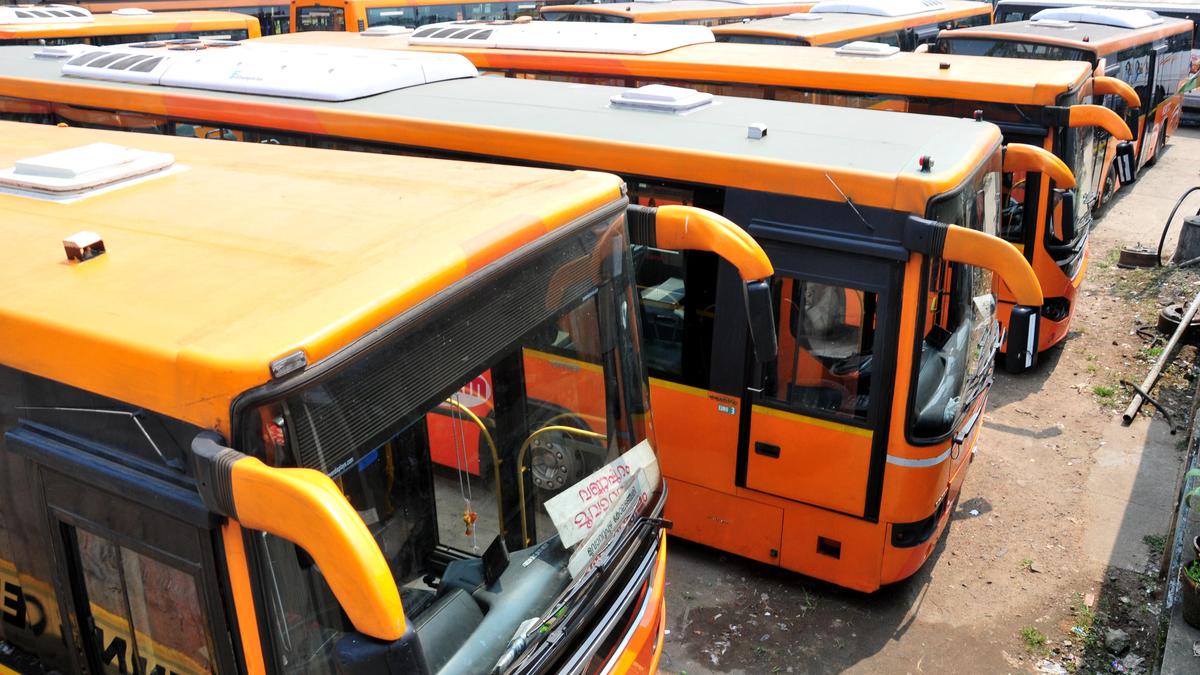
The withdrawal of more than 50 KSRTC Volvo air‑conditioned low‑floor city buses over the past decade has left a gap in Kochi’s public transport. While many AC buses were reassigned to long‑distance routes, most non‑AC low‑floor buses were scrapped due to poor maintenance. Only 15 AC feeder buses run by Kochi Metro Rail Limited serve a few metro stations; elsewhere in Kochi and its suburbs there are no such services.
Former Mayor K.J. Sohan, a strong supporter of public transport, said that AC buses of various sizes are needed to serve both main roads and narrower side streets. He noted that the AC low‑floor buses, though designed for city use, were diverted to long‑distance and inter‑district routes. When the Kochi metro opened in 2017, these buses could have been useful for feeder trips along the Aluva‑M.G. Road‑Thripunithura corridor. The state government refused to hand the buses over to the Kochi Corporation, prompting councillors to stage a dharna at the KSRTC bus station demanding their return. The National Transportation Planning and Research Centre (NATPAC) has studied potential routes for the city.
Sohan added that worsening congestion, reckless driving by private buses, accidents, and frequent violent incidents involving bus crews make it urgent for the state government to allow both KSRTC and private operators to introduce AC buses in the city. He suggested a higher fare structure for such services.
He also highlighted the potential for direct AC bus routes from Fort Kochi to Thripunithura and Kakkanad via the Kundannur Bridge‑Vytilla stretch, and for buses on the Chellanam‑Munambam corridor, arguing that adequate public transport would improve access to opportunities.
Former motor‑vehicle inspector Bijulal Ram echoed this view, saying that many traffic problems and accidents in cities like Kochi could be reduced if enough passenger‑friendly and AC city buses were introduced. He stressed that buses should comply with the AIS‑052 body code, have pneumatic doors, and use digital fare collection and passenger information systems to encourage commuters to shift from two‑wheelers and cars.
Public transport advocate Santosh Thannikkat called for a comprehensive plan to expand the bus network and improve service quality. He urged that buses currently operating mainly on arterial roads and under the metro corridor extend to less connected corridors.
Published – November 22, 2026 07:00 am IST
Frequently asked questions
How many AC city buses currently operate in Kochi?
Only 15 AC feeder buses run by Kochi Metro Rail Limited serve a few metro stations; elsewhere in Kochi and its suburbs there are no such services.
Why are more AC buses needed in Kochi?
Former Mayor K.J. Sohan said AC buses of various sizes are needed to serve main roads and narrower side streets, and to address worsening congestion, reckless driving, accidents, and frequent violent incidents involving bus crews.
What routes have been proposed for new AC buses?
Proposed direct AC routes from Fort Kochi to Thripunithura and Kakkanad via the Kundannur Bridge‑Vytilla stretch, and for buses on the Chellanam‑Munambam corridor.