World
Lisbon Protesters Demand Higher Wages, Lower Housing Costs Amid Rising Living Expenses
By Reuters
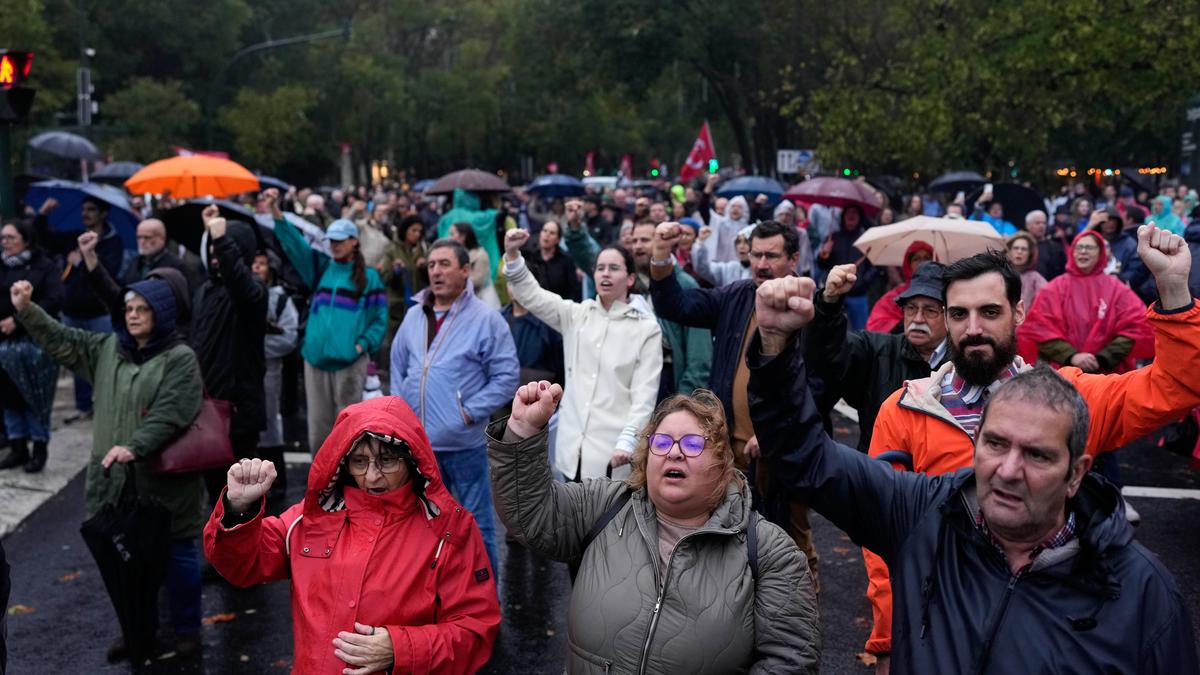
On Saturday, November 21, 2026, thousands of people marched through central Lisbon in heavy rain to protest rising living costs, a worsening housing crisis, and low wages. The protest was organized by CGTP, Portugal’s largest trade union federation, which called for higher wages and pensions, lower prices for essential goods and services, and measures to curb housing costs. CGTP said the turnout was “many thousands,” with protesters carrying umbrellas and wearing hooded ponchos along two of Lisbon’s main avenues. Police did not provide an estimate of the crowd size.
Manuel Gomes, a 44‑year‑old factory worker, said, “We work more, we have more expenses and we don’t have money for day‑to‑day life.” He blamed the centre‑right government’s policies for worsening the situation, adding, “Our wages are low, diesel and gasoline prices keep going up, and so do housing costs and everything else. We have to change this.”
Eurostat data show that Portugal’s average annual earnings in 2025 were 37% below the European Union average. Inflation reached 3.8% in October, driven by food and energy prices amid ongoing Middle East tensions. Portugal also faces one of Europe’s most severe housing affordability crises, with house prices more than doubling since 2017 and rents for new leases nearly doubling, disproportionately affecting younger people.
Luis Russo, a 66‑year‑old retired IT technician, said he was demonstrating to demand “higher wages and pensions and against speculation in the rental market,” accusing the government of serving “big interests” rather than ordinary people.
The protest followed weeks of unrest, including housing activists’ tent camps in Lisbon and Porto, and comes amid a broader wave of demonstrations across Europe over living costs and housing. Turnout at largely peaceful protests in France on Saturday was lower than in previous weeks.
Published – November 22, 2026 06:58 am IST
Frequently asked questions
What were the main demands of the protest?
Higher wages and pensions, lower prices for essential goods and services, and measures to curb housing costs.
How many people participated in the protest?
The turnout was described as many thousands.
What economic conditions contributed to the protest?
Eurostat data shows Portugal’s average annual earnings in 2025 were 37% below the EU average, inflation was 3.8% in October, house prices more than doubled since 2017, and rents for new leases nearly doubled.