Health
Iowa Army Ammunition Plant to Detonate Lead‑Rich Explosives Amid Public Outcry
By Hoda Sherif
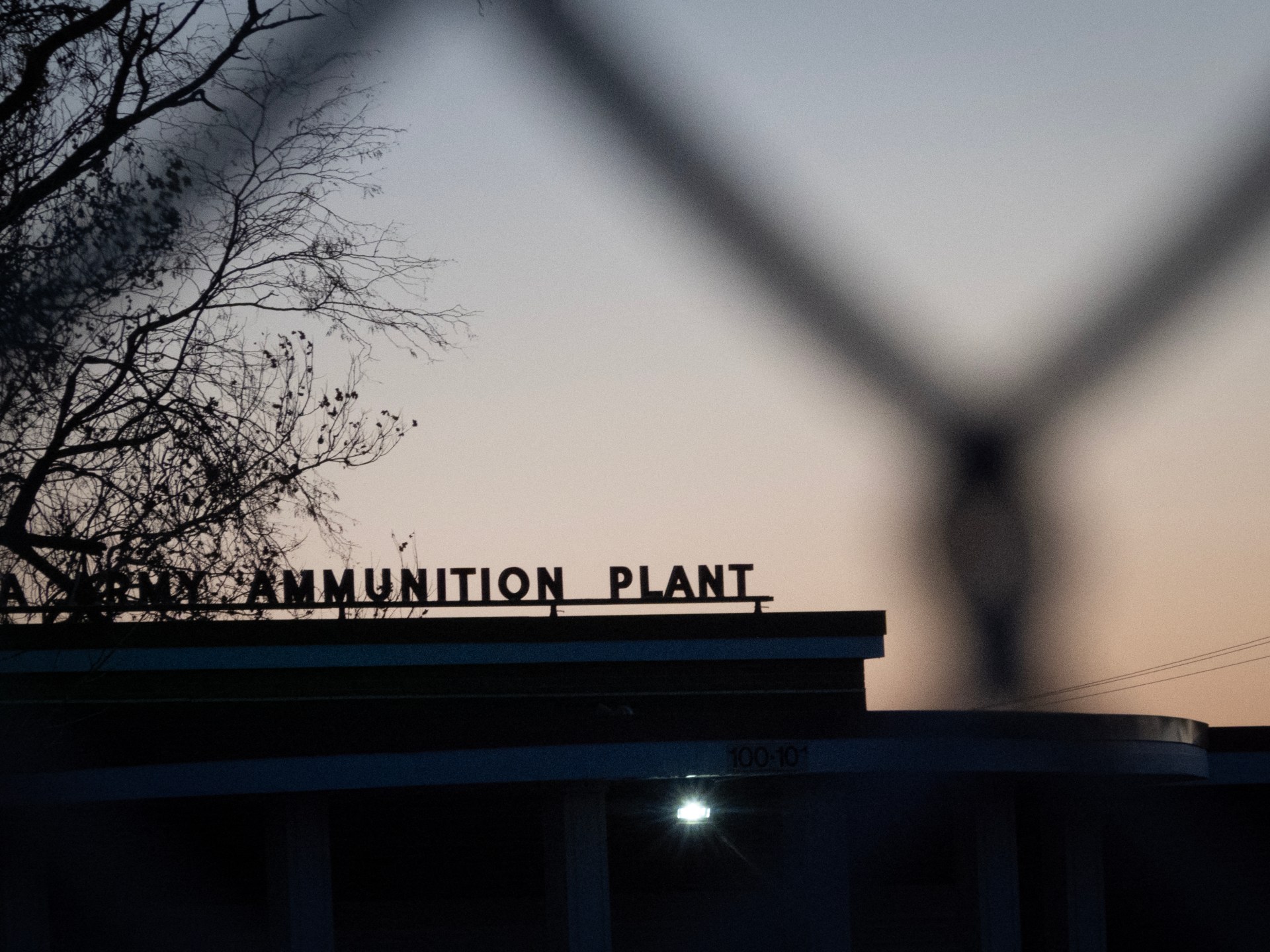
The United States Army plans to conduct two controlled detonations at the Iowa Army Ammunition Plant in southeastern Iowa to destroy 68 drums of degraded lead azide, a volatile, lead‑based explosive used in some conventional munitions. The Army’s decision was authorized by an emergency permit issued by the U.S. Environmental Protection Agency (EPA) and announced only five days before the original Friday, November 20 detonation date. Residents, environmental health experts, and Iowa elected officials have criticized the detonation, citing limited public notice and potential environmental and health harms.
Iowa Democratic Senator‑elect Josh Turek posted on X on Thursday that Iowans deserve transparency about safety precautions and health risks. He urged that the detonation should not proceed until those questions are answered.
Public pressure has pushed the Army to postpone the controlled blasts to Monday, November 23. However, a late‑stage legal challenge has cast doubt on whether the Army will be able to proceed. On the eve of the originally scheduled operation, the Iowa Environmental Council and the Iowa chapter of the Sierra Club petitioned a federal appeals court to overturn the EPA emergency permit. They argued that the agency had not given the public meaningful advance notice, failed to require adequate safeguards to protect human health and the environment, and sanctioned the operation without sufficient consideration of safer disposal alternatives.
On November 15, the Army warned residents of Middletown, a southeastern Iowa city of about 360 people, that the emergency blasts would loft a dust plume containing “some lead,” accompanied by loud explosions and ground vibrations. The Army’s containment strategy involves thoroughly drenching the soil above the existing igloo‑like, earth‑covered concrete magazines where the chemicals have been stored, with water before and during the detonations to help suppress airborne dust and particles. The magazines are surrounded by sand‑filled barriers roughly two stories high, designed to direct the blast force vertically into the sky rather than laterally across the surrounding landscape.
The Army’s modeling predicts that the blasts will produce elevated airborne lead levels but will remain “below the level at which EPA would require protective actions be taken.” Environmental health professor Patrick O’Shaughnessy of the University of Iowa, who will monitor the environmental fallout, said the most consequential variable remains undisclosed: precisely how much lead each explosion will propel into the air.
The stockpile of lead azide was discovered during a safety review in March. The material had been stored in bunkers for 20 years at the 19,000‑acre installation in Des Moines County, about 16 kilometres west of the Mississippi River. The Army says it has engaged with the local community, including an open house at the Army Reserve Center in mid‑October for residents within a 50‑mile radius.
The stockpile contains roughly 9,700 pounds (just under five tonnes) of explosives across 68 barrels, with about 6,900 pounds (about 3.5 tonnes) of lead by chemical mass. During long‑term storage, liquid in the drums evaporated, causing the lead azide to recrystallise. The recrystallisation increased the material’s sensitivity to shock and friction, turning it from a viable production component into an unserviceable hazardous waste.
Army Sustainment Command spokesperson Justine Barati said the Army faced a narrowing window to destroy the chemical material before colder weather or disturbances increased the risk of spontaneous detonation, which would pose an unacceptable risk to technicians on site. She told a local television news station that the Army is trying to do a controlled detonation to minimise impact to the community and environment.
Lead azide is an inorganic chemical compound made of lead and nitrogen, with lead accounting for about 71 percent of its mass. Elemental lead cannot be destroyed by heat; it decomposes, melts, vaporises or fragments into fine particulate dust. The Army’s fact sheet asserts that the heat generated by a proper detonation “incinerates” the lead azide, but paediatric epidemiologist Bruce Lanphear of Simon Fraser University disputed that explanation, saying the explosion redistributes lead rather than destroying it.
Lead exposure is particularly hazardous for fetuses, pregnant women, and young children, whose developing nervous systems are acutely susceptible. The U.S. Centers for Disease Control and Prevention (CDC) states that there is no safe blood level of lead in a child. Lanphear has studied how even low‑level lead exposure can severely blunt children’s cognitive function.
The Army announced on Thursday night that the operation would be postponed until Monday, describing the delay as “the latest possible moment prior to a forecasted temperature drop, which would risk further destabilization of the material.” The Army did not announce a time for the deferred blasts.
Later on Thursday, in response to the Iowa groups’ lawsuit, the U.S. Court of Appeals for the Eighth Circuit granted an interim stay of the EPA’s emergency authorization, temporarily blocking the military from proceeding while the court weighed the groups’ request for a longer‑term injunction. The stay is an interim measure, not a final ruling on the legality of the permit. While the Army cannot technically detonate the chemicals under its EPA permit while the suspension remains in force, the court may lift the pause beforehand. Justice Department lawyers, on Friday, pointed to separate emergency powers that the federal government could still invoke to bypass the permit requirement and press ahead with the blasts.
Frequently asked questions
How many drums of lead azide are scheduled for detonation?
68 drums.
When were the detonations originally scheduled and when were they postponed?
Originally Friday, November 20; postponed to Monday, November 23.
What legal action has been taken regarding the detonation?
Iowa Environmental Council and the Iowa chapter of the Sierra Club petitioned a federal appeals court to overturn the EPA emergency permit, and the court granted an interim stay of the permit.