India
Supreme Court Judge Calls for Deeper Equality Amid Persistent Gender Imbalance
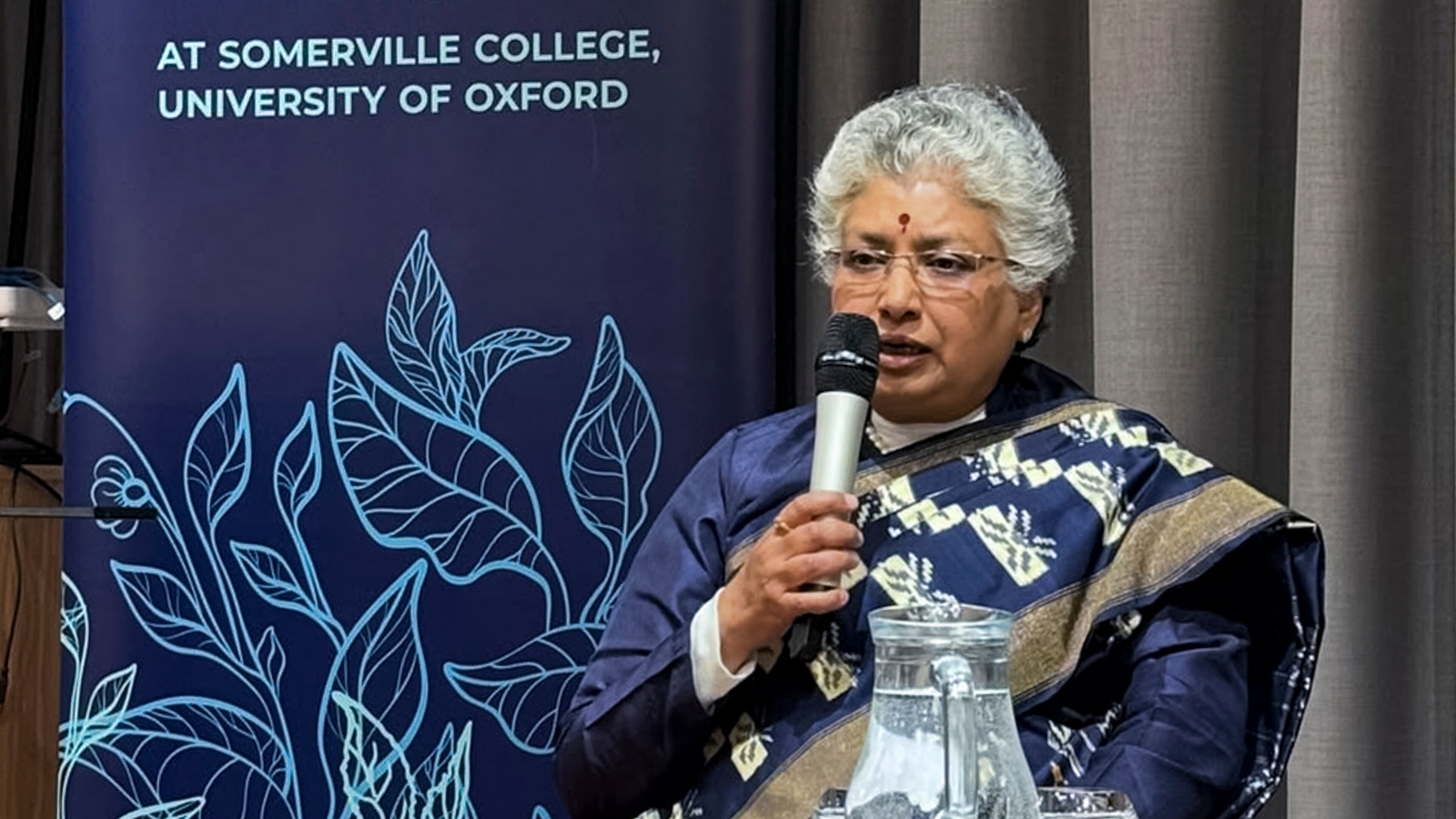
Justice BV Nagarathna, who is expected to become India’s first woman Chief Justice in September 2027, said at the inaugural Cornelia Sorabji Memorial Lecture at Somerville College, University of Oxford, that the presence of a few women in high public offices does not reflect the actual position of women across the country. She urged a deeper examination of structural barriers that prevent women from accessing education, employment and professional opportunities.
Nagarathna highlighted that the Supreme Court currently has three women judges out of 37, and women account for only 111 of the 781 judges in the country’s 25 high courts, about 14%. She called for one‑third representation of women lawyers on government panels, including those representing public sector undertakings and providing legal aid, arguing that participation must extend beyond entry to opportunities for advancement and leadership.
In her lecture, the judge traced the evolution of women’s rights from the colonial legal order to the constitutional promise of equality under Articles 14 and 21, noting that the journey remains unfinished despite legislative and judicial advances. She cited landmark judgments such as the 2005 recognition of daughters as equal coparceners in ancestral property, the Vishaka guidelines against workplace sexual harassment, and rulings that challenged gender‑based restrictions in employment and the armed forces.
Nagarathna cautioned against measuring progress solely by the number of discriminatory laws struck down, pointing to persistent barriers in women’s safety, economic independence and access to justice. She emphasized that equality must consider differences among women, including caste, class, disability, religion, region and economic circumstances.
She also argued that the legal profession must address the gap between women’s entry into the profession and their representation in positions of authority, drawing a parallel with constitutional reservations for women in local bodies and the 106th amendment providing for reservation in Parliament and state legislatures.
"The women of India are asking for their basic and constitutional rights which have to be provided both at home and outside," she said, listing rights such as being born as a girl child, education, marital choice, a career of one’s choice, inheritance and safe conditions at home, workplaces and public spaces as essential to empowerment.
Separately, the Integrated Homicide Investigation Team (IHIT) reported that Gaganpreet (Garry) Rehal, 23, and Sukhjeet Kaur, 24, were shot outside a Walmart store on the night of November 15. Both died in hospital. IHIT said the shooting was targeted and linked to organised crime, and that a nearby car fire reported at 10.51 pm is believed to be the suspect vehicle.
Frequently asked questions
Who is Justice BV Nagarathna expected to become in September 2027?
India’s first woman Chief Justice.
How many women judges are currently in the Supreme Court?
Three out of 37.
What proportion of high court judges are women?
111 of 781 judges, about 14%.