Education
Global Test Scores Hit Record Lows as Parental Engagement Declines, PISA Study Finds
A major international education assessment has revealed that test scores among 15-year-olds are falling in many wealthy nations, a trend researchers link to declining parental involvement in children's schooling. More than 760,000 teenagers across dozens of countries participated in the Programme for International Student Assessment (PISA) last year, with results released Tuesday showing that average scores in math, reading and science have reached their lowest points in the test's history among highly developed economies, including the United States, where reading and math scores continued to decline.
China, Singapore, Taiwan, Japan and South Korea achieved the highest marks, with Estonia, the United Kingdom and New Zealand also performing well.
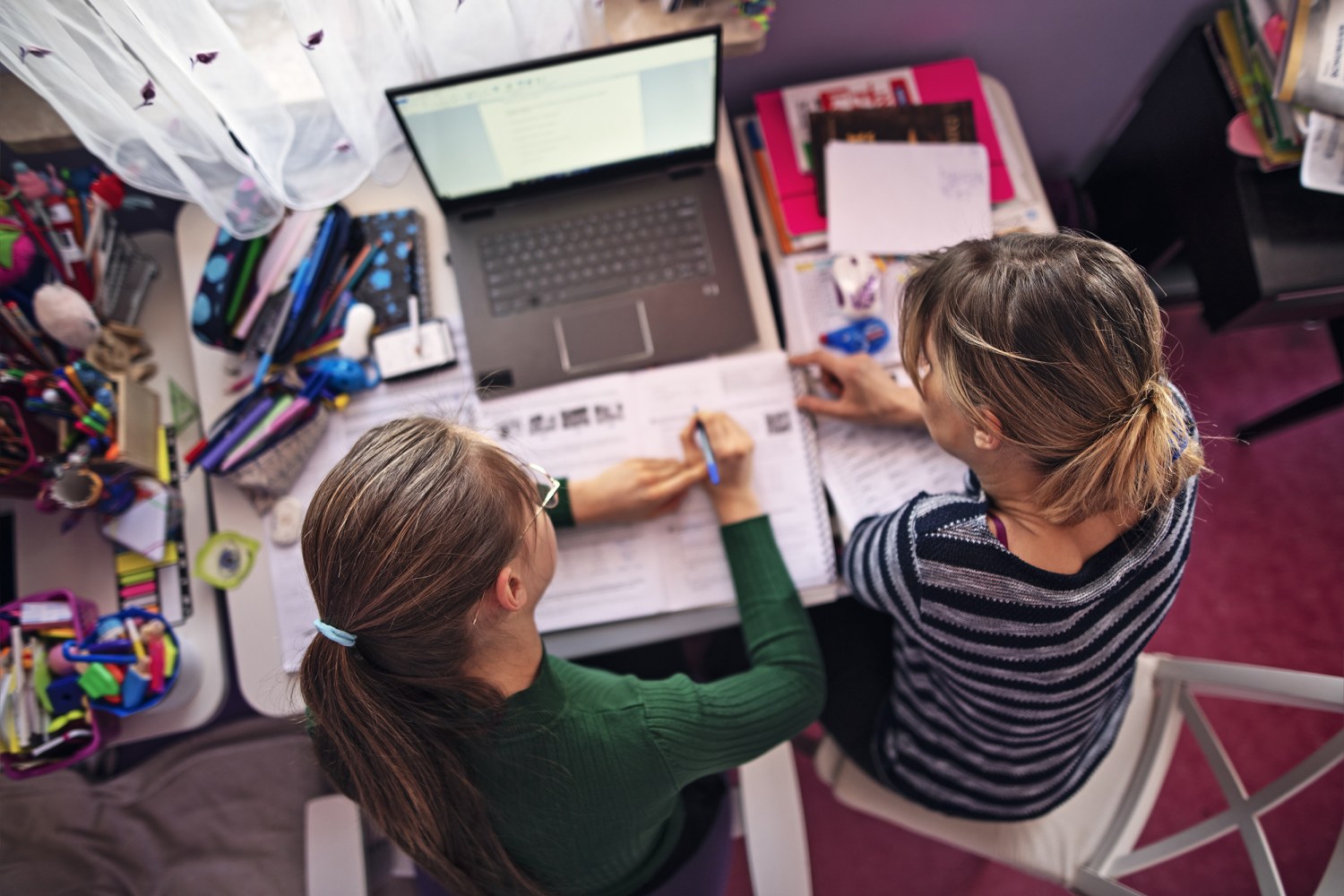
A companion survey of students suggests one explanation for the widespread decline: nearly every participating country reported a drop in family engagement with children's education since 2022, particularly regarding boys. This was measured through questions about how frequently parents discuss schoolwork with their children or show interest in their learning.
Andreas Schleicher, director for education and skills at the Organization for Economic Cooperation and Development, which administers the PISA test, said parents increasingly view themselves as consumers of educational services rather than active participants. "Parents see themselves more as a client of the school, not as someone who takes personal interest," he said.
The data showed that students whose family members ask them weekly about their school day scored roughly 35 points higher on the science portion of the test—equivalent to more than a year and a half of additional learning—compared to students with less engaged families, even after adjusting for socioeconomic factors.
Digital distraction emerged as another significant factor. More than a quarter of students in wealthy countries reported that classmates were distracted by digital devices during most or all science classes. Countries with strict cellphone policies in schools reported lower distraction levels. Schleicher noted a clear correlation between recreational device use and lower test scores, though the relationship with educational technology use was more complex. Countries where students reported two to three hours of daily in-school device use for learning purposes saw higher scores, but scores declined when usage exceeded that range.
Asian countries again led global rankings. Fewer than 10% of tested students in Japan, South Korea and mainland China reported classroom distraction from devices. Japan, South Korea, Taiwan, Singapore and participating Chinese provinces ranked among the top 10 regions worldwide in math, science and reading. In the Chinese provinces tested, nearly 100% of students met baseline standards in math and reading, compared to 65% in math and 74% in reading in the United States.
Tracey Burns, chief of global strategy and research at the National Center for Education and the Economy, warned that this gap carries broader implications. "To win a technological race, you need the people with the science and the technology and the reading capabilities," she said.
The U.S. matched the average score among OECD countries in math and ranked in the top 15 globally for science, reading and a new category measuring computational problem-solving. However, researchers cautioned that these rankings were partly boosted by declines in other countries, since U.S. reading and math scores fell to their lowest levels since PISA testing began in the early 2000s. Additionally, the U.S. results should be interpreted cautiously because the country did not meet the required sample size of participating schools and students.
The assessment also examined artificial intelligence use, finding that higher AI usage generally correlated with lower test scores. Students who reported never using chatbots outperformed those who did, even though nearly half of students in developed economies said they use AI chatbots for learning at least weekly.
Schleicher highlighted China, Japan, Singapore and Estonia as examples of countries successfully integrating AI into education without overreliance on it, noting that teachers in Asian countries often play a stronger role in designing classroom AI tools. "In the United States, teachers largely implement lessons. In Asia, teachers have a very strong role," he said.
He described visiting a Chinese elementary school classroom where students practiced calligraphy with traditional ink and brushes, while teachers scanned their work and used AI tools to provide feedback on their handwriting. "The classroom, if you made a photograph, would have looked like the 1950s—students doing calligraphy with ink," Schleicher said. "But everything was powered by AI."