India
Supreme Court Orders States to Form Wetland Grievance Committees
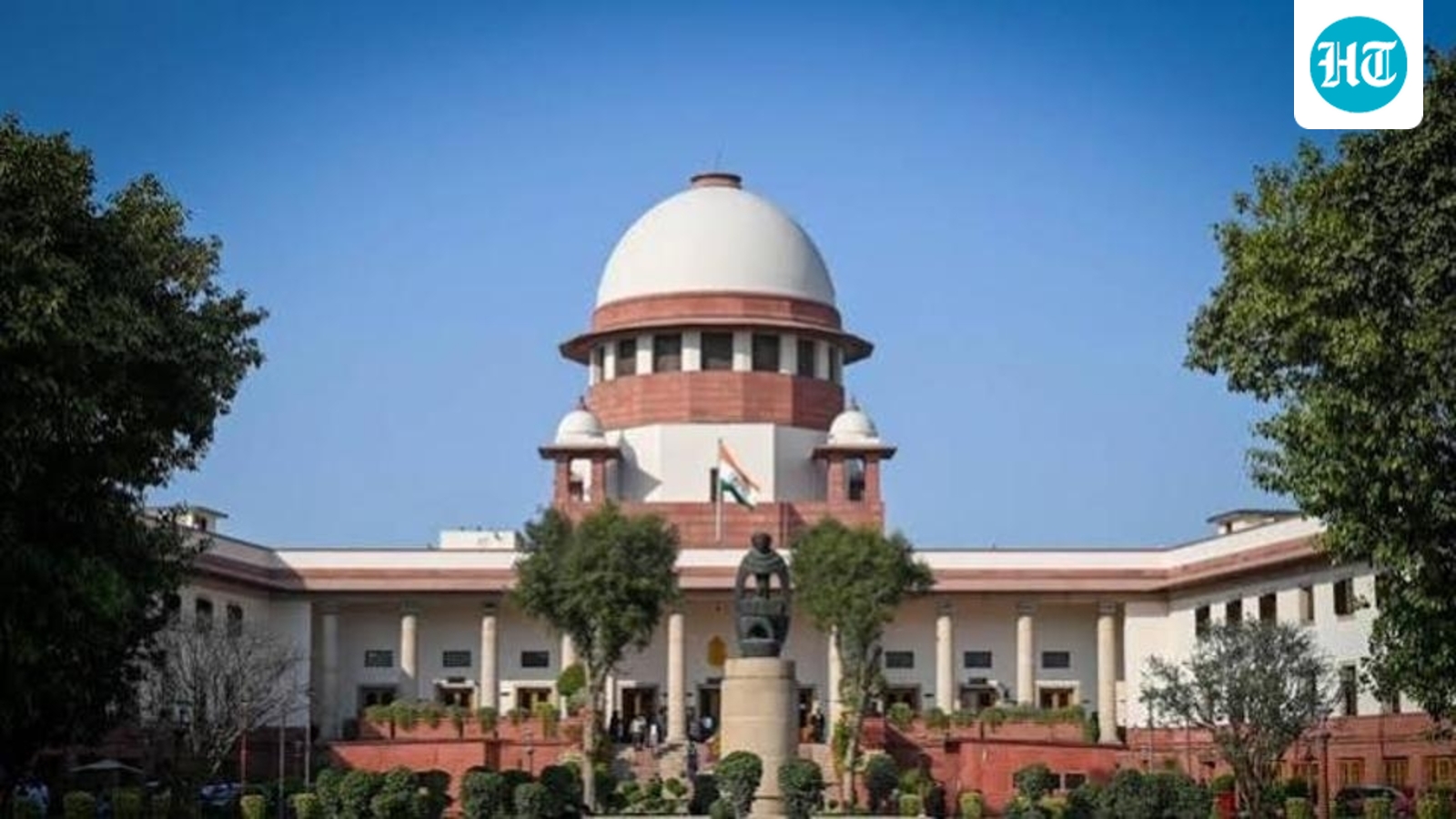
The Supreme Court has directed all states to immediately establish a grievance committee under the Wetland Conservation Rules, 2017, to address public complaints about wetland encroachment. The order, issued on Monday, came in a batch of petitions filed by birder and environmentalist Anand Arya, advocate MK Balakrishnan, and NGO Vanashakti, who noted that nine years after the 2017 Rules were enacted, states and union territories have not demarcated wetlands. The bench, comprising Justices Aravind Kumar and Vipul M. Pancholi, instructed state governments to set up a ‘grievance committee’ if one is not already in place.
Senior advocate Jayant Bhushan, acting as amicus curiae, explained that Rule 5(6)(b) of the Wetlands (Conservation and Management) Rules, 2017 requires a four‑member committee to hear and forward public grievances to the State Wetland Authorities. The Rules mandate that such committees be constituted within 90 days of the Rules becoming operational. A lawyer from Maharashtra pointed out that while a committee exists in that state, it has been unresponsive, citing instances where grievances were not acted upon.
Bhushan emphasized that forming a grievance committee is essential to protect the wetlands identified in the 2021 Space Application Centre (SAC) Atlas, which lists 231,195 wetlands covering more than 2.25 hectares. The Court noted that many of these protected wetlands continue to face encroachment and therefore urged states to comply with the rule.
The Court instructed that copies of the order be sent to all state chief secretaries for immediate implementation and scheduled a further hearing for December 2. This directive follows a series of orders in which the Court has monitored states’ efforts to demarcate wetland boundaries and conduct ground‑truthing before notification. Last month, the Court directed states to carry out ground‑truthing for water bodies other than wetlands.
In December 2024, the Court had asked states and union territories to demarcate all wetlands identified in the 2021 SAC Atlas within three months, a deadline that has been extended multiple times at the request of states. The Court has repeatedly stressed that protecting water bodies is vital for meeting the country’s drinking water needs, citing Article 21 of the Constitution.
Responses from several states indicated that some wetlands identified in the 2021 Atlas cannot be traced or are considered outside the definition of wetlands under the 2017 Rules, and therefore do not require protection. The Court has warned that it cannot remain a spectator to the consequences of unprotected water bodies.
According to a Centre report last year, ground‑truthing is complete for nearly 80% of the 231,195 wetlands in the 2021 Atlas, and boundary demarcation is finished for about 95,000 wetlands. The Ministry of Environment, Forests and Climate Change currently maintains that there are 1,319 notified wetlands and 103 Ramsar sites, which are wetlands of international importance under the Ramsar Convention.