India
Mahipalpur Flyover Bottleneck Affects Half a Million Daily Commuters
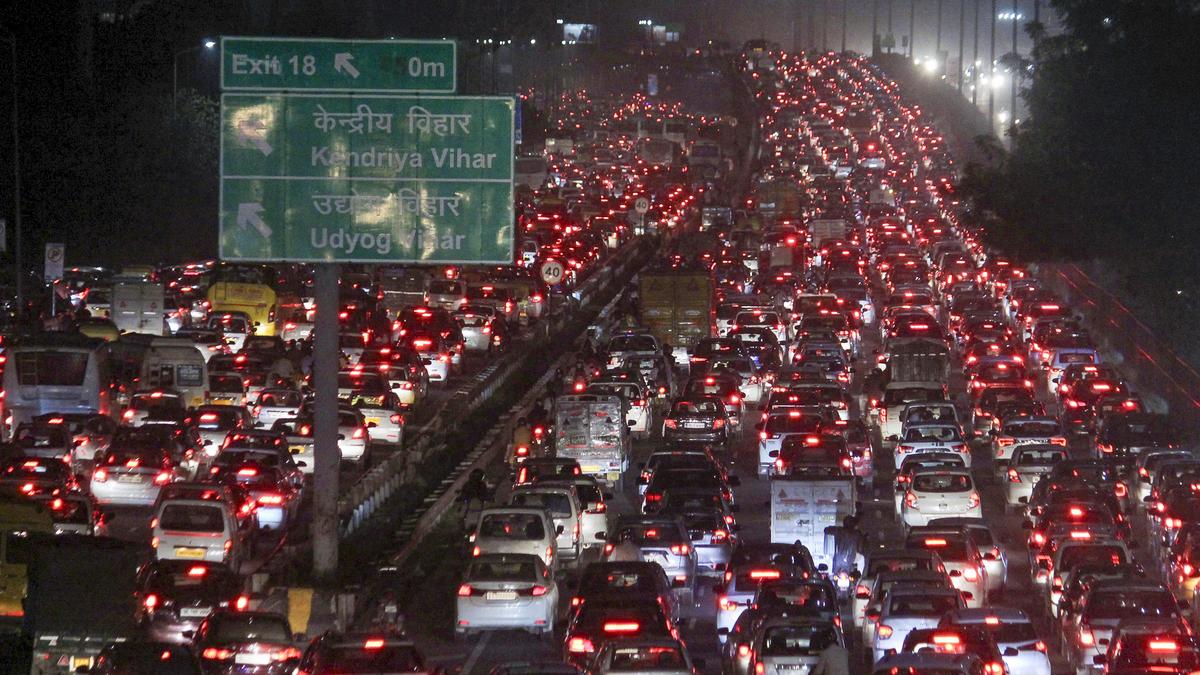
A long line of red tail‑lights stretches along the Mahipalpur flyover on National Highway‑48 every day as commuters travel between home and work. Delhi Traffic Police estimates that at least half a million commuters use the flyover daily, making the corridor that connects central Delhi with Gurugram a persistent traffic bottleneck. Vehicles begin slowing down even before reaching the flyover, with queues frequently extending beyond it.
Police sources attribute the congestion to multiple traffic streams converging at Telco Cut and Radisson, frequent merging and lane changes, and bottlenecks on the roads beyond the flyover. Gajender Rawat, a private‑sector employee who travels from Paschim Vihar to Gurugram, said he spends at least 30‑40 minutes crossing the flyover each day – roughly the time his entire home‑to‑work journey would take in the absence of traffic. “Vehicles begin slowing down almost as soon as we enter the flyover while travelling from Delhi towards Gurugram, with congestion stretching towards the Gurugram side. It is the same story on the way back, especially if you travel during peak office hours,” he said. On Wednesday, he took over 1.5 hours to cross the stretch during peak hours.
Some commuters have begun avoiding the corridor altogether. Denis Gupta, who travels daily from Rohini to Gurugram, said he now takes the Urban Extension Road (UER), despite the longer distance and toll charges. “I stopped using that route altogether because of the long traffic jams. I now take the UER, which is a longer route and takes around an hour, and have to pay toll for it. But I’d rather pay and drive longer than get stuck in a traffic jam. Ultimately, it takes longer on the shorter route because of the jam,” he said.
Commuters have repeatedly flagged the problem on social media, describing the flyover as a “permanent choke point” and raising concerns over traffic management and passenger pick‑ups and drop‑offs along the stretch. “Over the last five‑six months, there has been a permanent traffic jam at Mahipalpur flyover. We do not see police personnel at major choke points. Shiv Murti has become a bus stand, with long‑distance buses stopping to pick up passengers. Cabs drop passengers near the hotel at Mahipalpur flyover,” a commuter wrote on X, sharing a Google Maps screenshot showing a travel time of 1 hour and 43 minutes for 36 km.
A proposed decongestion plan prepared by the traffic police focuses on regulating the volume of vehicles entering the flyover rather than merely increasing signal timings. The plan recommends controlled entry from feeder roads such as Telco Cut and Radisson, channelising merging and U‑turn movements, and enforcing lane discipline to prevent sudden lane changes on the flyover. It also calls for installing temporary lane delineators and directional boards ahead of the flyover, prohibiting stopping, passenger pick‑ups and drop‑offs and unauthorised parking, and deploying traffic personnel at entry points, flyover approaches and the exit to coordinate vehicle movement. The plan further recommends keeping the road beyond the flyover clear to allow vehicles to disperse without queues building up backwards, and regulating the volume of traffic entering the corridor according to the capacity of the roads beyond it.
Traffic police officials say the congestion cannot be attributed solely to the capacity of the flyover. While its entry and exit points are relatively wide, the carriageway narrows on the flyover, making the movement of vehicles and merging traffic particularly challenging. The police have identified five major contributors to the congestion: traffic from Vasant Kunj, Mehrauli and Saket entering NH‑48 through the Mahipalpur bypass and Telco Cut; airport traffic heading towards Gurugram joining the highway near Radisson; local vehicles from Mahipalpur and Rangpuri entering the main carriageway; Dwarka‑bound vehicles making U‑turns near Radisson before entering NH‑48; and multiple infrastructure projects and changing road connectivity in the area. The resulting congestion is a combination of merging, lane‑changing and inadequate traffic dispersal beyond the flyover, rather than simply a shortage of road space.
Frequently asked questions
How many commuters use the Mahipalpur flyover daily?
At least half a million commuters use the flyover daily, according to Delhi Traffic Police estimates.
What are the main causes of congestion on the Mahipalpur flyover?
Congestion is caused by multiple traffic streams converging at Telco Cut and Radisson, frequent merging and lane changes, and bottlenecks on roads beyond the flyover.
What measures are being proposed to reduce traffic congestion on the Mahipalpur flyover?
The decongestion plan includes regulating vehicle volume entering the flyover, controlled entry from feeder roads, channelising merging and U‑turn movements, enforcing lane discipline, installing temporary lane delineators and directional boards, prohibiting stopping and passenger pick‑ups/drop‑offs, deploying traffic personnel at entry points, flyover approaches and exit, and keeping the road beyond the flyover clear.