Law & Justice
CREDAI Chennai to File Supreme Court Petition Over 1km Construction Ban Around Pallikaranai Marshland
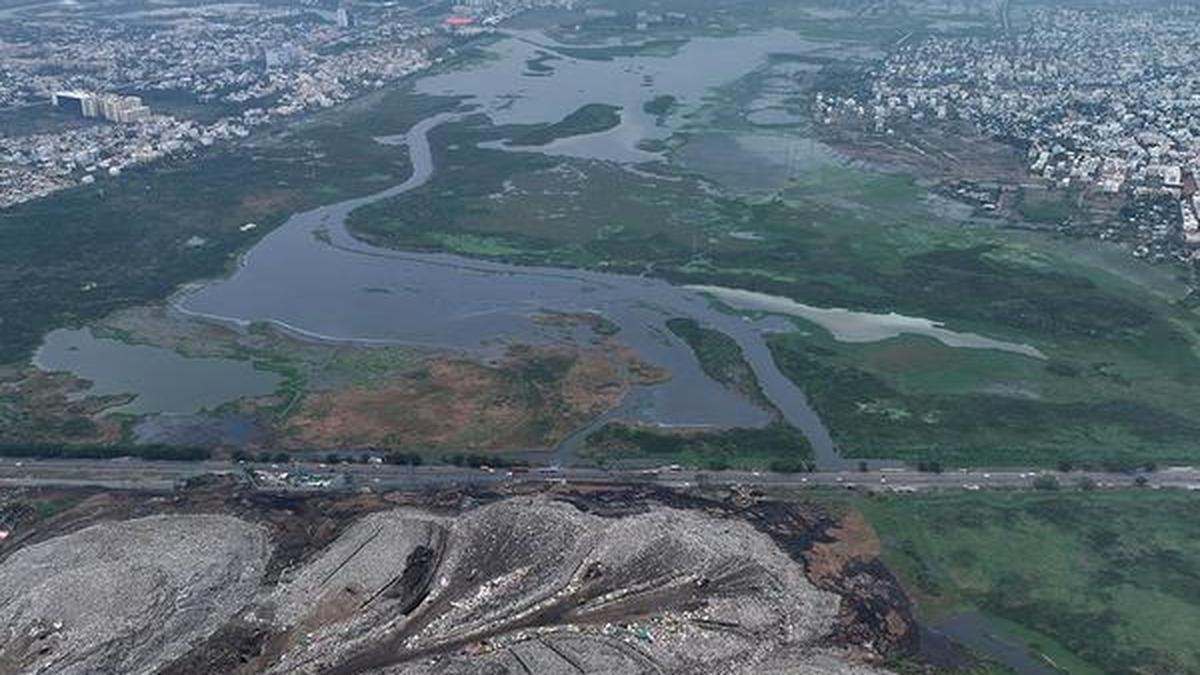
The Confederation of Real Estate Developers’ Associations of India (CREDAI) Chennai has expressed deep disappointment with the Madras High Court’s order on the Pallikaranai Ramsar issue. After hearing the case for more than nine months, the court’s decision to refer it to the Supreme Court has surprised the association. CREDAI Chennai has decided to approach the Supreme Court to seek relief from the National Green Tribunal’s (NGT) order that imposes a one‑kilometre construction restriction around the Pallikaranai marshland. The restriction affects not only real‑estate developers but also over one lakh patta holders whose land titles date back to as early as 1911, extending their wait for justice. The association said there was no new material on record to justify the court’s decision. When the petition was filed in February 2026, the court was already aware that the identification, demarcation and ground‑truthing of wetland boundaries across the country was being heard by the Supreme Court in WP(C) No.230 of 2001. CREDAI noted that the Madras High Court could have advised the petitioner to seek appropriate relief from the Supreme Court during the initial hearings in February 2026. In compliance with the court’s direction issued on September 7, 2026, the Wetland Authority re‑examined the Zone of Influence, considering hydrological connectivity, drainage pathways, satellite wetlands, land use and the wetland‑urban interface. Based on this study, an interim Zone of Influence was established. The competent authority identified land parcels that would impact the hydrology of the Pallikaranai swamp area through a review of historical imagery, scientific and hydrological studies and the regulatory framework. The Wetland Authority also proposed safeguards, including prohibiting blockage of established inlet and outlet channels, natural drains or hydrological pathways, and banning the discharge of untreated sewage or wastewater into water courses connected with the wetland. The TNSWA has not reduced the Pallikaranai Swamp area (Ramsar site), which remains fully protected. The regulation seeks to control development in the Zone of Influence area subject to safeguards that prevent impact on the Pallikaranai Swamp Area. The interim report was submitted after a two‑month study with technical agencies, following the High Court’s directions. CREDAI said the Madras High Court’s decision to refer the matter to the Supreme Court, despite the availability of a detailed scientific report by a competent authority, was surprising. It also pointed out clear precedents for a 0‑km Zone of Influence in densely urbanised areas, such as Guindy National Park, Chennai (SC case reference T.N.Godavarman Thirumulpad Vs. Union Of India) and East Kolkata wetlands (Ramsar site). A development freeze on a vast area of over 8,400 acres in a dense urban setting is unprecedented, CREDAI added.