Technology
Rolls‑Royce SMR Completes Factory‑Built Seismic‑Protection Component Test
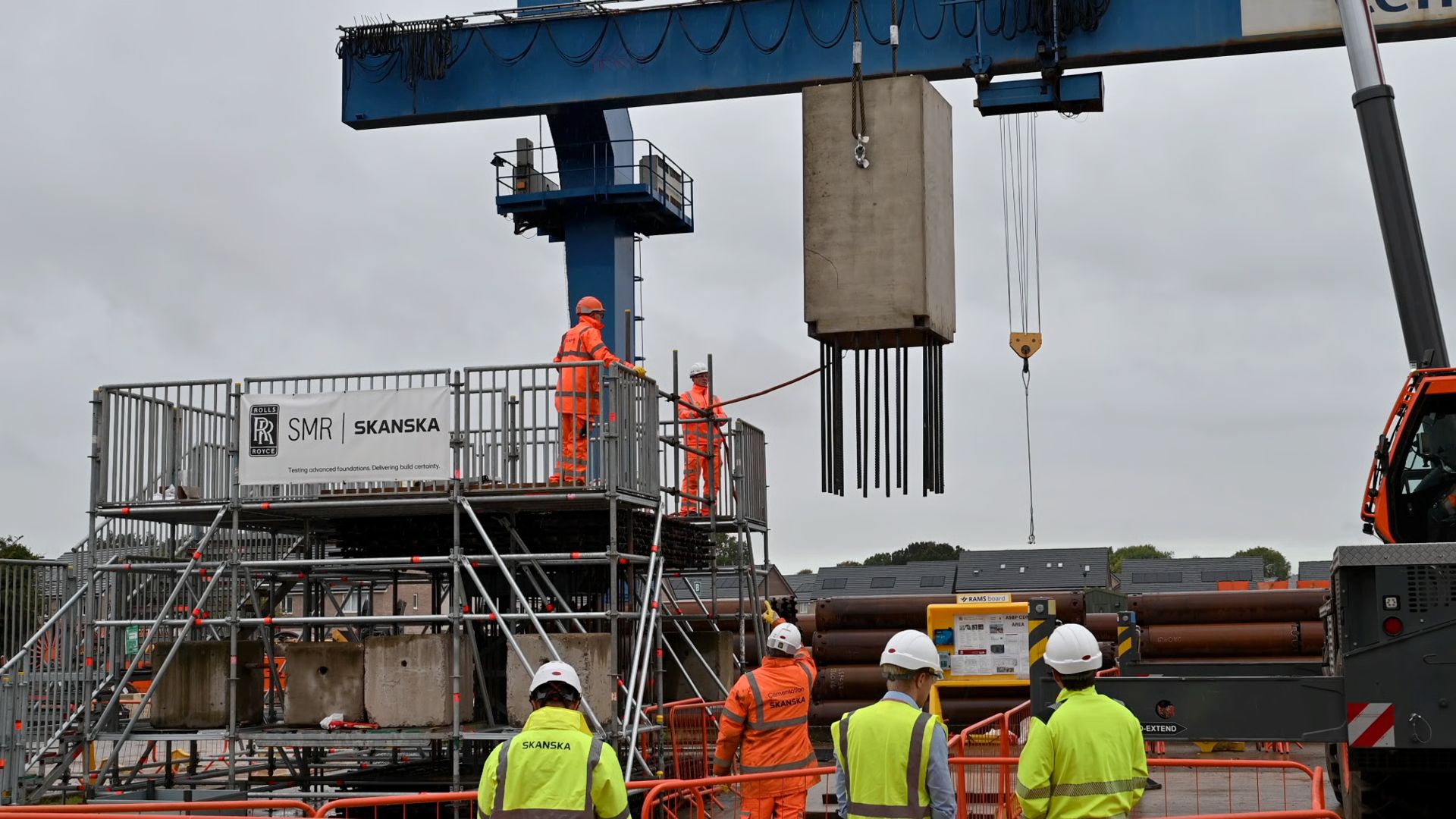
Rolls‑Royce SMR has finished a key construction test for its small modular reactor (SMR) program. A new precast concrete component, an aseismic bearing pedestal, could simplify the manufacture and assembly of future nuclear plants. Skanska built and tested the pedestal at its Bentley Works facility in Doncaster, England. The demonstrator confirms an off‑site manufacturing approach for a part that plays a crucial role in protecting nuclear infrastructure during earthquakes. The achievement gives Rolls‑Royce SMR another construction method to evaluate before deploying its factory‑built reactor design and shows how conventional construction techniques could support industrial‑scale production of nuclear power plants.
Aseismic bearing pedestals support isolation devices within the Rolls‑Royce SMR design. These devices separate buildings and other structures from ground movement during seismic events, reducing the forces that earthquakes can transfer into critical infrastructure. The pedestal’s performance is therefore important for protecting the reactor facility and supporting its structural resilience. Skanska’s demonstrator allowed engineers to test the manufacturing approach before committing to full‑scale deployment. Producing the component away from the construction site could also give manufacturers greater control over quality and production schedules.
The prototype represents a first‑of‑its‑kind precast bearing pedestal for the Rolls‑Royce SMR design. Skanska completed its construction and technical trials at Bentley Works, bringing its engineering and manufacturing capabilities into the project.
Off‑site manufacturing is a key part of Rolls‑Royce SMR’s construction strategy. The company aims to move significant portions of plant construction into controlled manufacturing environments, which could reduce on‑site work and improve consistency across multiple reactors by allowing suppliers to repeat established processes.
Ruth Todd, Operations and Supply Chain Director at Rolls‑Royce SMR, said the demonstrator supports the company’s plans for factory‑built nuclear plants and highlighted the importance of testing critical components before deployment. Early cooperation with suppliers helps engineers identify potential problems before construction begins and gives manufacturers time to refine their processes ahead of larger production requirements.
Terry Muckian, Skanska UK Executive Vice President, highlighted the engineering work behind the demonstrator, noting that the project combined the contractor’s civil engineering, design and steelwork manufacturing experience.
Rolls‑Royce SMR has secured a place in the UK’s small modular reactor deployment program through Great British Energy – Nuclear. The country’s first planned deployment will take place at Wylfa on Anglesey, North Wales, with the site expected to generate its first electricity in the mid‑2030s. The Czech Republic and Sweden also feature in the company’s international deployment plans.
Small modular reactors use factory‑manufactured sections that engineers assemble at their final locations, aiming to make nuclear construction more repeatable than conventional projects. The bearing pedestal demonstrator addresses one part of that challenge. Its successful trials give Rolls‑Royce SMR and Skanska a tested manufacturing approach for a component that supports seismic protection. Further engineering and manufacturing work will determine how the method translates into future plant construction, while the broader objective remains consistent production across a fleet of reactors.