Business & Finance
VIX Drops 32% From November Peak While Bitcoin Slides Toward $62,000
By Ethan Mercer
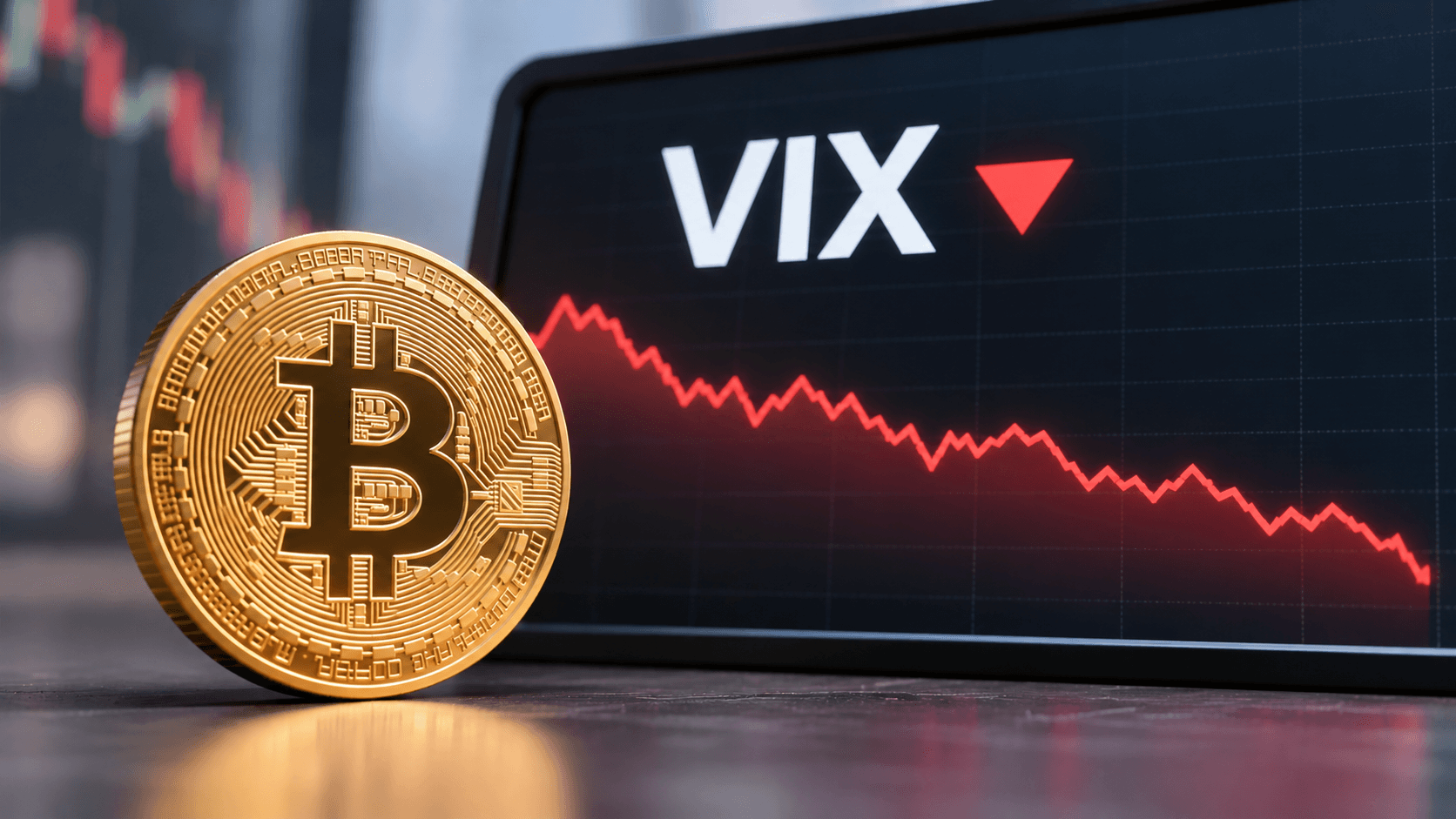
The Cboe Volatility Index (VIX), often called Wall Street’s fear gauge, fell about 32% from its November closing peak. The index closed at 28.18 on November 5 and fell to 19.30 on November 13, showing a sharp decline in expected U.S. stock‑market volatility. It recovered toward 20 during trading on November 16, remaining well below the earlier peak.
Bitcoin, meanwhile, slipped toward $62,000 on November 15 before rebounding toward $65,000. The move highlights a divergence: expectations for U.S. equity volatility have moderated even as cryptocurrency investors face substantial losses.
The VIX measures the market’s expectation of S&P 500 volatility over the next 30 days using index‑option prices. A rising VIX indicates traders expect larger stock‑market fluctuations; a falling VIX suggests those expectations are easing. The index does not directly measure Bitcoin volatility or predict cryptocurrency prices.
Bitcoin’s decline has coincided with institutional selling, shrinking stablecoin liquidity, and expectations of tighter Federal Reserve policy. According to Farside Investors, Bitcoin experienced about $1.91 billion in spot ETF withdrawals across seven consecutive trading sessions through November 13, adding cryptocurrency‑specific selling pressure.
The divergence also occurs amid uncertainty around artificial‑intelligence stocks. Nvidia shares fell nearly 13% during November 9–13 as investors reacted to a leadership transition and concerns about AI infrastructure valuations. The correction prompted a rotation into other chipmakers, with Broadcom and AMD posting substantial weekly gains. Volatility expectations can decline even when individual technology stocks remain under pressure.
A VIX reading near 20 indicates that S&P 500 options are pricing roughly 20% annualized volatility over the coming month. It does not mean stocks are expected to decline 20%, nor does it imply Bitcoin will move an equivalent amount. For cryptocurrency investors, ETF flows, derivatives positioning, and liquidity remain key indicators. Recent Bitcoin liquidation pressure shows how leveraged positions can amplify declines independently of VIX changes. A further VIX decline could signal improving expectations for equity‑market stability, but it would not automatically remove selling pressure from cryptocurrency markets.