Entertainment
Casino Royale Turns 20: A 20‑Year Retrospective on the Film That Re‑imagined Bond
By admin
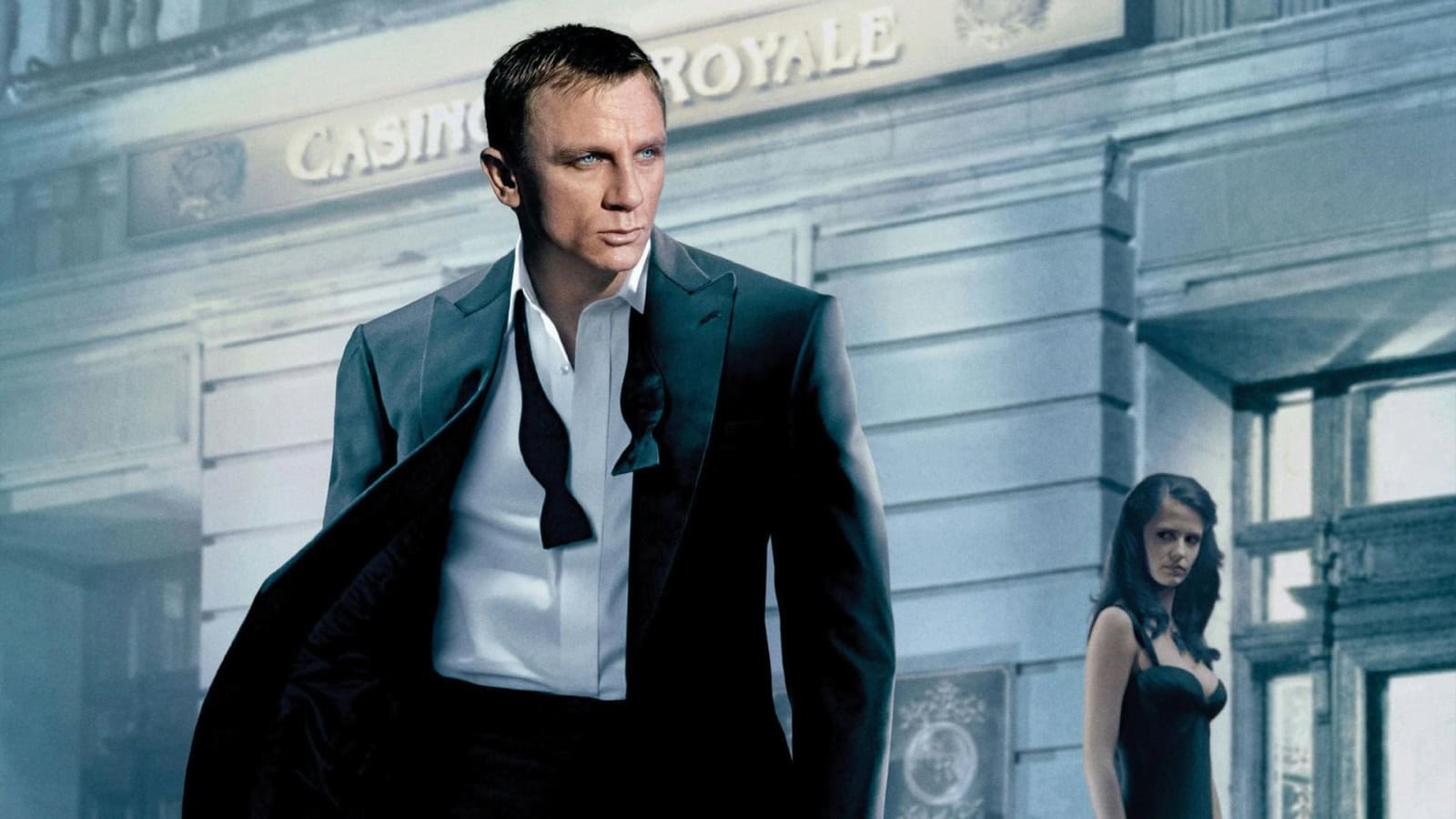
Twenty years after its 2006 release, Daniel Craig’s debut as 007 in Casino Royale is celebrated for redefining the James Bond franchise. The film introduced a grittier, more vulnerable 007, featuring high‑stakes poker, intense action and daring stunts. It marked a shift from the franchise’s earlier, more fantastical tone, offering a grounded origin story for the new 00 agent.
The source material, Ian Fleming’s 1953 novel Casino Royale, had been adapted before: a 1954 television episode starring Barry Nelson, a 1967 satirical film with David Niven, Peter Sellers and Woody Allen, and a 1999 rights acquisition by Eon Productions through Sony Pictures and MGM. During this period, Quentin Tarantino expressed interest in a 1960s‑set adaptation with Pierce Brosnan, but Eon declined.
In March 2004, screenwriters Neal Purvis and Robert Wade were hired to craft a screenplay that returned to Fleming’s books. Producers Barbara Broccoli and Michael G. Wilson wanted a more realistic Bond after Die Another Day. In February 2005, Martin Campbell, who directed GoldenEye, was brought on as director. Campbell felt the existing script needed work and enlisted Oscar‑winning screenwriter Paul Haggis to rewrite the climax, deepen Vesper Lynd’s fate, and give Bond a personal stake.
Casting the new Bond was exhaustive. Over 200 actors were considered before narrowing to ten finalists. Casting director Debbie McWilliams noted that many candidates lacked the maturity and charisma required. Hugh Jackman, Christian Bale, Clive Owen, Ewan McGregor, Karl Urban, Sam Worthington, Michael Fassbender and Henry Cavill were approached; Bale and Jackman declined, Cavill was deemed too young. Daniel Craig, after reading all Fleming’s novels and drawing inspiration from Mossad and British Secret Service advisors, became the frontrunner. He accepted the role in September 2005 after Haggis had completed his rewrite.
The role of Vesper Lynd was also contested. Angelina Jolie, Charlize Theron, Rachel McAdams, and others were considered. Eva Green, a French actress who had appeared in The Dreamers and Kingdom of Heaven, was ultimately cast and announced on 16 February 2006.
Mads Mikkelsen was chosen to play the antagonist, with casting director McWilliams citing his theatre background. Judi Dench returned as M, a role she had famously played in GoldenEye.
The film’s most spectacular stunt involved an Aston Martin DBS V12 performing seven barrel rolls during a crash sequence. A nitrogen‑powered air cannon was used to launch the car, earning a Guinness World Record on 5 November 2006. Three Aston Martin DB9s were destroyed during filming.
A free‑running chase sequence, inspired by Sébastien Foucan, was filmed in Nassau, the Bahamas, although the story places it in Madagascar. The sequence required two months of planning and six weeks of rehearsal.
Casino Royale was produced on a $150 million budget and grossed $600 million worldwide. It holds a 94 % approval rating on Rotten Tomatoes, with critics praising its darker tone and Craig’s performance. The film received nine BAFTA nominations, including Best Actor for Craig, the first such nomination for a Bond actor.
The success of Casino Royale launched Daniel Craig’s era, leading to subsequent hits such as Skyfall and No Time To Die, and cemented a new, grittier vision of Bond for a new generation.
Frequently asked questions
Who directed Casino Royale?
Martin Campbell, former director of GoldenEye, was brought on as director in February 2005.
How many actors were considered for Daniel Craig’s role as Bond?
Over 200 actors were considered before narrowing to ten finalists.
What Guinness World Record was set during the film’s production?
The Aston Martin DBS V12 performed seven barrel rolls during a crash sequence, earning a Guinness World Record on 5 November 2006.