Business & Finance
PM Modi Calls on Indian Firms to Prioritize Quality, Global Reach and Self‑Reliance
By Ravi Hari
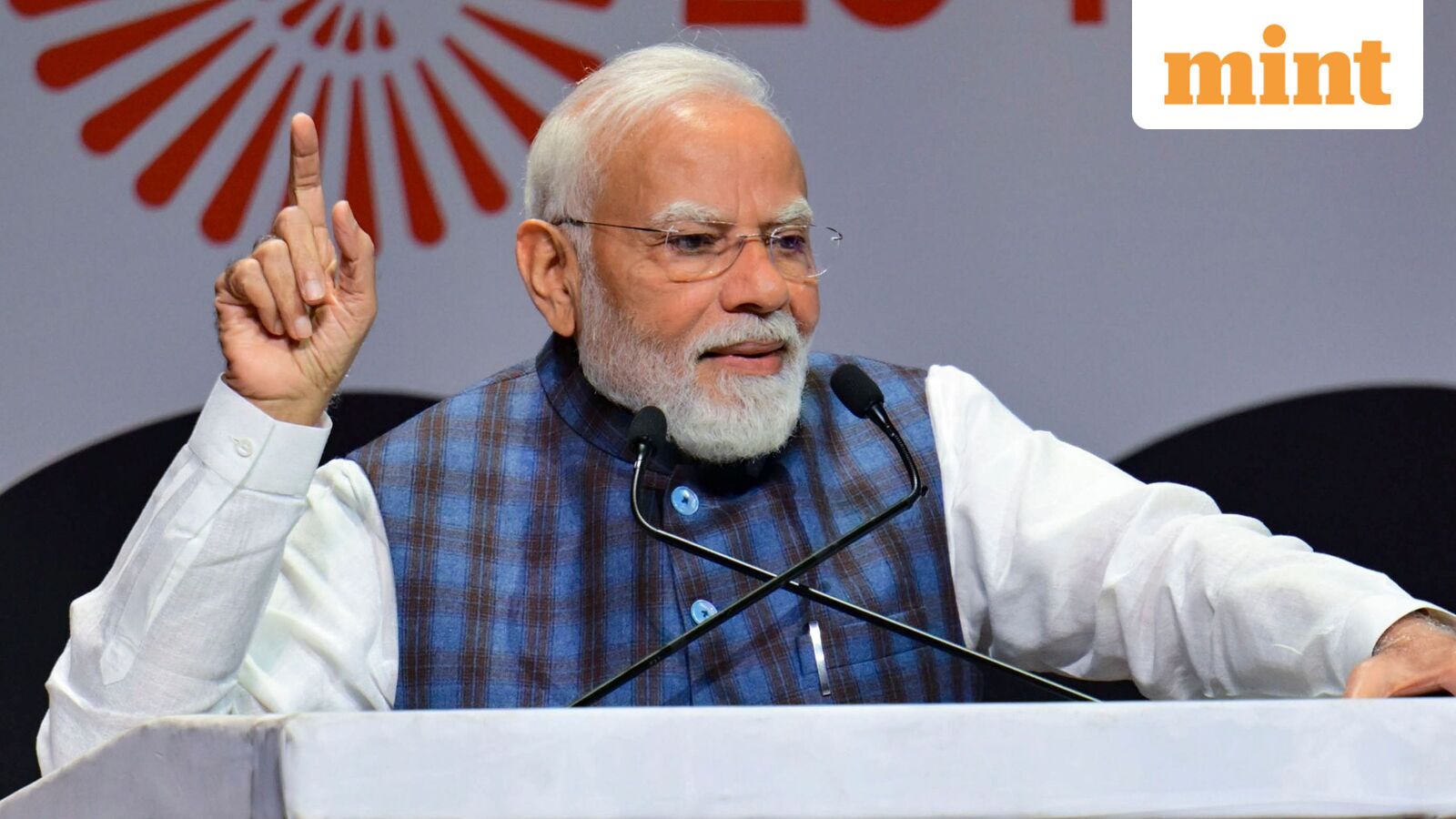
Prime Minister Narendra Modi urged Indian businesses to move beyond the domestic market, improve product quality, reduce import dependence and expand their global footprint. Speaking at the 100th Annual General Meeting and Annual Convention of the Federation of Indian Chambers of Commerce and Industry (FICCI) in New Delhi on November 19, Modi said that India’s 1.4 billion consumers should not be treated as an assured market and that companies must offer “export quality” goods to them.
He warned that the domestic market should serve as a launchpad for global competitiveness rather than a comfort zone, and asked industry leaders to make India First the foundation of long‑term investment decisions over the next two decades. Modi said this would strengthen self‑reliance and create new opportunities.
The Prime Minister highlighted government tax reforms, noting the reduction of the basic corporate tax rate from 30 % in 2014 to 22 % and the income‑tax exemption for earnings up to ₹12 lakh. He questioned whether companies had passed on these benefits through higher salaries or additional hiring, and praised improvements in tax administration and GST reforms that have lowered taxes on several products.
Modi called on the pharmaceutical sector to reduce dependence on imported active pharmaceutical ingredients, bulk drugs and intermediates, and urged companies to identify ingredients that could be manufactured domestically. He criticized the export of raw materials while importing finished products, citing examples such as wheat and bread, and pointed to opportunities in steel and aluminium where India exports iron ore but imports finished steel and specialised alloys.
The Prime Minister urged increased investment in agriculture, food processing and procurement infrastructure to boost India’s share of global agricultural exports, which remains around 2‑2.5 %. He noted the rise in processed food’s share of agri‑food exports from 13 % to over 20 % in the past 12 years and encouraged value addition for specific international markets.
Modi identified hand tools, power tools, machinery manufacturing, packaging equipment, irrigation systems and factory‑related machinery as sectors where Indian companies could build a stronger global presence. He urged large firms to help smaller enterprises meet international quality and scale requirements.
He urged businesses to take advantage of the Free Trade Agreements India has signed with major economies, and asked them to invest in overseas market research, understand consumer preferences and establish distribution networks.
Marking FICCI’s centenary, Modi invoked Mahatma Gandhi’s 1930 message of Swadeshi and self‑reliance, asking industry leaders to carry forward that vision. He invited representatives to submit written suggestions on areas requiring further reforms.
PM Modi highlighted India’s economic performance, noting that the country has moved from being among the world’s “Fragile Five” economies to becoming the fastest‑growing major economy. He cited a World Bank report that around 500 million Indians have moved out of poverty in the past 12‑13 years and mentioned that merchandise exports reached nearly $50 billion in October, the highest‑ever monthly figure.
Concluding, Modi said FICCI’s centenary is an opportunity to reflect on the contribution Indian businesses can make over the next two decades, urging companies to prepare for future domestic and global demand rather than focusing only on established sectors.