Business & Finance
ITAT Bangalore Grants Relief to Taxpayer After Consultant's Form Error Triggered Wrong Tax Regime
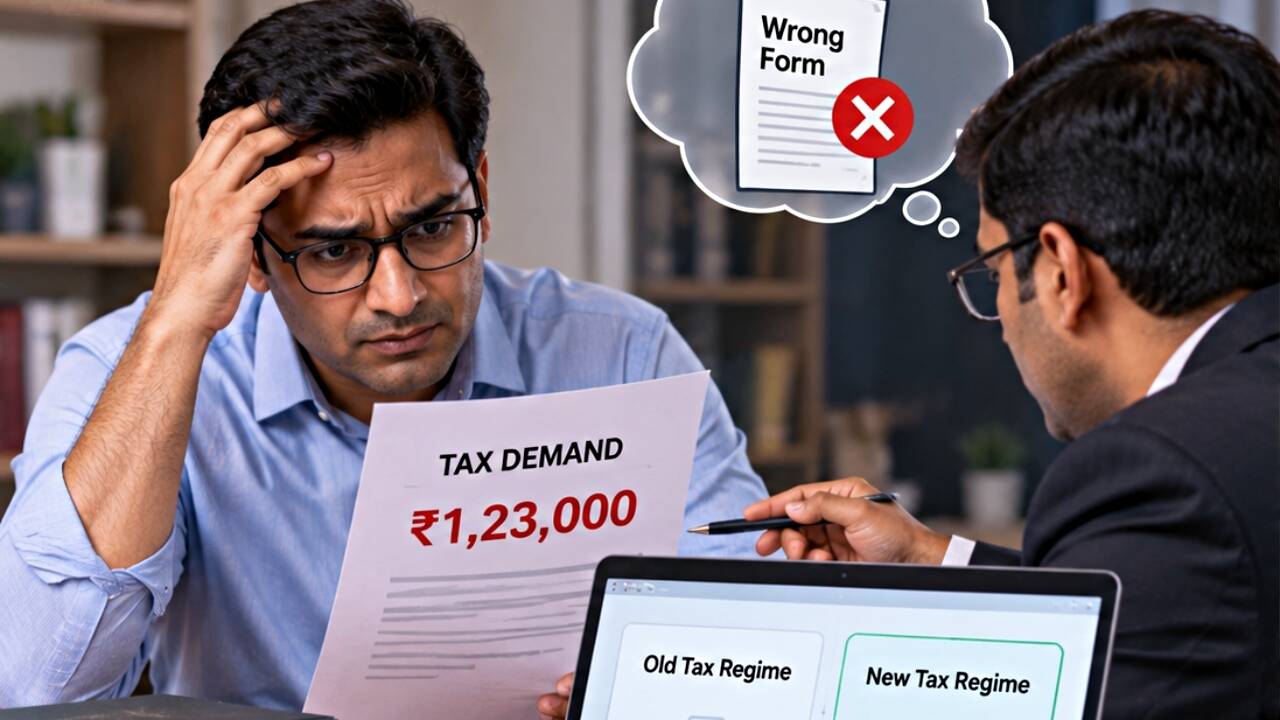
A Bengaluru taxpayer has secured relief from the Income Tax Appellate Tribunal (ITAT) Bangalore after his consultant mistakenly filed a form that shifted him into the old tax regime, resulting in a higher tax demand.
Mr Shah, a resident of Ali Asker Road, Bengaluru, had filed his income tax return under the new tax regime, declaring a total income of Rs 32.55 lakh. However, on September 30, 2025, his tax consultant inadvertently submitted Form No. 10-IEA during routine compliance work, which had the effect of opting him out of the new tax regime.
Since Shah's return had been prepared based on the new regime, the erroneous form created a discrepancy. When the Centralised Processing Centre (CPC), Bengaluru, processed his return on January 29, 2026, it relied on Form 10-IEA and computed his tax liability under the old regime, leading to an additional tax demand of Rs 1.23 lakh.
Shah contended that the form did not reflect his actual intention and had been filed by mistake. He pointed to his ITR, which clearly showed he wanted to continue under the new regime. The Commissioner of Appeals (CIT-A) rejected his explanation, prompting Shah to approach ITAT Bangalore, where he was represented by Varun S.
On August 17, 2026, the tribunal ruled in his favour. According to Chartered Accountant Suresh Surana, Shah had filed his return on October 24, 2025, computing his entire tax liability under the new regime as per Section 115BAC(1A). The tribunal considered this subsequent action, along with the contents of the actual return, to determine his genuine intent.
Surana said the tribunal noted that an income tax return is the statutory document through which a taxpayer declares income, calculates tax liability, and indicates the regime being followed. Since Shah's return, filed after the erroneous form, unambiguously computed tax under the new regime, the tribunal held that this later expression of choice could not be ignored merely because an earlier form had been filed incorrectly due to an inadvertent error.
The tribunal also observed that Shah had not attempted to claim benefits from both regimes simultaneously—he did not seek deductions or exemptions available only under the old regime while also claiming the lower rates of the new regime. The dispute, therefore, centred on identifying which regime Shah had genuinely intended to choose, rather than an attempt to exploit both regimes.
In reaching its decision, ITAT Bangalore relied on the Pune Tribunal's ruling in Akshay Nitin Malu v. ITO [2025] 173 taxmann.com 684, where a taxpayer had first opted for the new regime via Form 10-IE but later filed his return under the old regime. The Pune ITAT had ruled that the choice reflected in the subsequently filed return should prevail. Surana noted that the Bangalore tribunal applied the same principle to Shah's case, even though the regime shift was in the opposite direction.
Surana explained,