India
Supreme Court Seeks Party Responses on Traders’ Challenge to Ramlila Maidan Protest Designation
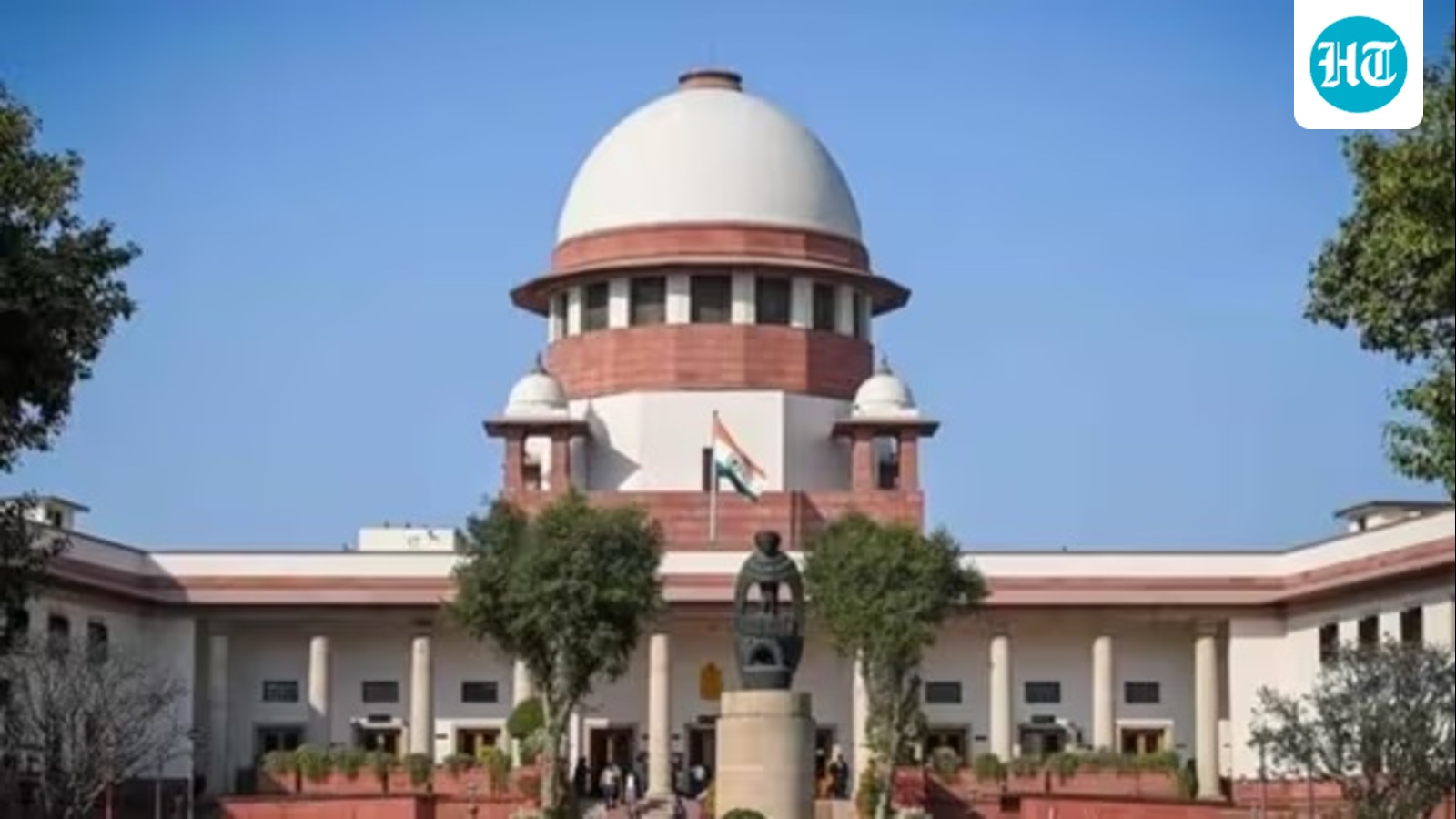
The Supreme Court on Wednesday asked political parties, including the Congress and the Aam Aadmi Party (AAP), and organisations such as the Cockroach Janata Party (CJP) and the All India Students Union (AISA), to respond to a petition filed by market traders’ associations that contests the designation of Ramlila Maidan as a protest venue. The petition, submitted by the Kirana Committee of Delhi and the Delhi Iron and Hardware Merchants Association of Chawri Bazar on October 16, argues that demonstrations at the ground disrupt business, affect livelihoods and deny access to roads leading to nearby residential areas. The petition was filed ahead of a proposed “Lehra Do Tiranga” march organised by the CJP at Connaught Place, with participation by AISA, on the same day. A bench headed by Chief Justice Surya Kant, and joined by Justices Joymalya and V Mohana, issued notices and requested responses from the Centre, the Delhi government, the Congress, the AAP, the CJP and AISA. The bench agreed to take up the matter after two weeks.
Senior advocate Mukul Rohatgi, appearing for the petitioners, said the notification of Ramlila Maidan as a protest site is wrong because the location is close to prominent markets such as Connaught Place, Chandni Chowk, Chawri Bazar, Khari Baoli and Sadar Bazar. Solicitor General Tushar Mehta, appearing for the Centre, told the court that the matter should be considered together with petitions challenging police action during the Delhi protests, as they all involve fundamental rights of traders, workers and residents.
In their petition, the traders said Ramlila Maidan is surrounded by dense residential localities and wholesale and retail markets of Old Delhi, where thousands of workers, traders and vendors operate. They argued that the designation was made without a published assessment of its impact on residents and businesses, or safeguards concerning the number of demonstrators, duration of protests, damage to property and liability. On November 3, while hearing the petition, the court asked whether the organisations that had called for protests had been made parties to the case. Following the suggestion, the petitioners added the Congress, which organised a rally at Ramlila Maidan on November 1, along with the AAP, the CJP and AISA.
The bench noted that protests affect the livelihood of people working in shops and those earning their living by selling goods on carts and stalls. The traders had initially approached the court over an order issued by the New Delhi Municipal Council (NDMC) to close Central Park in Connaught Place for the proposed march. The subsequent rally at Ramlila Maidan on November 1, they said, reinforced their concerns about the suitability of the ground as a protest venue.
The petition seeks the quashing of the October 11 order issued by Delhi Police designating Ramlila Maidan as a protest site, and a fresh, reasoned assessment after considering the surrounding areas and the interests of those affected. The Kirana Committee said the protests occurred during weeks when traders earn a substantial share of their annual income. “In the very weeks on which its traders earn their year, due to illegal and unlawful protests conducted in the midst of festive season, the livelihood of the vendors has suffered a significant loss,” the petition said. It estimated that Delhi sees daily business of around ₹500 crore to ₹600 crore, of which about ₹250 crore was at risk each day during the peak season between October 2026 and January 2027. The petition said nearly one million establishments, 10 million livelihoods and around 500,000 outstation traders depended on this activity. The petitioners said the impact extended beyond business owners to employees, daily‑wage workers, street vendors, hawkers, delivery personnel, drivers and artisans.
They clarified that they were not seeking a ban on peaceful protests, but wanted a framework governing the location, duration and scale of demonstrations, traffic arrangements and continued access to markets, residential neighbourhoods, hospitals and public transport. They also sought preventive planning and enforcement of the law in cases of violence or vandalism, while clarifying that such conduct should not be attributed to peaceful demonstrators generally.
Frequently asked questions
Which parties were asked to respond by the Supreme Court?
The Supreme Court asked Congress, the Aam Aadmi Party (AAP), the Cockroach Janata Party (CJP), and the All India Students Union (AISA) to respond.
What is the main concern of traders in the petition?
Traders contend that protests at Ramlila Maidan disrupt business, affect livelihoods, deny access to roads, and lack a published assessment of impact on residents and businesses.