Business & Finance
Sugar Price Surge in 2026 Raises Questions Over Government's Preparedness
By Sambavi Parthasarathy, Gauri Singavarapu
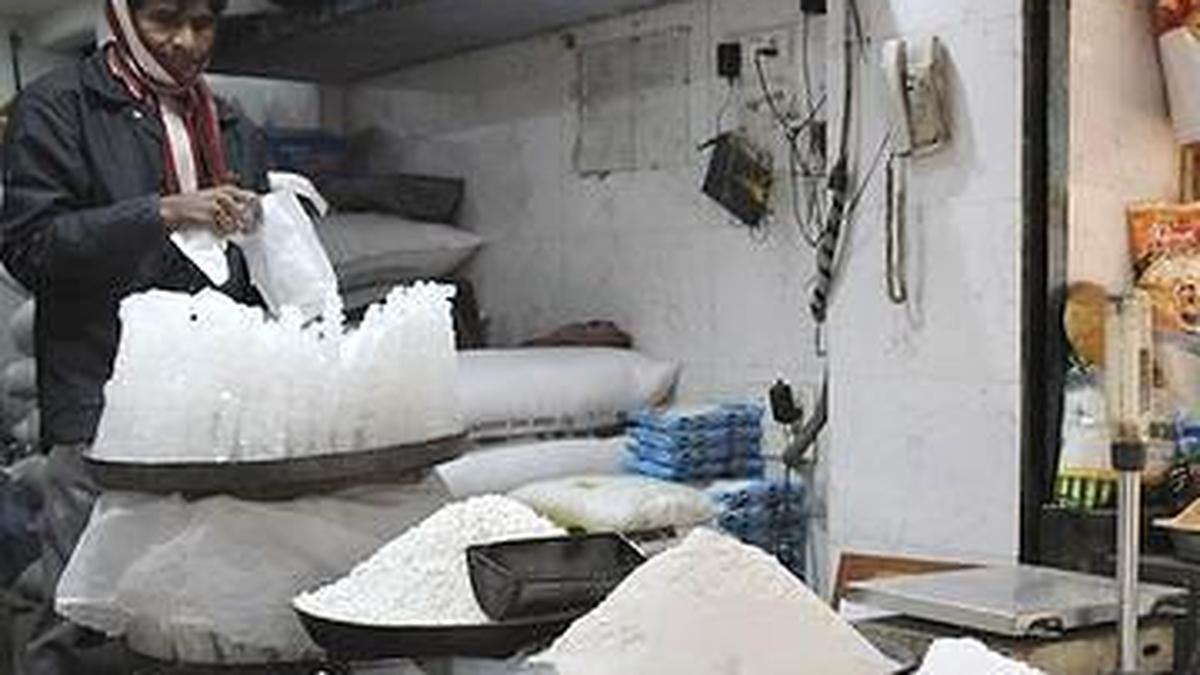
India's retail sugar prices climbed to unprecedented levels in August 2026, prompting the Union government to introduce several measures aimed at controlling prices and ensuring supply. Among these steps was a decision to allow duty-free imports of 10 lakh metric tonnes of raw sugar until October 31, 2026—the first such move in ten years.
Despite these interventions, prices have only eased slightly. Retail sugar prices rose sharply by 41%, from ₹46.27 per kilogram on August 26, 2025, to ₹65.05 per kilogram on August 26, 2026. This steep increase has led to scrutiny over whether the government could have anticipated and addressed the situation earlier.
Officials attributed the price spike to several factors, including heightened demand before the festive season, hoarding, lower-than-expected sugar production, tightening global supplies, and weather-related damage to crops. However, data indicates that this year's price increase was unusually high compared to previous years, undermining the claim that festive demand was a major driver.
Experts suggest that other cited factors were more predictable and could have been tracked more closely by authorities. Kunal Munjal, a Senior Research Fellow at the Economic Analysis Unit of the Indian Statistical Institute in Bengaluru, said that early signs pointed to tightening domestic sugar supplies. He noted that expectations of reduced sugar production in Brazil—the world's top sugar producer—had already signaled global supply pressures.
In early August, the Food and Agriculture Organization (FAO) reported that its Sugar Price Index rose by 5.6% in July, hinting at further increases. The FAO linked this trend to potential crop damage in the European Union due to hot weather and the impact of El Niño conditions on production in key Asian countries.
India's own sugarcane output has been declining since the 2022-23 season, when it peaked at 490.5 million metric tonnes. In a March 2025 reply to the Rajya Sabha, the government acknowledged this decline but maintained that production levels were adequate for domestic needs. About 83% of India's sugar output is consumed domestically, with imports mainly sourced from Brazil.
Munjal explained that this year's core issue was a mismatch between projected and actual sugar production. Initial estimates for the 2025-26 season had pegged output at around 343 lakh tonnes, but actual production is now estimated at approximately 306 lakh tonnes—a significant shortfall.
He noted that despite fluctuating or declining production trends in Uttar Pradesh and Maharashtra—the two states that together contribute 71% of sugarcane and 65% of sugar output—initial estimates remained high. Based on these inflated figures, the government had permitted exports and set ethanol diversion targets. When actual production fell short, domestic supply tightened more than expected.
Regarding opposition claims that sugar diversion for ethanol production contributed to the price rise, Munjal said this was unlikely to be a major short-term factor, though it could become more relevant in the long run. He pointed out that maize has increasingly replaced sugarcane as the primary feedstock for ethanol blending in India, a shift that reduced sugarcane's role in ethanol production. Historical data show no similar price surges during periods when ethanol production relied heavily on sugarcane.
The data used in this analysis were drawn from Parliamentary Questions and Answers, the Department of Consumer Affairs' Price Monitoring Division, the Food and Agriculture Organization of the United Nations, and the United States Department of Agriculture's Foreign Agricultural Service.