World
UN Reconstitutes 10‑Member Science and Technology Group Ahead of 2027 SDG Summit
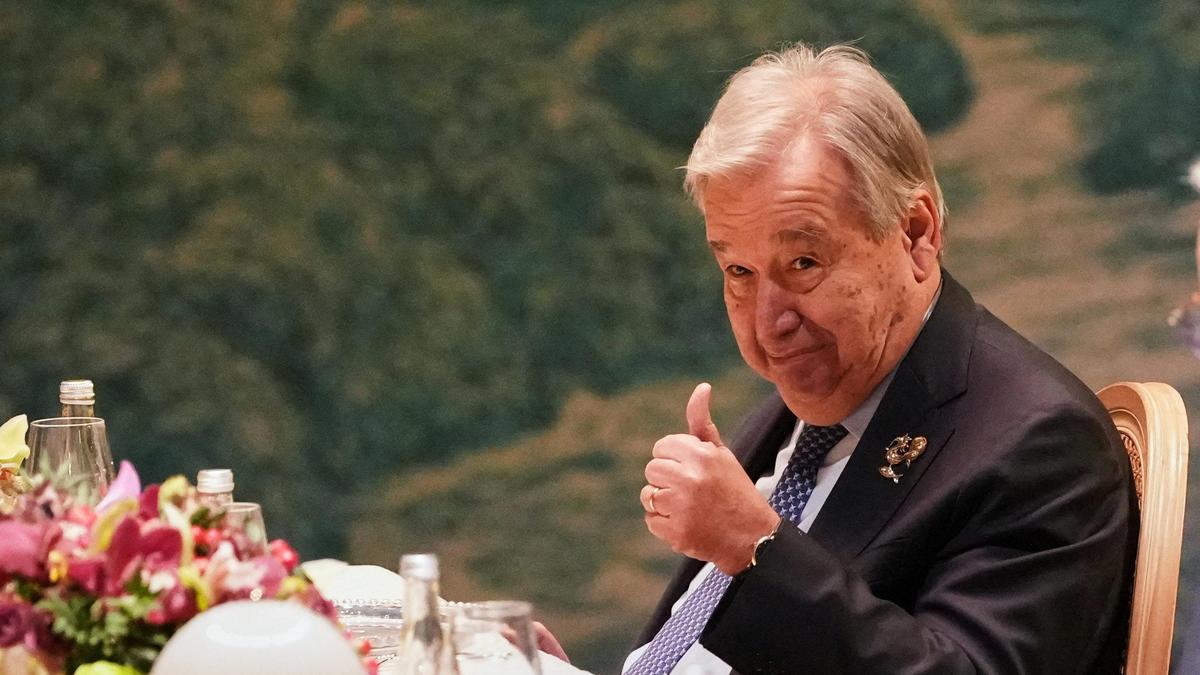
The United Nations Secretary‑General Antonio Guterres has reconstituted a 10‑member group that promotes science, technology and innovation to achieve the Sustainable Development Goals. The group’s sole Indian member is former biologist and former Council of Scientific and Industrial Research (CSIR) Director General Shekhar Mande, who is also President of the Indian National Science Academy. The reconstitution comes as the international community intensifies efforts to meet the 2030 Agenda and prepares for the 2027 SDG Summit.
A UN press statement said the group is made up of distinguished experts from diverse geographic and disciplinary backgrounds in both developing and developed countries. Each member is recognised for international excellence in science or technology and brings experience from civil society, the private sector and the scientific community, underscoring the inclusive approach the UN is taking.
The other members are Marian Dorcas Quain (Ghana), Deputy Director‑General of CSIR Ghana; Giorgio Rossi (Italy), Vice‑President of Elettra‑Sincrotrone Trieste; Magnus Andersson (Sweden), Associate Professor at Malmö University; Mônica Tejo Cavalcanti (Brazil), Professor at the Federal University of Campina Grande; Evgeniya Dmitrieva (Russia), Member of the Civic Chamber of the Russian Federation; Motoko Kotani (Japan), Executive Director of Science at RIKEN; Jin Li (China), President of Fudan University; Madin Maseeh (Maldives), President of the Maldives Space Research Organisation; and Rita Orji (Nigeria), Canada Research Chair in Persuasive Technology at Dalhousie University.
Professor Mande also serves as President of Vijnana Bharti, which, together with the Ministry of Science and Technology, is preparing to host the India International Science Festival in Pune in December. On Wednesday, November 18, 2026, Union Minister of Science Jitendra Singh announced that the government had decided to replace “scattered, repetitive gatherings”, including the former Indian Science Congress, with two flagship national events. The Emerging Science, Technology and Innovation Conclave in October featured 13 ministries and Nobel Laureates and focused on frontier themes, while the India International Science Festival aims to have a “festive, public‑facing character with international resonance”. By rotating the venue to different regions—after Chandigarh, Hyderabad, Goa and Delhi—bringing the IISF to Pune for the first time leverages the western hub’s vibrant academic, research and industrial ecosystem.