World
$18 bn pledged for Gaza reconstruction remains unspent as rebuilding stalls
By Alia Chughtai, Mohamed Hussein
Donors have pledged about $18 bn for Gaza through U.S. President Donald Trump’s Board of Peace, but more than a year after the October 10, 2025 ceasefire, reconstruction has not begun and nearly 1.4 million Palestinians still live in makeshift shelters. The board had requested $280 m to fund the initial building phase, yet in September it reported that most of that money remained unspent. In its latest report, submitted on Tuesday, the board warned that the truce between Israel and Hamas could collapse unless immediate steps are taken to carry out the ceasefire deal, according to The Associated Press. The next day, Israel launched its first major military ground operation in the Gaza Strip since the ceasefire, attacking refugee camps in the central part of the enclave. Since the ceasefire took effect, Israel has killed at least 1,658 Palestinians and injured 6,000, according to the Palestinian Ministry of Health. Israel continues to block the entry of 60,000 mobile homes promised under the ceasefire deal and severely restricts food and medical aid into the besieged enclave. It has also yet to allow the Palestinian committee set up to administer Gaza to enter the Strip.
The Board of Peace was proposed by President Trump in September 2025 as part of his 20‑point plan for Gaza. On November 17, 2025, the United Nations Security Council adopted Resolution 2803, recognising the board as a transitional administration responsible for setting the framework and coordinating funding for Gaza’s redevelopment. The resolution authorises its role in Gaza until December 31, 2027, unless the UN Security Council decides otherwise. The board’s charter also allows it to work in other areas affected by conflict. Trump chairs the board and can only be replaced if he resigns or is unable to serve. He appoints its executive board, whose members are Ajay Banga, Tony Blair, Martin Edelman, Robert Gabriel Jr, Jared Kushner, Marc Rowan, Marco Rubio, Steve Witkoff, and Susie Wiles. Each member state has one vote. Decisions need a majority of those present and voting, and Trump’s approval. He can also veto executive board decisions.
Under the plan, Palestinian technocrats would run Gaza’s day‑to‑day affairs through the National Committee for the Administration of Gaza, led by Ali Shaath. The committee reports to the board, but Israel has not allowed it to enter Gaza, and it operates from Cairo. The board has 28 members: Albania, Argentina, Armenia, Azerbaijan, Bahrain, Belarus, Bulgaria, Cambodia, Egypt, El Salvador, Hungary, Indonesia, Israel, Jordan, Kazakhstan, Kosovo, Kuwait, Mongolia, Morocco, Pakistan, Paraguay, Qatar, Saudi Arabia, Turkiye, the United Arab Emirates, the United States, Uzbekistan, and Vietnam. Germany, India, Japan, the United Kingdom, and the European Union also attended the inaugural meeting as observers. Countries join by invitation from Trump and normally serve up to three years. Countries that pay more than $1 bn in cash in the charter’s first year are exempt from that limit.
At the board’s first meeting in Washington, DC, on February 19, Trump announced about $7 bn in pledges from nine countries, plus a $10 bn U.S. pledge. The UAE pledged $1.2 bn. Kuwait, Qatar and Saudi Arabia pledged $1 bn each, with Saudi Arabia saying it would pay over several years. Azerbaijan, Bahrain, Kazakhstan, Morocco, and Uzbekistan also pledged.
At a briefing in New York on September 23, the board said donors had made about $18 bn in early funding commitments. It said it had called in $280 m from donors for the building phase so far, and that most of it remained unspent. Board of Peace officials previously told the Washington Post that the money couldn’t be spent on projects until Israel allowed international troops or newly‑trained Palestinian police to enter Gaza and begin the process of disarming Hamas. The board puts the cost of rebuilding Gaza at about $71 bn, close to the UN’s estimate of $71.5 bn, a figure that could rise as more damage is recorded. The board has identified $6 bn in projects. It says its six‑month recovery plan needs $2.45 bn for 66 programmes, plus about $200 m in in‑kind support.
The 66 programmes are divided across six areas: - Infrastructure development: 24 programmes - Human development: 17 programmes - Peace and security: 11 programmes - Economic acceleration: 7 programmes - Digital transformation: 6 programmes - Legal: 1 programme
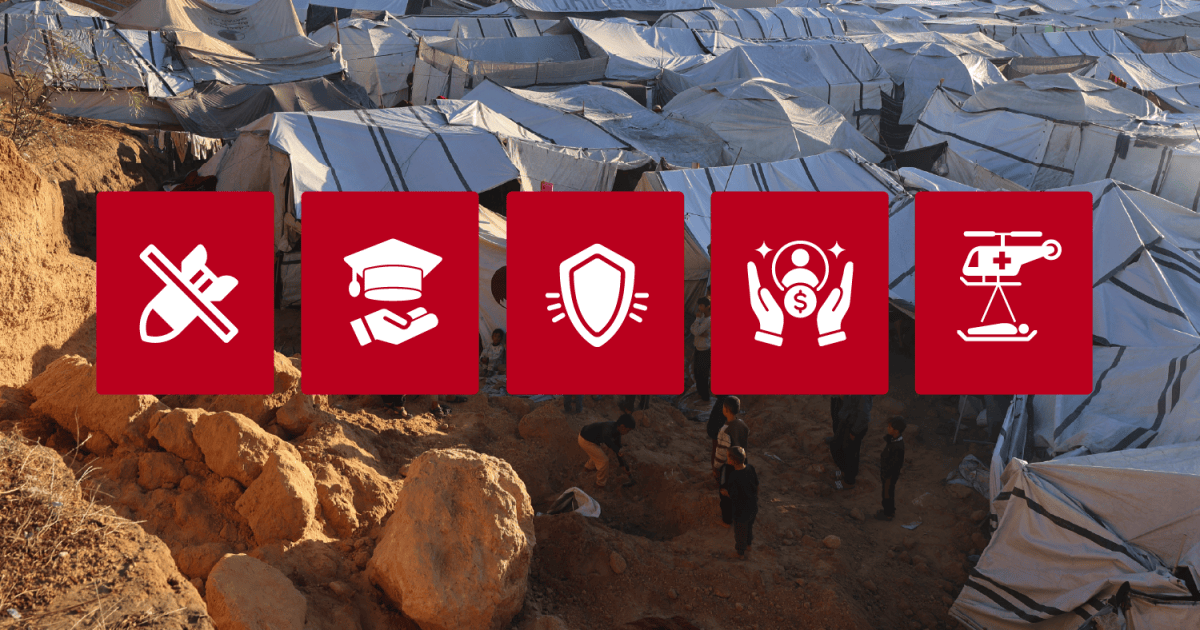
The Board of Peace highlights five countries helping Gaza’s recovery on the ground. Others have pledged money, but the board has not said how much each has pledged: - Egypt: Training a civil guard - Kazakhstan: University scholarships - Morocco: Disarming fighters and helping them return to civilian life - Romania: Medical evacuations - United Arab Emirates: Resources, support and its own programmes
Frequently asked questions
How much total funding has been pledged for Gaza reconstruction?
Donors have pledged about $18 bn for Gaza through Trump’s Board of Peace.
What happened to the $280 m requested for the initial building phase?
The board reported that most of the $280 m remained unspent as of September.
Who chairs the Board of Peace and how can he be replaced?
President Trump chairs the board and can only be replaced if he resigns or is unable to serve.