India
Visakhapatnam Water Table Drops Nearly 4 Metres Amid Severe Rainfall Shortage
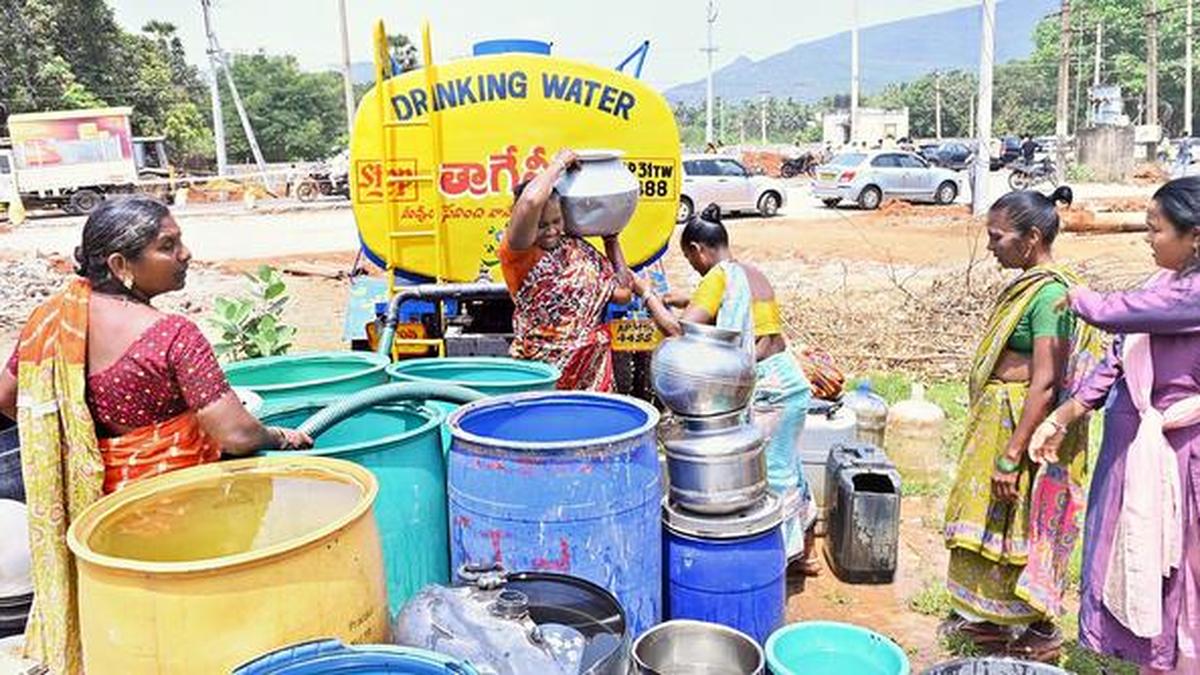
Visakhapatnam district has experienced a significant decline in its groundwater level over the past year, falling by 3.86 metres, according to data from the District Ground Water and Water Audit Department. The water table dropped from 7.65 metres below ground in August 2025 to 11.51 metres below ground in August 2026.
District Ground Water Officer K. Pushpalatha attributed the decline directly to a severe shortfall in rainfall. She shared these findings during a training session titled 'Integrated and Interdisciplinary Strategies for Sustainable Ground Water Development and Management,' held on Tuesday, September 8, 2026, and jointly organized by the Central Ground Water Board and the GITAM School of Science.
Pushpalatha noted that as of August 26, the district had received only 92.39 mm of rainfall, far below the seasonal normal of 177.3 mm, marking a 47.89% deficit. She identified several factors contributing to the accelerated depletion of groundwater, including intensive borewell extraction for irrigation, domestic, and industrial purposes, diminished natural recharge due to urban concrete surfaces, insufficient water-harvesting infrastructure, and significant surface runoff resulting from short, heavy rain events.
Data gathered from a monitoring network comprising 31 piezometers and eight observation wells revealed that groundwater levels in six villages had fallen below 20 metres. Thirty-eight villages showed levels between three and six metres, while 135 habitations—96 rural villages and 39 urban wards—fell within the 6 to 20 metre range.
During the same event, CGWB scientist P. Kiran Kumar discussed rainfall patterns and the use of stable isotopes in groundwater research. He explained that the El Niño phenomenon had contributed to below-average monsoon rainfall across India, resulting in poor groundwater recharge in various parts of Visakhapatnam district this year, with possible negative consequences for local agriculture and water availability.
Additional presentations included CGWB scientist S.S.S. Vittala, who addressed the use of remote sensing and GIS technology in groundwater management, and CGWB scientist Nageshwar Rao Elisela, who discussed the role of geophysical methods in groundwater exploration.
K. Sureshkumar, associate professor of environmental science at GITAM School of Science, highlighted the increasing risk of seawater intrusion into coastal groundwater sources in Visakhapatnam. T. Srinivas, a professor in GITAM's civil engineering department, presented on sustainable methods for treating and reusing greywater.