Climate & Environment
South Asia Faces Record Smog Levels as Winter Approaches
By Mohamed Hussein, Hanna Duggal
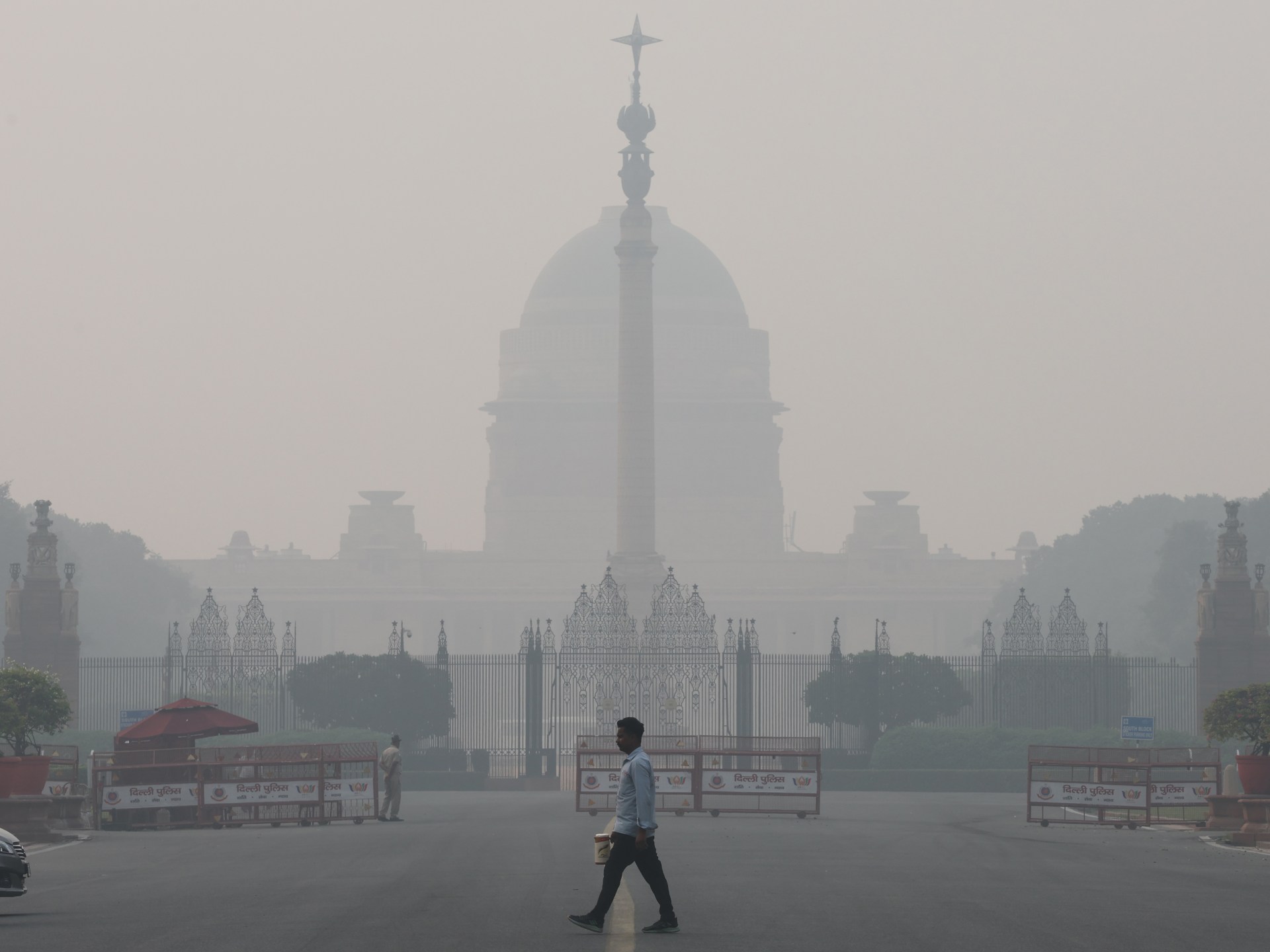
India and Pakistan together host 42 of the world’s 50 most polluted cities in 2025, according to IQAir. As winter arrives in the Northern Hemisphere, smog season intensifies, especially in South Asia. Cities from New Delhi to Dhaka are shrouded in thick grey haze, with Delhi’s Air Quality Index (AQI) exceeding 350 in several areas last week, a level classified as “hazardous.”
During winter, a layer of warmer air traps cooler air near the ground. Combined with low wind speeds, this prevents pollution from vehicles, industry and crop burning from dispersing. Smog mainly originates from burning fossil fuels—particularly coal—vehicle exhaust, factories and smoke from forest and crop fires. Summer smog forms when sunlight reacts with nitrogen oxides to create ground‑level ozone, while winter smog is driven by temperature inversions.
The Indo‑Gangetic Plain, spanning parts of Pakistan, northern India, Nepal and Bangladesh, is one of the world’s most polluted regions. Hemmed in by the Himalayas, the plain has weak winds and a shallow air layer in winter, trapping pollutants.
Air quality is measured by monitoring stations that track six main pollutants, including ozone, nitrogen dioxide and particulate matter (PM). The most harmful is PM2.5, particles 2.5 micrometres or less in diameter, which can penetrate deep into the lungs and enter the bloodstream. These readings are combined into an AQI that ranges from 0 to 500 and is divided into six colour‑coded categories: green (0‑50), yellow (51‑100), orange (101‑150), red (151‑200), purple (201‑300) and maroon (301+).
Loni, on the outskirts of Delhi, topped the list of polluted cities with average PM2.5 levels of 112.5 µg/m³, more than 22 times the WHO’s recommended limit. Other cities on the list include Hotan in China, Byrnihat and New Delhi. In Delhi, vehicles contribute 23 % of winter pollution, while biomass burning, including farm stubble fires, accounts for 20 %, according to India’s Ministry of Environment, Forest and Climate Change.
Air pollution is linked to about seven million premature deaths worldwide each year, according to the World Health Organization. Pollutants enter the body through the lungs, causing inflammation, cell damage and immune suppression. PM2.5 can also enter the bloodstream, affecting the heart and brain. Major health outcomes include stroke, heart disease, chronic obstructive pulmonary disease, lung cancer, pneumonia, asthma exacerbation, reduced lung function and cataracts from indoor cooking smoke. Long‑term exposure is associated with dementia, diabetes and adverse pregnancy outcomes such as premature birth and low birth weight.
Individuals can reduce exposure by wearing a well‑fitting N95 mask outdoors, keeping windows closed and using a HEPA‑filter air purifier indoors, limiting strenuous outdoor activity on high‑pollution days, checking the AQI before going out and protecting vulnerable groups such as children, the elderly and those with asthma.
Governments are implementing various measures to curb pollution. Car‑free days close city centres to vehicles or limit driving by licence plate. Paris’s first car‑free day in September 2015 covered about a third of the city and reduced nitrogen dioxide levels by up to 40 %. London’s Ultra Low Emission Zone (ULEZ), launched in 2019, cut roadside nitrogen dioxide concentrations by 19.6 % within three months. In Krakow, Poland, the replacement of more than 25,000 coal and wood‑burning heating devices and the ban on solid fuels for home heating in September 2019 reduced average annual PM2.5 levels by 40 % between 2010 and 2021.