World
US Secondary Sanctions Losing Effectiveness as Global Economy Adapts
By Smriti Jain
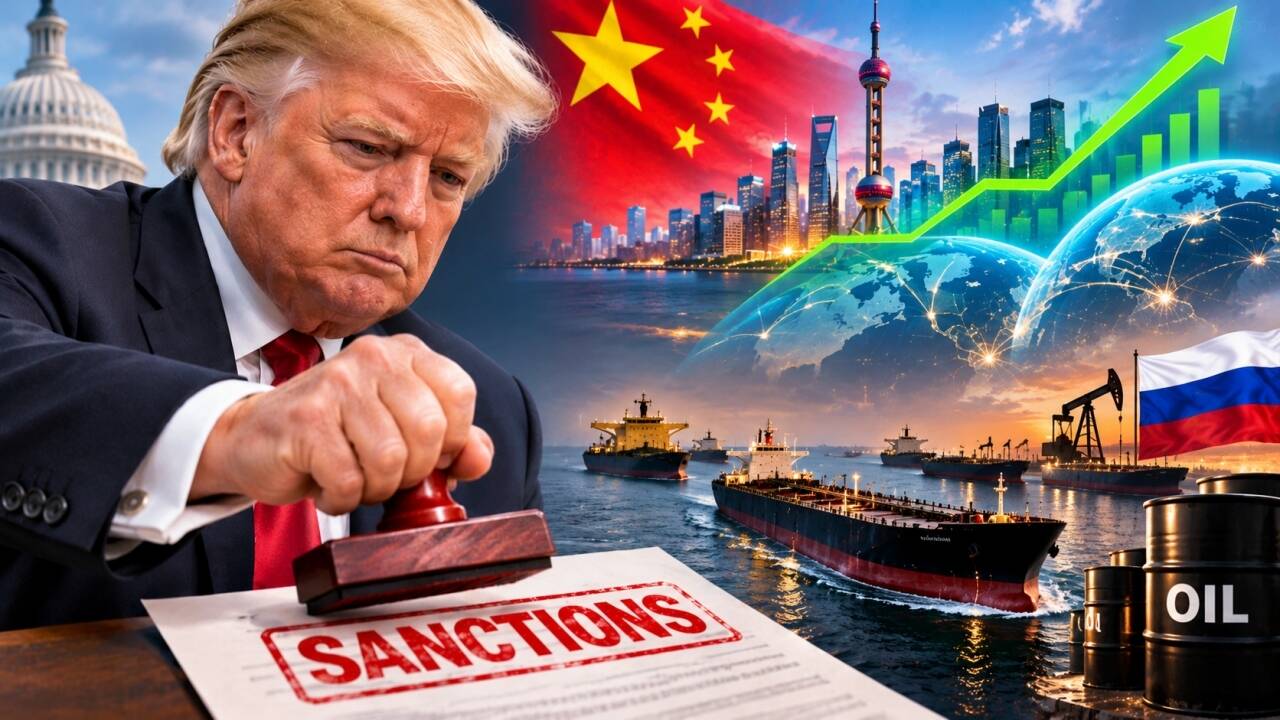
Secondary sanctions have long been a key tool for the United States to exert economic pressure on individuals, businesses and banks linked to adversary countries. During the Trump administration, the United States intensified the use of these measures to influence geopolitics. From the 1980s through the 2010s, the U.S. leveraged the dollar‑based financial system to isolate foreign governments and companies, using tariffs, secondary sanctions and other tactics to coerce compliance. A recent report by the Henrich Foundation notes that U.S. sanctions had been a strategic substitute for military power, allowing the U.S. to contain rival states while freeing up military resources for regions such as the Middle East and East Asia. However, the report argues that U.S. sanctions power is now less capable of deterrence.
The foundation’s analysis explains that the U.S. built its sanctions power on the growing dominance of the dollar, the rise of the U.S. as a net exporter of fossil fuels, and a period of macroeconomic stability from the mid‑1980s to the mid‑2010s. Since 2017, and especially after the “Liberation Day” tariffs introduced in spring 2025, countries have increasingly sought to protect themselves from U.S. dollar exposure. Export controls on strategic items such as semiconductors, AI technology and rare earths have prompted investment in domestic production and stronger alliance networks, allowing the global economy to weather trade conflict and economic warfare.
One of the most visible signs of the diminishing impact of U.S. secondary sanctions is the continued operation of a shadow tanker fleet that transports Russian energy supplies. U.S. sanctions against Iran and Venezuela in the 2010s, followed by coordinated G7 measures against Russia in the early 2020s, excluded several major oil‑producing countries from the unrestricted international market centered on the Brent crude benchmark. The sanctions did not eliminate oil trade; instead, they redirected it toward alternative channels that are harder to monitor. The global oil market has effectively split into a largely unrestricted segment and a smaller but still substantial shadow market. An ecosystem of tankers, shipping companies and insurers now facilitates trade for Venezuela, Iran and Russia, supplying importers such as China, India, Turkey, Vietnam and Indonesia.
Russia’s exploration of the Northern Sea Route and China’s restrictions on rare earth exports have further reduced the effectiveness of U.S. sanctions. In October 2025, a Chinese embargo on rare earths forced the United States to accept a tariff truce in the Sino‑U.S. trade war. Beijing has since expanded its export‑control machinery to maintain the option of economic retaliation.
Iran’s strategic position in the Strait of Hormuz and Russia’s natural gas exports give the two countries control over about 42 % of the global natural gas market. Restrictions on traffic through the Strait of Hormuz have triggered a global fuel crisis with consequences for the U.S. economy.
The report also highlights a growing trend of foreign governments reducing their exposure to U.S. Treasury debt. Foreign official holdings fell 8.4 % from $4.24 trillion in January 2021 to $3.87 trillion in December 2025, with China’s holdings more than halved over the past decade. This trend accelerated after the U.S. attack on Iran, with overseas public‑sector holdings dropping 6.3 % between February and August 2026.
For India, the impact of U.S. sanctions is mixed. India has not finalized a trade deal with the United States and continues to buy Russian crude. According to Vivek Iyer, Partner and Financial Services Risk Advisory Leader at Grant Thornton Bharat, India is moderately exposed to sanctions pressure, especially in energy. The new Sanctioning Russia and Iran Act allows the U.S. to impose tariffs of up to 100 % on goods from the five biggest buyers of Russian oil and gas. India, which imports more Russian crude than any country except China, is one of those buyers. On October 16, the Trump administration waived sections 112 and 113 of the Act, but the waiver is discretionary and can be reversed.
Ajay Srivastava, founder of the Global Trade Research Initiative, notes that India remains vulnerable at both the company and country levels. The U.S. has used sanctions to influence India’s energy choices, prompting the country to stop buying Iranian crude and reduce Venezuelan oil imports. While tougher U.S. sanctions may increase costs for U.S. consumers and accelerate the growth of alternative payment systems, they could also offer India discounted crude, more trade settled in rupees and better market access if it aligns with U.S. interests.
Frequently asked questions
Why are U.S. secondary sanctions becoming less effective?
Countries are diversifying away from the dollar, building domestic production of strategic items, and using alternative channels like shadow tanker fleets, reducing U.S. isolation power.
What is the effect of U.S. sanctions on India's energy imports?
India imports more Russian crude than any country except China, is one of the five biggest buyers of Russian oil and gas, and could face tariffs up to 100% under the Sanctioning Russia and Iran Act, but may also receive discounted crude and better market access if it aligns with U.S. interests.
How have foreign holdings of U.S. Treasury debt changed?
Foreign official holdings fell 8.4% from $4.24 trillion in January 2021 to $3.87 trillion in December 2025, with China’s holdings more than halved over the past decade, and overseas public‑sector holdings dropped 6.3% between February and August 2026 after the U.S. attack on Iran.