India
Industry Pushes for Expanded PLI, Tax Incentives and MSME Support Ahead of Budget
By Manas Pimpalkhare, Banikinkar Pattanayak
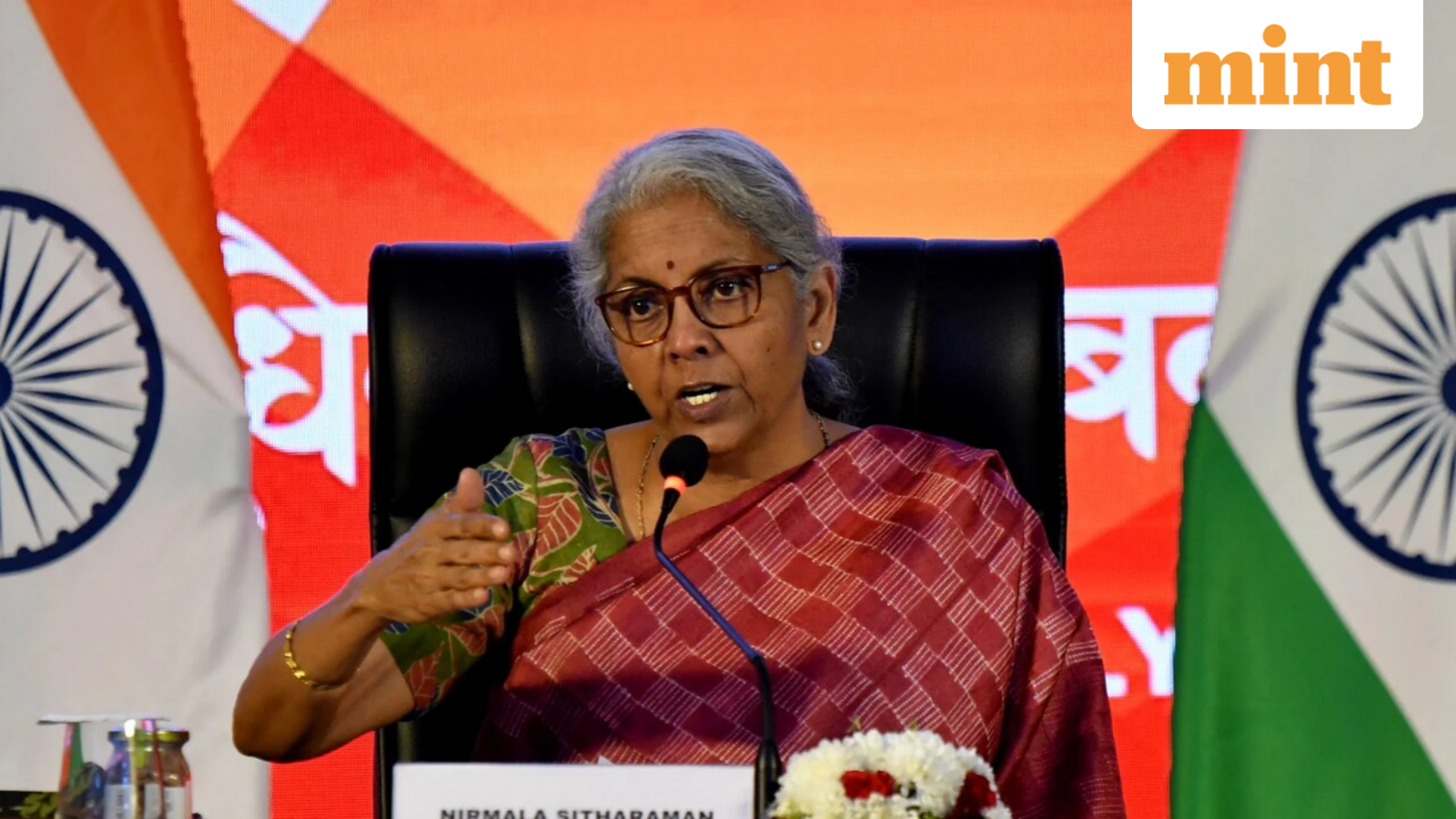
Industry leaders have urged the Centre to broaden production‑linked incentive (PLI) schemes, boost research and development support and introduce targeted tax incentives to lift manufacturing’s share of the economy to 25% from about 15% in the coming years. Smaller businesses have called for cheaper credit and policy support to expand, according to two people familiar with the discussions.
Scaling up manufacturing is seen as essential for economic growth and job creation. Services alone cannot absorb the 11 million young people projected by the World Bank to enter the Indian workforce each year over the next two decades, while agriculture cannot keep them productively employed. A stronger manufacturing base would also help India make better use of trade agreements with economies such as the UK and the European Union, and expand exports, trade experts said.
Queries emailed to the finance ministry spokesperson on Tuesday evening did not elicit an immediate response. At the customary pre‑budget meeting with industry and manufacturing experts, chaired by Finance Minister Nirmala Sitharaman, Confederation of Indian Industry (CII) president R. Mukundan called for time‑bound tax measures that "reward additional economic activity rather than offering general concessions". These include accelerated depreciation on new plant and machinery, a higher weighted deduction for incremental R&D expenditure, and a limited‑period corporate tax benefit for companies that create additional net employment, verified through Employees' Provident Fund Organisation records, Mukundan said.
Sitharaman began her pre‑budget consultations with stakeholders on Monday. The meetings will continue until 26 November.
Assocham past president Vineet Agarwal called for greater policy support through simplified compliance, timely disbursal of incentives and better implementation of existing PLI schemes to accelerate investment, increase domestic value addition and strengthen manufacturing competitiveness. PLI schemes have supported key sectors, including electronics, pharmaceuticals, telecom and food processing, and helped bolster domestic production capacity, Agarwal said. However, schemes covering sectors such as specialty steel, textiles, white goods, advanced chemistry cell (ACC) batteries and solar photovoltaic modules need further strengthening to deliver the desired results.
Agarwal also proposed a dedicated PLI scheme for robotics, automation equipment, sensors, precision components and related technologies to encourage domestic production, investment and technological self‑reliance.
Smaller businesses, represented by the Federation of Indian Micro, Small and Medium Enterprises (FISME), have proposed a National Enterprise Graduation Mission to encourage formalisation and help businesses scale up, according to a document and a person aware of the development. "Support for building scale and access to cheaper capital are among the key demands made by MSME organisations," said an anonymous source.
The FISME proposal envisages a two‑track approach: bringing more micro, small and medium enterprises (MSMEs) into the formal economy while helping small businesses set up, register and grow into larger enterprises. "India’s enterprise policy has understandably concentrated on entry, livelihood protection and the supply of credit. The next generation of policy must also build an escalator for movement from own‑account work to employer enterprise, from informal to formal, and from Micro to Small, Small to Medium, and Medium to globally competitive enterprise," the document prepared for the finance ministry’s pre‑budget meeting and dated 17 November said.
Physical space constraints and fragmented permissions discourage entrepreneurs from setting up formal businesses. Further compliance hurdles and funding shortages, meanwhile, prevent micro enterprises from graduating into small businesses, according to FISME’s budget proposal. The proposal also calls for easing labour compliance requirements and removing tax‑related penalties, particularly for micro enterprises.
To help MSME exporters scale up, it suggests financing export‑order receivables through a system modelled on the existing Trade Receivables Discounting System (TReDS). TReDS platforms allow MSMEs to receive early payment against their receivables through financing, with the buyer subsequently repaying the financier, helping reduce payment delays.
In India, micro enterprises are defined as those with investments of up to ₹2.5 crore and annual turnover of up to ₹10 crore. Small enterprises have investments of up to ₹25 crore and turnover of up to ₹100 crore, while medium enterprises have investments of up to ₹125 crore and turnover of up to ₹500 crore.
The push to help MSMEs scale up is significant given the sector’s contribution to employment and the economy. It is India’s largest employer after agriculture, with 448 million people employed across 101 million MSMEs. The sector contributes 31% of the country’s gross domestic product (GDP) and 50% of its exports, according to official data. However, MSMEs have faced mounting pressures from global disruptions in recent years. The pandemic, multiple wars and tariff‑related uncertainties have left businesses grappling with higher input costs and an increasingly uncertain trade environment.
Frequently asked questions
What sectors are covered by existing PLI schemes?
Electronics, pharmaceuticals, telecom and food processing.
What tax incentives are proposed to support manufacturing?
Accelerated depreciation on new plant and machinery, a higher weighted deduction for incremental R&D expenditure, and a limited‑period corporate tax benefit for companies that create additional net employment verified through EPFO records.
How is a micro enterprise defined in India?
Micro enterprises have investments up to ₹2.5 crore and annual turnover up to ₹10 crore.