World
Shenzhen Lights Up APEC 2026 as Xi Highlights China’s Tech Rise
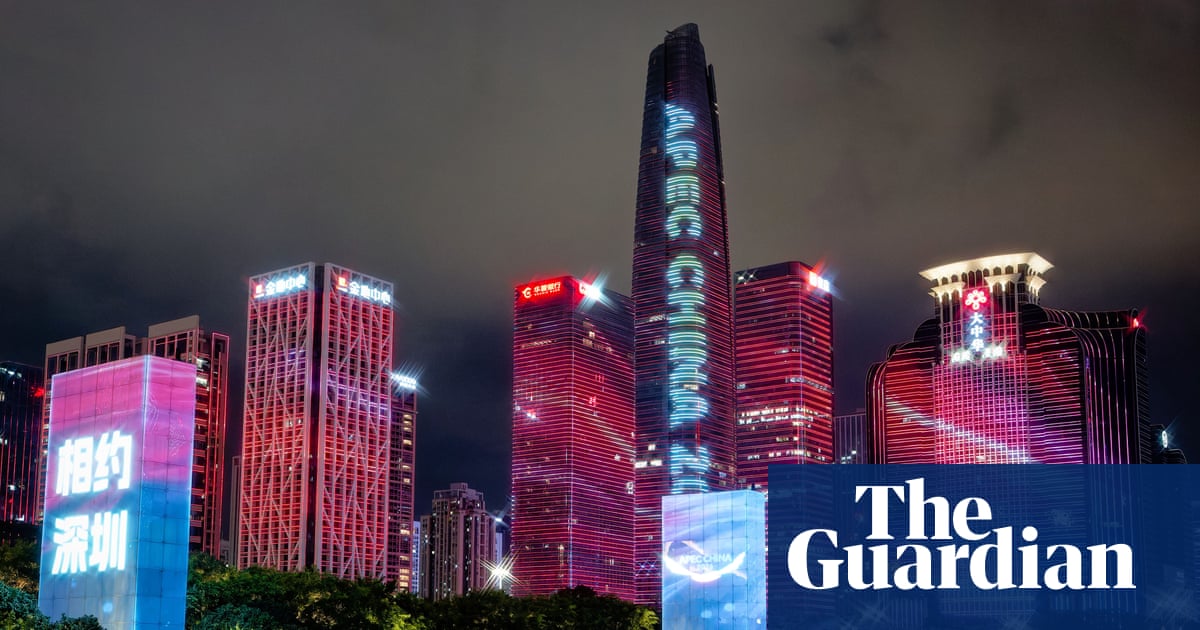
During a warm evening in Shenzhen, residents and visitors watched the city’s skyline flash in cyan, violet, cyber green, scarlet and gold, repeatedly displaying the words “Apec 2026.” The Asia-Pacific Economic Cooperation summit is a showcase for one of China’s most advanced cities, and President Xi Jinping is enjoying the neon glow. On the sidelines, several high‑profile bilateral meetings took place, and a historic three‑way summit with U.S. President Donald Trump and Russian President Vladimir Putin was announced, cementing Xi’s role as an agenda‑setter on the global stage. The broader APEC summit offers China a platform to present itself as a steward of multilateralism against what it calls “unilateralism and protectionism,” referring to trade measures taken by countries such as the United States.
Shenzhen, a city that has transformed from sparsely populated marshland into a technological hub, is highlighted in a photo display at the APEC media centre that calls the city “a miracle in the history of world development created by the Chinese people.” Professor Astrid Nordin of King’s College London said, “Xi wants people to go home Chinamaxxing. Shenzhen is itself part of the message. It’s a showcase of Chinese technological and economic achievements, and of China’s claim that it offers opportunities for prosperity in a world increasingly characterised by uncertainty and conflict.”
The summit is being carefully coordinated. The Financial Times reported that it would be one of the most tightly controlled in the organisation’s history, with leaders traveling to a state guesthouse beside Shenzhen’s tiger safari park to meet Xi. Diplomats complained that the format “seems designed to reduce the free‑flowing discussion characteristic of prior editions.” China’s foreign ministry said it looks forward to “practical results in key areas such as trade, connectivity, digital economy, AI and so on.”
Xi has already announced trade wins with Canada’s Mark Carney, extending remission measures for certain Chinese steel and aluminium products by two years in exchange for tariff relief on Canadian pork, fish and seafood exports. A meeting with Papua New Guinea’s leader James Marape showed how Beijing’s geopolitical priorities are reflected by its allies; Marape told Xi that he had closed Taiwan’s office in his country despite domestic challenges.
The most important meeting will be between Xi and Trump. The leaders of the world’s two superpowers are expected to tackle a broad range of issues, including AI and trade. The Trump administration said on Monday it would further restrict China’s access to advanced AI chips. Christopher Adams, a senior adviser at Covington who was involved in trade negotiations with China during the Obama and first Trump administrations, said, “The trade truce may increasingly look like a ceasefire in a war where major combat operations remain on hold but skirmishes are escalating to the point where the line between peace and war is blurred. I don’t see pressure to announce a further extension of the trade truce in Shenzhen. If a significant extension is announced, that would be an upside surprise.”
China has leveraged APEC’s multinational platform to support its arguments. A commentary by Xinhua on Tuesday said, “Amid deepening geopolitical rivalries and growing global divisions, China’s hosting sends a clear signal that great‑power competition need not be a zero‑sum game, and that one country’s development need not come at the expense of another.”
Chen Xu, chair of the APEC senior officials’ meeting, said Beijing had made trade “openness” a key focus of its APEC year and looked forward to “achieving more practical outcomes on the trade front.” The much‑anticipated trilateral summit with Trump and Putin could prove largely symbolic. For Xi, “it provides the appearance of China shaping the world order as an equal to the United States,” said Dr Kevork Oskanian, an expert on Russia at the University of Exeter. “Agreement on substantial issues, which would, in any case, require extensive preparatory negotiations, is unlikely.”
For China’s ruling Communist Party, the political pomp has another key purpose. Nordin said summits are “occasions for leaders to tell stories about the world, about their country’s place in it … and one of the most important audiences for those stories is at home.” For locals watching the skyscraper light show on Monday night, the symbolism was not lost. One unnamed local man said, “It’s so great that the summit will take place in Shenzhen. I feel very proud.”