India
India’s E‑Waste Challenge: 14.15 Lakh Tonnes Generated, 78% Handled Informally
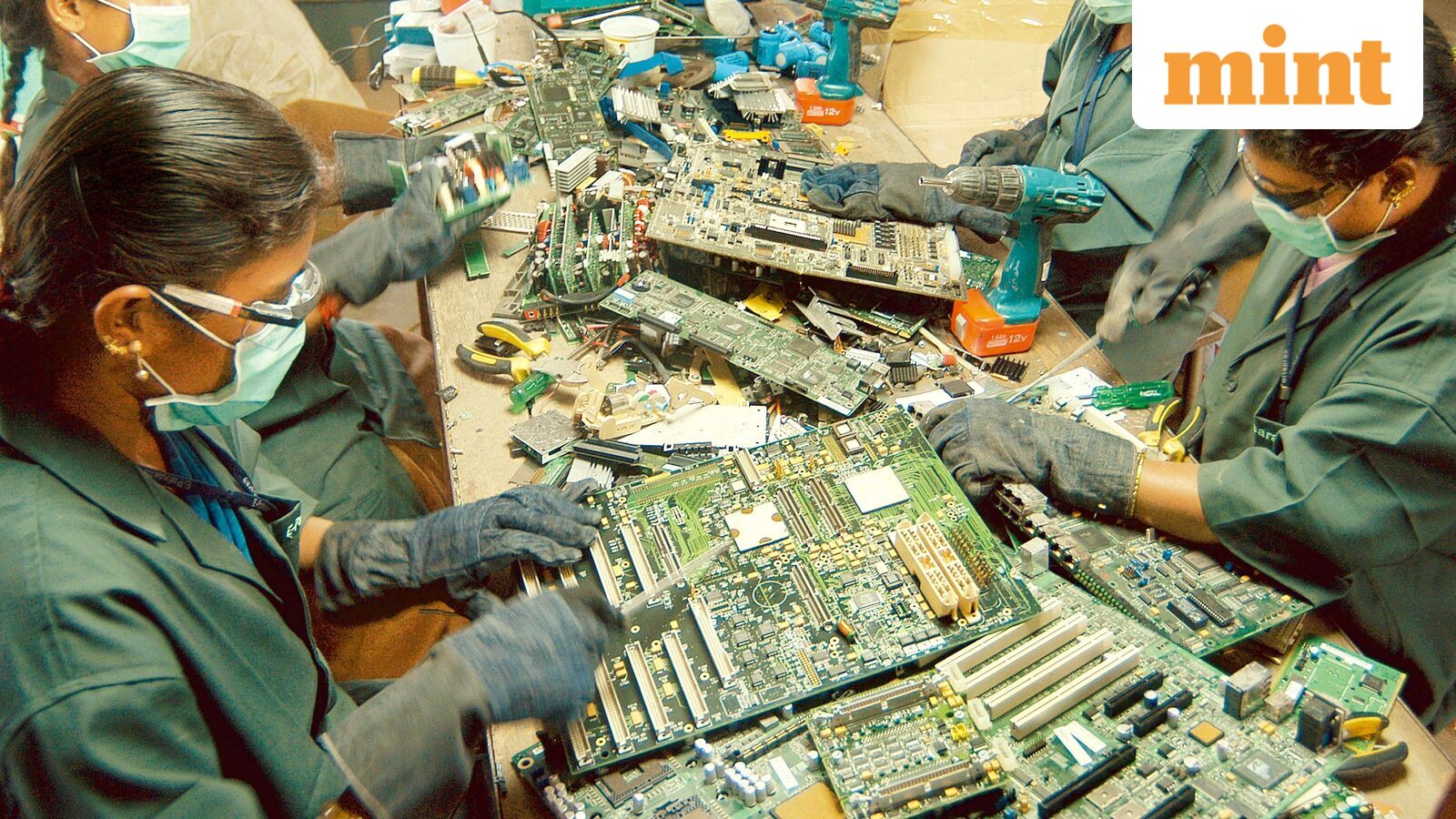
India produced 14.15 lakh tonnes of e‑waste in 2025‑26, of which 9.79 lakh tonnes were recycled, according to provisional figures released by the environment ministry in March 2026. In 2024‑25, generation was 13.98 lakh tonnes, with 11.59 lakh tonnes recycled. The Central Pollution Control Board estimates e‑waste generation using producers’ sales data and equipment lifespans. A January 2026 report by the Energy and Resources Institute (TERI), backed by NITI Aayog, found that about 78 % of India’s e‑waste is handled by informal operators.
The E‑Waste (Management) Rules, 2022, require manufacturers, producers, refurbishers and recyclers to register and to meet recycling targets calculated by weight as a percentage of the quantity of each category of equipment released into the market in a prior year. Targets were 60 % for 2023‑24 and 2024‑25, 70 % for 2025‑26 and 2026‑27, and will rise to 80 % from 2027‑28. New producers have separate calculations, and used‑equipment imports carry 100 % end‑of‑life EPR liability if not re‑exported.
Producers need not recycle directly; they meet obligations by purchasing EPR certificates from CPCB‑registered recyclers via an online portal. Registered recyclers report recovered metals—gold, copper, aluminium and iron—on the CPCB portal to generate certificates. However, TERI’s report flagged spurious certificates and non‑operational registered facilities. In September, Reuters reported that WEEE‑PRO, an authorised e‑waste recycler, supplied fabricated recycling documents to companies such as Haier, Godrej & Boyce and Blue Star.
The 2022 rules provide CPCB verification, random inspections, periodic audits and environmental compensation for violations. TERI identified gaps between portal registrations and operating facilities and recommended physical checks of machinery, trial runs and mass‑balance audits comparing waste inputs with recovered outputs. The government has ordered wider inspections to verify declared capacity against actual operations. A CPCB directive issued in July asked states to audit more than 2,000 recyclers, including 309 e‑waste facilities. Inspectors will verify machinery, conduct plant trial runs and compare electricity consumption with reported processing. CPCB has also mandated GST e‑invoices for sales of recovered materials to be uploaded on the EPR portal; certificates based on other invoices are treated as false. Forged or manipulated documents can lead to a recycler being barred from generating certificates. Uttar Pradesh has identified 33 e‑waste recyclers for immediate inspection.
Formal recyclers must become a viable business to compete with informal scrap dealers, who have collection advantage and lower overheads. TERI estimates India’s annual e‑waste stream is worth about ₹51,000 crore, of which 60 % is technically recoverable. Yet only 18 % of this potential value is captured: formal recyclers capture 5 % and informal operators 13 %. Making formal recycling viable will require stricter enforcement against unregistered and unsafe processing, raising the cost of operating outside the rules, while simplifying registration, improving access to finance and providing targeted incentives to attract investment in authorised recycling facilities.
Frequently asked questions
What was India's e‑waste generation in 2025‑26?
India produced 14.15 lakh tonnes of e‑waste in 2025‑26.
What percentage of India's e‑waste is handled informally?
About 78 % of India’s e‑waste is handled by informal operators.
What are the recycling targets for 2025‑26 under the E‑Waste Rules?
The target for 2025‑26 is 70 % of the quantity of each category of equipment released into the market in a prior year.