World
France’s Deepening Divide Fuels Ongoing Protests
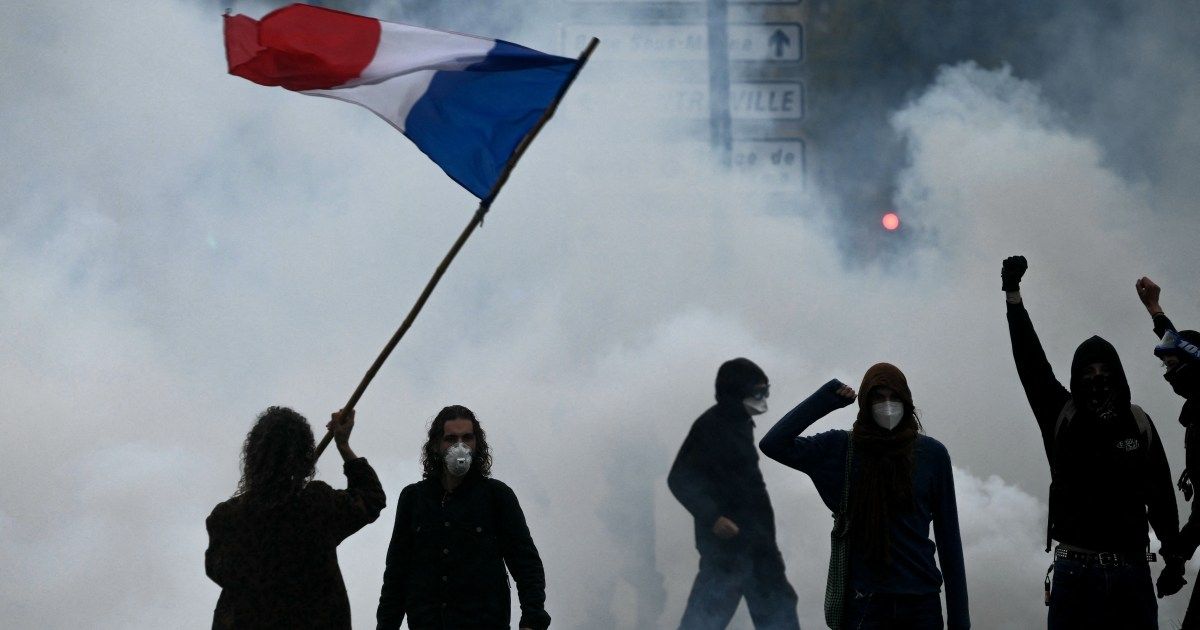
The current student protests in France are part of a broader crisis affecting French society. Fifty years ago, former spokesperson for President Charles de Gaulle Alain Peyrefitte published *Le Mal français* (The French Malaise), arguing that a lack of trust within society and between society and state institutions was hindering national progress. He claimed that the state’s excessive control through rules, bureaucracy and centralisation caused stagnation. Today, the malaise persists, but its symptoms have changed. The dramatic protests by students, workers and other disaffected groups, sometimes turning violent, are only the visible surface of a deeper problem.
After the events of 17 October, when symbols of state authority—including the town halls of Limoges and Marseille and an official building in Lyon—were attacked and businesses looted, President Emmanuel Macron said the acts sought to "tear down our institutions." His strong language echoes the rhetoric used by the French government during the May 1968 protests, when students challenged the established order and were described as an "attack on the Republic." While the 1968 movement called for more freedom and was led by privileged youth, today’s protests demand equality and dignity and are driven by those who feel left behind.
A comparable episode is the 2005 unrest in the suburbs of Paris and other major cities following the deaths of two teenagers, Bouna and Zyed, who were pursued by police. For three weeks, residents of impoverished neighbourhoods expressed anger at police violence and marginalisation. Two elements of the French malaise were evident: a deep divide between the prosperous urban population and the marginalised, racialised poor living in underdeveloped outskirts, and a police force that increasingly focuses on policing the latter with growing brutality. In France, the police is tasked with defending the state rather than protecting citizens, and it often employs a discriminatory approach that differentiates between affluent neighbourhoods and impoverished areas, between the white majority and communities of colour. Consequently, upwards of 60 percent of the police and military forces vote for the far right.
In 2019, political scientist Jérôme Fourquet published *The French Archipelago: The birth of a diverse and divided nation*, arguing that France has undergone a societal shift that has fundamentally altered people’s relationships with themselves and with the "other." The nation has split into small, increasingly isolated islands. This transformation is not solely due to immigration but stems largely from the secession of the elite, which has grown distant and indifferent to the rest of the nation. The elite’s abandonment and self‑isolation have sparked the revolt of the masses.
Institutions that traditionally fostered socialisation—schools, summer camps and compulsory military service—are no longer functioning effectively or have been cancelled. In this fragmented society, a scapegoat has been chosen for all problems, diverting attention from the real roots of the malaise. Islamophobia and the belief in the "Great Replacement" conspiracy theory have flourished, and Islamophobia has become institutionalised through legislation and a political culture that has transformed blasphemy into a perceived duty.
France, compared with its neighbours, has a smaller immigrant population but espouses a louder rhetoric about "integration." There is a considerable gap between rhetoric and reality. While those in power demand that people of immigrant background "integrate," very little is done by the state to drive this process. As a result, some French citizens feel they are French only on paper. They understand that citizenship cannot be reduced to a political discourse. Without genuine access to rights, which necessarily entails social justice and human dignity, there can be no meaningful citizenship.
In 2005, a group of activists declared themselves the "Natives of the Republic" and called for its decolonisation. France, which gave birth to the Declaration of the Rights of Man and of the Citizen, has failed to treat some of its own people as full citizens. That failure lies at the core of the new French malaise.
The views expressed in this article are the author’s own and do not necessarily reflect Al Jazeera’s editorial stance.
Frequently asked questions
Who said the acts sought to 'tear down our institutions'?
President Emmanuel Macron.
What happened on 17 October in France?
Attacks on the town halls of Limoges and Marseille and an official building in Lyon, with businesses looted.
What percentage of police and military forces vote for the far right?
Upwards of 60 percent.