Politics
Netanyahu Faces Unprecedented Political and Legal Pressure as New Knesset Forms
By Akiva Eldar
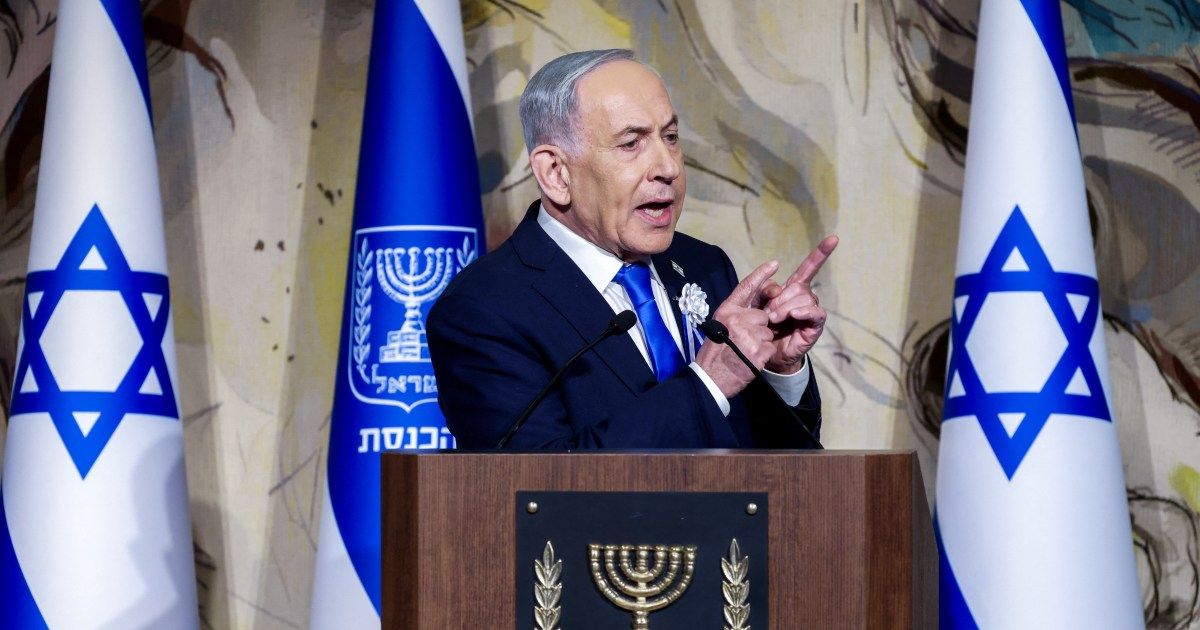
The Israeli prime minister has avoided defeat in previous crises, but the current situation may be different. The new Knesset has 120 seats, and Netanyahu’s bloc won 53, eight short of a majority. Sixty‑seven members of the new parliament have nominated former army chief Gadi Eisenkot, leader of the Yashar party, who now has up to 42 days to form a government. For Netanyahu, this could be the longest 42‑day period of his career.
The stakes are both political and personal. His corruption trial, which began in May 2020, is in its final stages. A sitting prime minister can be removed only after a final conviction, and he can stall hearings and use the justice system to his advantage. If he is removed, he will be a regular defendant.
Eisenkot’s bloc has already tabled bills for a state commission of inquiry into the October 7 attacks and for prime‑ministerial term limits. A state inquiry would strip Netanyahu of the title he values most: “defender of Israel”.
To buy time, Netanyahu is using three tactics. First, he has proposed a “national unity government” that would exclude Arab parties but include Jewish supremacists and anti‑Zionist Haredi parties. Eisenkot has called the offer a spin but has agreed to negotiate with Likud. Second, he has used incitement, labeling Ra’am and the Joint List as “terror supporters” and “haters of Israel” and declaring that a government depending on them could not be formed. Third, he has reportedly urged U.S. President Donald Trump to launch another wave of strikes on Iran, hoping that a war could disrupt the formation of a new government.
If all three tactics fail, Netanyahu could call another election next spring. Between 2019 and 2022 he has taken Israelis to the polls five times rather than relinquish power.
Eisenkot’s own challenges are significant. He campaigned on three pledges: no Netanyahu, no Haredi parties, and no Arab parties. He cannot keep all three. One option is to bring in Shas and United Torah Judaism, which would give him 61 seats, the number needed for a majority. However, the Haredi parties want a pledge exempting them from military service.
Another possibility is a minority government backed by Arab parties from outside the coalition. Eisenkot is reportedly willing to do this, as is Yair Golan, leader of the Democrats, but Avigdor Lieberman of Yisrael Beytenu rules out Arab parties, a minority government, and new elections.
A third option is a Likud government without Netanyahu or with him in a diplomatic role. No Likud lawmaker has broken ranks so far, and for Netanyahu a junior partnership could be a launching pad to undermine the government from within.
The situation remains fluid. Netanyahu’s strategy is to force Eisenkot’s partners to squabble over the draft, the Arab parties, and portfolios until the 42‑day deadline expires, potentially leading to a seventh election since 2019. The outcome will determine whether Netanyahu’s era ends in November 2026 or whether he continues to hold onto power.
The views expressed in this article are the author’s own and do not necessarily reflect Al Jazeera’s editorial stance.
Frequently asked questions
How many seats did Netanyahu's bloc win in the new Knesset?
Netanyahu’s bloc won 53 seats.
What is the deadline for Gadi Eisenkot to form a government?
Eisenkot has up to 42 days to form a government.